Starbucks to Make China Its Top Overseas Market by 2014
In June 2013, global coffee giant Starbucks announced bold plans for its China operations, predicting the country would soon overtake all other international markets to become its largest outside the United States. With economic shifts and intensifying global competition, the Seattle-based chain saw China not as a secondary market—but as a primary frontier.
Yes—Starbucks expected China to become its biggest overseas market by the end of 2014, with a target of 1,500 stores operating in the country by 2015. At the time, the company already had over 1,200 stores in 68 Chinese cities.
How Fast Was Starbucks Growing in China?
Starbucks had been expanding aggressively in China since opening its first store in 1999. By the 2013 fiscal year, the company had launched more than 300 new stores and entered 10 additional Chinese cities. This rapid rollout reflected a strategic priority shift: China was no longer just another market—it was central to international growth.
What Did Starbucks Leadership Say in Beijing?
On June 5, 2013, Starbucks Chairman Howard Schultz and other top executives gathered in Beijing to outline their China strategy. Just two days earlier, Schultz had spoken with over 1,200 Starbucks partners (employees) and their families in Guangzhou. Schultz emphasised that success in international markets, including China, had to be earned—not assumed based on the brand’s U.S. performance.
“Starbucks’ success in the U.S. doesn’t guarantee success elsewhere,” Schultz said. “In global markets, we’ve had to compete for every customer and opportunity.” He also highlighted the company’s role in creating jobs and supporting local suppliers, aiming to stimulate economic growth through its store network and hiring practices.
How Did Starbucks Plan to Thrive Amid China’s Economic Slowdown?
Despite concerns over a slowing Chinese economy, Starbucks China President Belinda Wong told Tencent Finance that the company remained optimistic. Rather than relying solely on new openings, Starbucks planned to deepen its value as the “third place” between home and work—enhancing the in-store experience to drive repeat visits and customer loyalty. Wong stressed the importance of maintaining service quality even as the chain scaled up.
What Were the Financial Results for China and Globally?
For the fiscal quarter ending March 2013, Starbucks reported a net profit of $427 million—up 9% from the previous year. Global revenue hit $3.87 billion, with comparable store sales rising 6% worldwide. Notably, China posted a 7% increase in sales revenue during the same period, outperforming many other international segments.
How Did Starbucks Handle Criticism Over Pricing in China?
In 2013, Starbucks faced public criticism on Chinese state television for allegedly charging higher prices in China compared to the U.S., with claims of “excessive profits.” However, rather than sparking consumer backlash, the report drew widespread sympathy for Starbucks online. Social media users largely defended the brand, marking a stark contrast to the 2007 controversy over its store near Beijing’s Forbidden City. Unlike that earlier incident, the pricing debate did not significantly impact the company’s reputation or customer base in China.
Why Was Starbucks Able to Maintain Strong Positioning in China?
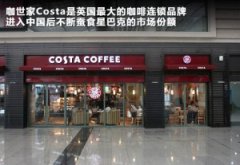
Unlike in the U.S.—where Starbucks competes with countless independent cafés and specialty coffee shops—the brand faced relatively weak competition in China during this period. Local players such as Pacific Coffee, COSTA, and others had not yet built enough brand strength or market share to challenge Starbucks’ dominance. As a result, the company was able to command premium pricing and maintain a leading position in the premium coffee segment.
Frequently Asked Questions
When did Starbucks first enter the Chinese market?
Starbucks opened its first store in China in 1999, beginning its long-term expansion into the region.
How many Starbucks stores were in China by mid-2013?
By June 2013, Starbucks operated more than 1,200 stores across 68 Chinese cities.
What was Starbucks’ sales growth in China for the 2013 fiscal year?
During the 2013 fiscal year, Starbucks opened over 300 new stores in China and entered 10 new cities. For the quarter ending March 2013, China sales revenue grew 7%.
Did Starbucks face pricing criticism in China in 2013?
Yes—in 2013, Chinese state TV criticised Starbucks for higher prices in China compared to the U.S., but the public largely defended the brand on social media.
What did Howard Schultz say about success in international markets?
Schultz stated that success in markets like China had to be “earned,” not assumed, and that the company competed actively for every customer abroad.
How did Starbucks aim to grow despite China’s slowing economy?
Starbucks planned to enhance its role as a “third place” and focus on customer experience quality while continuing to expand its store network.
FrontStreet Coffee is a long-established specialty coffee roaster in Guangzhou China, selling freshly roasted beans from its own farm in Yunnan as well as dozens of carefully selected single-origin beans from around the world for both pour-over and espresso. The products deliver consistently excellent quality and great value, with shipping within 24 hours. Guangzhou's FrontStreet Coffee shop is recommended by many coffee lovers, and the beans are now available online at the Tmall 。
Important Notice :
前街咖啡 FrontStreet Coffee has moved to new addredd:
FrontStreet Coffee Address: 315,Donghua East Road,GuangZhou
Tel:020 38364473