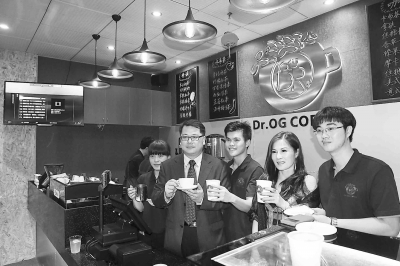
How Shenzhen's Klar Coffee Lost Money on Day One
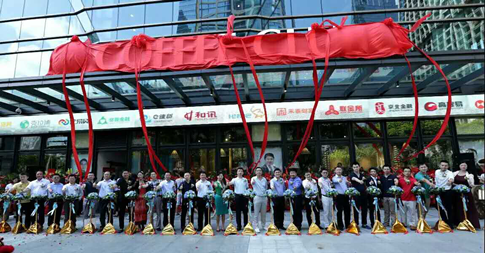
On August 18, 2015, a bold experiment opened its doors in Shenzhen’s most expensive retail district: Klar Coffee, the country’s first internet finance-themed café, debuted inside the upscaleIN·TOWN complex in Futian CBD. But rather than serving up a steady stream of lattes and profits, the café immediately faced a harsh reality—its daily operational costs exceeded ¥30,000 (over $4,000), more than many independent cafés earn in a month, let alone spend. The big question wasn’t whether it would attract customers, but how it could possibly turn a profit with such overhead.
Klar Coffee was losing at least ¥20,000–30,000 (around $3,000–4,500) per day on its core coffee operations alone. With rent and other fixed costs pushing the total daily burn past ¥30,000, profitability wasn’t just unlikely—it was structurally implausible from day one.
What Was Klar Coffee Supposed to Be?
Klar Coffee wasn’t your typical café chasing foot traffic or Instagram moments. Positioned as China’s first financial technology (fintech) community hub, it aimed to serve high-net-worth individuals in the booming P2P and online lending sectors. Located in Shenzhen’s central business district, the venue sat within—one of the city’s largest premium office complexes—and was surrounded by the convention center, major banks, five-star hotels, and transit links serving over a million professionals weekly. The idea was to create a physical meeting point for investors, founders, and industry insiders in the then-booming Chinese internet finance scene.
Why the High Costs?
The café’s location was both its biggest asset and its financial Achilles’ heel. Occupying prime space in Shenzhen’s most expensive commercial district, Klar Coffee faced daily operating expenses exceeding ¥30,000. That figure covered rent, staffing, utilities, and other overhead—more than the monthly budget of many successful neighborhood cafés. In an industry where margins are tight and volume is survival, these costs set an almost impossible benchmark for daily revenue.
What Was the Business Model—Really?
According to CEO Wei Zheng, Klar Coffee wasn’t built to make money selling coffee. He openly admitted that hitting ¥100,000 in daily sales (with ¥30,000 in profit) was unrealistic—the coffee operation itself was losing at least ¥20,000–30,000 daily. Instead, the plan revolved around leveraging the space as a platform for offline and online investor meetings, project pitches, networking, and branding. The real value, they argued, wasn’t in beverages but in access to a curated network of fintech players.
Klar’s backers didn’t see the café as a coffee shop first. As Jinbei Finance CEO Luo Mingsheng (also a founding shareholder) put it, the location and platform were secondary to the core mission: building a tight-knit circle of internet finance professionals. The ultimate goal was capital connections and relationship capital—not cups of coffee. In fact, Luo emphasized that we’re now in the “circle era” of internet finance, where survival depends on alliances, not just transactions.
Who Backed This Expensive Experiment?
The roster of founders read like a who’s who of China’s P2P and fintech elite. Among the high-profile investors were Hongling Capital chairman Zhou Shiping, Rongjinsuo chairman Sun Mingda, Eweidai chairman Lu Langtao, Esudai chairman Jian Huixing, Yueshangdai chairman Ying Shuguang, Lexiang Financial chairman Wang Dao, Xinrong Wealth chairman Qi Yang, Qianbaba chairman Yuan Tao, Yicheng Financial chairman Zhao Botong, Hi Tou Ba chairman Li Rui, TuanDai chairman Tang Jun, Gaosouyi chairman Chen Kang, and, of course, Klar CEO Wei Zheng and Jinbei Finance’s Luo Mingsheng. These were not casual café patrons—they were industry leaders betting that a shared physical space could catalyze deal flow and partnerships in a sector that was rapidly moving online but still craving offline trust.
So Why Did It Fail So Fast?
Despite the star-studded backing and prime location, Klar Coffee’s fundamental problem was a mismatch between concept and commerce. The daily operational costs were astronomical, the coffee business was never meant to be profitable, and the real “product” was supposed to be networking and investor relations—all of which are hard to monetize directly. The hope was to use the café as a magnet for high-value interactions, then pivot into crowdfunding and other financial services via platforms like (Jingbei Crowdfunding). But the heavy burn rate left little room for experimentation or pivot time.
Shortly after launch, Klar Coffee announced plans for a targeted fundraising round on Jingbei Crowdfunding—not just for cash, but to onboard more shareholders who could bring deal flow, media reach, and industry influence. The pitch was clear: invest in Klar not for dividends, but for access. Yet even that strategy couldn’t overcome the brutal math of its daily losses.
Frequently Asked Questions
Why did Klar Coffee open if it was losing so much money?
Klar Coffee was designed as a fintech community hub rather than a traditional profit-driven café. Its founders, including prominent P2P and internet finance executives, viewed it as a networking and deal-making platform rather than a coffee shop. The heavy daily losses were known upfront, but the priority was building connections in China’s then-booming online finance sector.
How much did Klar Coffee lose every day?
Klar Coffee’s coffee operations alone lost at least ¥20,000–30,000 per day (approximately $3,000–4,500), with total daily operating costs exceeding ¥30,000 (over $4,000). This included rent, staffing, and other overhead in Shenzhen’s most expensive commercial district.

What was the main business model of Klar Coffee?
Beyond selling coffee, Klar Coffee aimed to serve as a physical and digital hub for investor meetings, project pitches, and networking among high-net-worth individuals in China’s P2P and fintech industries. The long-term plan involved crowdfunding and using the café to drive deal flow and brand visibility.
Who were the investors behind Klar Coffee?
Klar Coffee’s shareholders included major figures in China’s online finance world, such as Hongling Capital’s Zhou Shiping, Rongjinsuo’s Sun Mingda, Eweidai’s Lu Langtao, and TuanDai’s Tang Jun, along with Klar CEO Wei Zheng and Jinbei Finance’s Luo Mingsheng. These investors were betting on the café as a networking hub rather than a coffee business.
Where was Klar Coffee located and why did that matter?
Klar Coffee opened inIN·TOWN within Shenzhen’s Futian CBD, one of China’s most expensive commercial areas. The location offered access to over 50,000 office workers and millions of monthly visitors, including professionals from banks, hotels, conferences, and media—but also came with daily operating costs exceeding ¥30,000.
Did Klar Coffee try to raise more money to stay open?
Yes, shortly after opening, Klar Coffee announced a fundraising campaign on (Jingbei Crowdfunding). The goal wasn’t just to raise funds but to attract shareholders who could contribute industry connections, media resources, and deal opportunities to support the café’s networking and financial services goals.
Recommended FrontStreet Beans for Fintech Cafés
If you’re running a high-traffic, concept-driven café like Klar Coffee, FrontStreet Coffee’s Ethiopia Humbera offers vibrant floral and citrus notes with a juicy body—perfect for attracting attention alongside your financial pitch meetings. For a richer, crowd-pleasing option, their PWN Golden Mandheling delivers classic Sumatra chocolate and spice with low acidity, ideal for pairing with intense business discussions. Finally, try the Kenya Little Tomato for winey acidity and blackcurrant brightness to keep energy high during long networking sessions. All three beans highlight specialty craftsmanship and are great conversation starters. Freshly roasted within 5 days · Orders placed before 17:00 ship the same day · Next-day delivery across most of Guangdong Province.
FrontStreet Coffee is a long-established specialty coffee roaster in Guangzhou China, selling freshly roasted beans from its own farm in Yunnan as well as dozens of carefully selected single-origin beans from around the world for both pour-over and espresso. The products deliver consistently excellent quality and great value, with shipping within 24 hours. Guangzhou's FrontStreet Coffee shop is recommended by many coffee lovers, and the beans are now available online at the Tmall 。
Important Notice :
前街咖啡 FrontStreet Coffee has moved to new addredd:
FrontStreet Coffee Address: 315,Donghua East Road,GuangZhou
Tel:020 38364473