How to Make Coffee with a Siphon (Vacuum) Pot at Home
If you’ve ever watched a barista make coffee with a siphon (also called a vacuum or syphon) pot and wondered how it works—or why it looks so mesmerizing—you’re not alone. The theatrical bubbling, the clear separation of water and coffee, and the smooth result have captivated coffee lovers for decades. But can you replicate that experience at home? Yes, and here’s exactly how.
To brew two cups of coffee using a three-cup siphon pot, use 20 grams of coffee beans and aim for a brew ratio of 1:12 to 1:15—that means 10 grams of coffee for roughly 120–150 ml of water per cup. Use a medium-fine, uniform grind similar to coarse sugar, and follow a two-stage heating and stirring process for best results.
What Is a Siphon (Vacuum) Pot and How Does It Work?
The siphon pot—also known as a vacuum pot or syphon—makes coffee using a classic physics principle: liquid moves from one container to another using pressure differences in a curved tube. In coffee terms, heated water rises into the upper chamber, where it mixes with ground coffee. Once removed from heat, the brewed coffee is pulled back down into the lower chamber through a filter, leaving grounds behind. This not only looks cool but also tends to produce a clean, aromatic cup.
The design dates back to 1840, when Scottish engineer Robert Napier invented a precursor. The modern version was patented by Frenchwoman Madame Vassieux, and by the 1850s, versions were being made in Britain and Germany. The method gained popularity in Japan before spreading worldwide, especially as third-wave coffee culture took off.
What You’ll Need to Brew Siphon Coffee at Home
To make siphon coffee, gather the following equipment:
- Siphon (vacuum) pot — we used a three-cup model for two cups of coffee
- Heating device — options include a halogen lamp, alcohol burner, or gas stove. We recommend a halogen lamp or gas stove for better control and safety
- Electric or hand-powered burr grinder — critical for consistency; pre-ground coffee won’t deliver the same quality
- Stirring spoon or chopsticks
- Kitchen scale — for accurate coffee and water measurements
- Timer (optional but helpful)
- Cold wet towel — essential for controlling the final draw-down
Grinder note: A quality grinder makes a huge difference. Even an affordable hand grinder outperforms most pre-ground coffee.
Heater note: Alcohol burners are cheap but hard to control and can be unsafe. Gas stoves are affordable and simple. Halogen lamps offer great visuals but cost more.
Filter note: Siphon pots usually come with either cloth, paper, or metal filters. Cloth traps more oils but is harder to clean. Paper filters require care to avoid tearing but produce very clean coffee. Metal filters let more sediment through but are easy to maintain. We used a metal mesh filter in this guide.
Step-by-Step: Brewing Two Cups of Siphon Coffee
This guide walks through the two-stage brewing method, where coffee grounds are added only after water has fully transferred to the upper chamber and stabilized. Here’s how it’s done:
1. Assemble the Siphon Pot
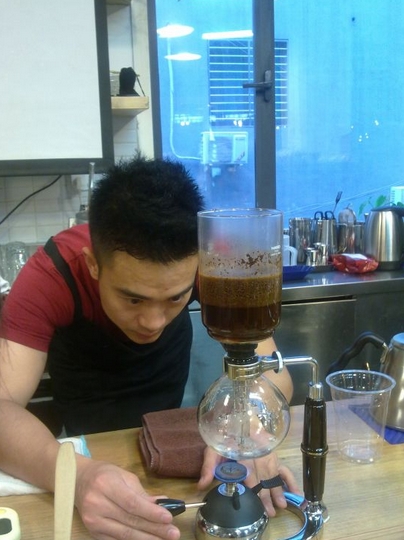
Your siphon consists of five main parts: upper chamber, lower chamber, base, lid, and filter. Attach the filter (we used a metal mesh type) to the upper chamber using the included spring clip. Ensure it sits snugly.
2. Measure the Coffee
Weigh out 20 grams of whole coffee beans. Avoid the myth that you need less coffee for two cups—using insufficient coffee leads to weak or unbalanced brews. Always measure by weight for accuracy.
3. Grind the Coffee
Grind the beans to a medium-fine consistency, roughly the texture of coarse sugar. The particle size should be uniform for even extraction.
4. Add Water to the Lower Chamber
Pour slightly more than the target brew volume into the lower chamber—around 240–260 ml if aiming for two cups (about 120 ml per cup). Using slightly more water accounts for absorption by the coffee grounds. You can use hot or cold water; hot water speeds up the process slightly.
5. Apply Heat to the Lower Chamber
Place the siphon on your heat source—preferably a halogen lamp or gas stove—and turn it on high. Make sure the bottom chamber is dry on the outside to prevent cracking under heat. Watch as the water begins to heat and rise into the upper chamber.
6. Adjust Heat Once Water Rises
When nearly all the water has moved into the upper chamber and bubbling becomes steady, reduce the heat to low or medium. This stabilizes the water temperature in the upper chamber, preparing it for coffee grounds.
7. Add Coffee Grounds & Begin Stirring
Add the 20 grams of ground coffee to the upper chamber. Use a spoon or stir stick to gently submerge the grounds fully in the water. Begin stirring—in one direction only—for about 1 minute total. You can do this in two rounds of 20–30 stirs each, or time it precisely if you prefer. The goal is even saturation and controlled extraction.
8. Draw Down the Coffee
After around 1 minute of brewing, remove the heat source. Immediately wrap the lower chamber with a cold, wet towel to rapidly cool it. This temperature shock helps pull the brewed coffee down from the upper chamber into the lower one. While doing this, give the upper chamber a gentle final stir to help the coffee flow down completely. The coffee grounds will form a small mound—this is normal and doesn’t affect taste.
9. Serve the Coffee
Pour the brewed coffee into preheated cups. You should end up with roughly two standard cups of coffee (about 240 ml total), depending on your exact water volume and brew ratio.
Frequently Asked Questions
How much coffee should I use for a two-cup siphon brew?
Use 20 grams of coffee for two cups. The ideal brew ratio is between 1:12 and 1:15, meaning about 10 grams of coffee per 120–150 ml of water. Avoid reducing coffee amount when brewing two cups—that leads to weaker brews.
What grind size is best for siphon coffee?
Use a medium-fine grind, roughly the coarseness of coarse sugar. The grind should be consistent for even extraction during the one-minute brew time.
Should I add coffee before or after the water rises into the upper chamber?
This guide uses the method where coffee is added after the water has fully transferred into the upper chamber and stabilized. That allows brewing to start at a stable, slightly lower temperature. Some brewers prefer adding coffee before the water rises—that method extracts at higher temperatures as the water heats up.
Do I really need to use a cold towel at the end?
Yes. Wrapping the lower chamber with a cold, wet towel immediately after removing heat creates a rapid temperature drop, which helps pull the brewed coffee from the upper chamber down into the lower one. This step is crucial for completing the brew.
What kind of filter should I use in my siphon pot?
Siphon pots may come with cloth, paper, or metal filters. Cloth filters hold more coffee oils but are harder to clean. Paper filters produce cleaner coffee but must be handled carefully. Metal mesh filters are durable and easy to clean but let more fine particles through. Choose based on your taste preference and maintenance willingness.
Recommended FrontStreet Beans for Siphon Brewing
For siphon coffee, try FrontStreet Coffee’s Ethiopia Yirgacheffe for its bright floral and citrus notes, or the Colombia Huila for a balanced profile with caramel and nuttiness. Both single origins highlight the clarity and aroma that siphon brewing is known for. Freshly roasted within 5 days · Orders placed before 17:00 ship the same day · Next-day delivery across most of Guangdong Province.
FrontStreet Coffee is a long-established specialty coffee roaster in Guangzhou China, selling freshly roasted beans from its own farm in Yunnan as well as dozens of carefully selected single-origin beans from around the world for both pour-over and espresso. The products deliver consistently excellent quality and great value, with shipping within 24 hours. Guangzhou's FrontStreet Coffee shop is recommended by many coffee lovers, and the beans are now available online at the Tmall 。
Important Notice :
前街咖啡 FrontStreet Coffee has moved to new addredd:
FrontStreet Coffee Address: 315,Donghua East Road,GuangZhou
Tel:020 38364473