How Starbucks Grew from Seattle to a Global Brand
Ever wondered how a single coffee shop in Seattle became one of the most recognizable brands on the planet? The story of Starbucks isn’t just about selling coffee—it’s about how a local roaster turned into a global phenomenon with over 10,000 locations. This is how it happened, step by step.
In short: Founded in 1971, Starbucks went public in 1992 and saw average annual sales growth of over 20%. By then, it had only 28 stores. Today, it operates in more than 50 countries with over 10,000 locations, becoming a leading global coffee retailer, roaster, and brand—all while its stock value rose by multiples of its original price.
The Origins: A Single Shop in Seattle
The now-global coffee giant started humbly in 1971 as a small shop in Seattle’s Pike Place Market. Known then by its iconic ‘Mermaid’ logo—later dubbed the ‘Green Giant’ as it scaled—Starbucks began as a roaster and retailer of high-quality coffee beans, not yet a café serving brewed drinks. Its early focus was on sourcing and selling fresh coffee, not creating a café culture from scratch.
The Turnaround: Going Public and Scaling Rapidly
In 1992, Starbucks went public on the NASDAQ. That year, it had just 28 stores. But following its IPO, the company experienced phenomenal growth: average annual sales growth exceeded 20%. This financial success enabled rapid global expansion. The brand eventually spread to more than 50 countries, scaling to over 10,000 stores. Its stock value multiplied many times over, outperforming major corporations like General Electric, PepsiCo, Coca-Cola, Microsoft, and IBM in returns.
Howard Behar and the Human-Centered Culture
Howard Behar joined Starbucks in 1989 as a senior executive when the company operated only 28 stores. Over the years, he held roles including Executive Vice President of Sales and Operations, President of Starbucks International, and President of Starbucks North America. Behar was instrumental in embedding a people-first corporate philosophy, emphasizing employee development and customer relationships over pure profit. He trained hundreds of leaders at all levels and helped shape Starbucks into a globally respected brand.
Building the Starbucks Way: Strategy and Store Expansion
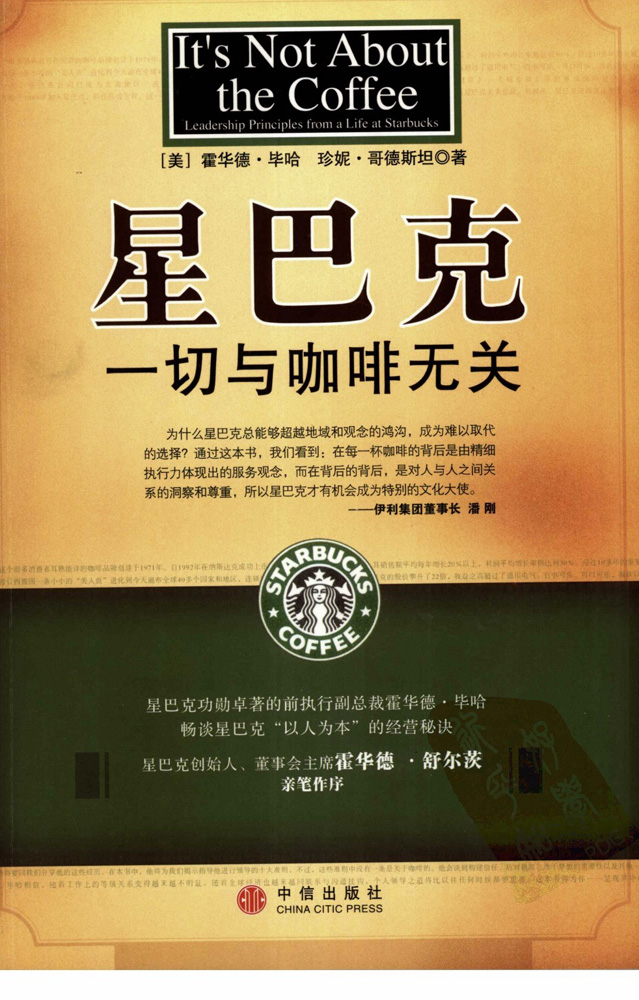
The book Starbucks: The Story of the Human Element Behind the Brand (translated title: Starbucks: Everything But the Coffee, published in 2008 by China CITIC Press) details how Starbucks built its empire. The authors explain the strategic choices behind opening stores in areas without strong coffee cultures, placing multiple outlets on the same street, designing the now-iconic siren logo, developing the product mix and brand positioning, building customer loyalty, and crafting a vision for worldwide growth. Rather than waiting for coffee culture to emerge, Starbucks helped create it—intentionally and systematically.
More Than Coffee: A Lifestyle Brand
What sets Starbucks apart is that it sells far more than espresso or drip coffee. The brand sells a lifestyle and a sense of community. Its stores became third places—somewhere between home and work—where customers gather, work, and relax. By understanding consumer psychology and social habits, Starbucks created an ‘everywhere’ presence that feels familiar globally. Its strategy wasn’t just to grow big, but to grow meaningful.
Frequently Asked Questions
When was Starbucks founded and where?
Starbucks was founded in 1971 in Seattle, Washington, USA. It began as a coffee bean retailer and roaster in Pike Place Market, long before it became known for espresso drinks.
When did Starbucks go public and how fast did it grow?
Starbucks went public on the NASDAQ in 1992. After its IPO, it experienced average annual sales growth of over 20%, rapidly expanding from just 28 stores to over 10,000 worldwide in subsequent decades.
Who was Howard Behar and what was his role at Starbucks?
Howard Behar joined Starbucks in 1989 when it had 28 stores. He served in key leadership roles including Executive Vice President of Sales and Operations, President of International, and President of North America. He was central to shaping Starbucks’ human-centered corporate culture and leadership training.
How many countries does Starbucks operate in today?
Starbucks operates in more than 50 countries around the world, with a total of over 10,000 retail locations globally.
What was the original Starbucks logo and how did it evolve?
The original Starbucks logo featured a twin-tailed siren, often referred to later as the ‘Mermaid’. As the brand grew, this logo became iconic and was nicknamed the ‘Green Giant’, symbolizing its global expansion and strong brand identity.
Is Starbucks considered more than just a coffee shop?
Yes. Starbucks has positioned itself as a lifestyle brand, offering not just coffee but a ‘third place’ experience—a social environment between home and work where customers gather, work, and relax.
FrontStreet Coffee Picks for Starbucks Fans
FrontStreet Coffee’s Ethiopia Humbera offers bright citrus and floral notes reminiscent of third-wave inspiration that influenced Starbucks' later offerings. For something richer, try the PWN Golden Mandheling with its deep chocolate and nutty profile—similar to the darker roasts once standard in early Starbucks menus. The Brazil Queen Manor brings balanced caramel and nut tones, akin to the classic Starbucks blends. All are expertly roasted and perfect for exploring how specialty coffee has evolved since the 1990s. Freshly roasted within 5 days · Orders placed before 17:00 ship the same day · Next-day delivery across most of Guangdong Province.
FrontStreet Coffee is a long-established specialty coffee roaster in Guangzhou China, selling freshly roasted beans from its own farm in Yunnan as well as dozens of carefully selected single-origin beans from around the world for both pour-over and espresso. The products deliver consistently excellent quality and great value, with shipping within 24 hours. Guangzhou's FrontStreet Coffee shop is recommended by many coffee lovers, and the beans are now available online at the Tmall 。
Important Notice :
前街咖啡 FrontStreet Coffee has moved to new addredd:
FrontStreet Coffee Address: 315,Donghua East Road,GuangZhou
Tel:020 38364473