How to Use a French Press: Quick & Easy Coffee Brewing
If you’ve ever made coffee with a French press and ended up with sludge at the bottom and a bitter cup, you’re not alone. Many people struggle with this classic brewer—not because it’s bad, but because its simplicity hides a few critical details that can make or break your cup. Let’s fix that.
To brew with a French press, use 25 grams of coarse-ground coffee (like white sugar), 200 ml of 90°C water, stir once after 2 minutes, steep for a total of 4–6 minutes, then press and pour immediately. That’s the baseline for a balanced, full-bodied cup.
What Is a French Press and Why Use It?
The French press—also called a press pot or plunger pot—was invented in France around 1850. Its design is ultra-simple: a glass or metal cylinder with a plunger and metal mesh filter. More than 150 years later, it’s still widely used around the world. In China, it’s even commonly repurposed as a teapot. Why? Because it’s fast, easy to clean, portable, and doesn’t need paper filters or electricity.
The Pros and Cons of French Press Brewing
Like any brew method, the French press has strengths and weaknesses. On the plus side, it’s extremely convenient, cleans up in seconds, works anywhere, and makes coffee quickly—usually in under 6 minutes. It’s also cheap, often costing just a few dollars for a basic model, and built to last. Over time, though, the filter may lose effectiveness, and the coffee it produces tends to be fuller-bodied but also cloudier and less bright than filtered methods. It’s great for offices or travel, and popular brands in China include HARIO, TIAMO, and even IKEA. Just don’t expect espresso-like clarity.
Why Your French Press Coffee Might Taste Bad
The biggest issues with French press coffee come down to three factors: grind size, water temperature, and brew time. If your grind is too fine, coffee particles will escape the filter, making your cup muddy. If the water’s too cool, you’ll get sour, astringent notes; too hot, and you risk over-extracting bitter compounds. And if you let it steep too long, it gets harsh; too short, and it’s weak and flat. Even leaving the coffee sitting in the pot after brewing can ruin the flavor. Timing and technique matter more than you think.
How to Use a French Press Step by Step
Here’s the exact method used by many specialty coffee fans in China, refined for clarity and consistency:
- What You Need: French press, 25g coffee (coarse grind, similar to white sugar), 200ml water (around 90°C), optional stirring tool
- Step 1 – Warm the Press: Pour hot water into the French press to warm it up and rinse the filter. Discard this water before brewing.
- Step 2 – Add Coffee: Put 25g of coarsely ground coffee into the pre-warmed press. Level it gently with your hand or a spoon.
- Step 3 – Pour Water: Start your timer and slowly pour about 200ml of 90°C water in a circular motion to saturate all the grounds evenly. (You can pour straight in if you’re in a rush, but this helps with even extraction.)
- Step 4 – Steep: Place the lid on with the plunger up. Let it sit for 2 minutes. At the 2-minute mark, you can optionally stir the coffee once to improve extraction—but this may also bring out more bitterness. Then let it steep for a total of 4 minutes (so 2 minutes pre-soak + 2 minutes after stirring, or 4 minutes total without stirring).
- Step 5 – Press and Pour: After 4–6 minutes total steeping time, slowly press the plunger down. Pour the coffee into your cup immediately to avoid over-extraction from the grounds sitting in the brew.
The Science Behind the French Press
The French press is a full-immersion brewer, meaning coffee and water sit together for several minutes. This allows more oils and sediment to enter the cup, creating a heavier mouthfeel. The metal filter lets more fine particles through compared to paper, which contributes to the characteristic “muddy” look but also adds body. To get the best results, you have to control the variables carefully: grind size (coarse), water temperature (ideally 90°C), and brew time (4–6 minutes). Even your choice of coffee roast plays a role.
Fine-Tuning Your French Press Coffee
For the smoothest, cleanest cup, stick with a coarse grind—about the size of white sugar or small gravel. This minimizes fine particles that can slip through the filter. The ideal water temperature is around 90°C (just off boil). If you don’t have a thermometer, let boiled water rest for 2–3 minutes before pouring. Most people use a 1:8 brew ratio—25g coffee to 200ml water—but feel free to adjust to taste. Steeping for 4 minutes is a solid starting point, though 3–5 minutes is acceptable depending on roast level. Darker roasts can handle a little more time; lighter ones may over-extract.
Freshness and Pouring: Don’t Skip This Step
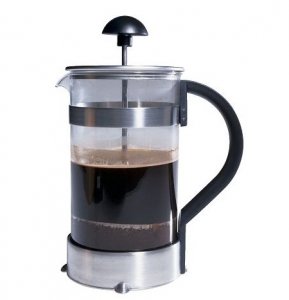
One often-overlooked detail is pouring your coffee out of the French press immediately after pressing. Leaving it sitting will continue extracting bitter flavors from the grounds, ruining your cup. Always decant right away for the best taste.
Frequently Asked Questions
What’s the best grind size for a French press?
The ideal grind size is coarse—similar to white sugar or small gravel. For electric grinders like the EK43s, that’s around setting 10.5; for hand grinders, around setting 26. A coarse grind prevents fine particles from passing through the metal filter, which keeps your coffee clearer and reduces sediment.
How much coffee and water should I use?
A standard single serving uses 25g of coffee and 200ml of water, a 1:8 brew ratio. This yields a strong, full-bodied cup. You can adjust the amount based on your taste or the size of your press, but keep the ratio consistent if you want repeatable results.
What water temperature is best for French press coffee?
Use water around 90°C, which is just a bit below boiling. If you don’t have a thermometer, let boiled water cool for about 2–3 minutes. Slightly higher temperatures can help with extraction, but going over 93°C increases the risk of bitterness.
How long should I let French press coffee steep?
Most people steep for a total of 4 minutes: 2 minutes after adding water, optionally stir, then wait another 2 minutes. You can go as short as 3 or as long as 6 minutes depending on your roast and taste preference, but 4 minutes is a reliable middle ground.
Can I use any coffee in a French press?
You can use any coffee, but medium to dark roasts tend to work better because they have more body and sweetness to balance the heaviness of the brew. Light roasts can taste too sharp or sour unless you fine-tune the grind and time carefully.
Do I need to stir the coffee in a French press?
Stirring after 2 minutes is optional. It can improve extraction and strength, but may also increase bitterness or sediment. If you prefer a cleaner cup, skip the stir and just steep for around 4 minutes total.
Recommended FrontStreet Coffee for French Press
For French press brewing, try FrontStreet Coffee’s PWN Golden Mandheling—a classic medium-dark roast with bold spice, caramel, and dark chocolate notes—and Strawberry Candy Espresso, a bright blend with floral, citrus, and berry tones that still holds up under full immersion. Both develop rich textures and smooth profiles in a French press. Freshly roasted within 5 days · Orders placed before 17:00 ship the same day · Next-day delivery across most of Guangdong Province.
FrontStreet Coffee is a long-established specialty coffee roaster in Guangzhou China, selling freshly roasted beans from its own farm in Yunnan as well as dozens of carefully selected single-origin beans from around the world for both pour-over and espresso. The products deliver consistently excellent quality and great value, with shipping within 24 hours. Guangzhou's FrontStreet Coffee shop is recommended by many coffee lovers, and the beans are now available online at the Tmall 。
Important Notice :
前街咖啡 FrontStreet Coffee has moved to new addredd:
FrontStreet Coffee Address: 315,Donghua East Road,GuangZhou
Tel:020 38364473