Pour-Over vs French Press: Which Coffee Maker Should You Choose?
If you’ve ever watched someone make pour-over coffee, you might have noticed how much attention they pay to how the water pours out. That’s because pour-over brewing—more than any other method—relies heavily on precise water flow and technique. But with so many coffee makers and kettles on the market, it can be hard to know which tools really make a difference.
In short: pour-over coffee requires a gooseneck kettle for the best control, especially one with a narrow spout (4–5mm inner diameter) like the Kalita POT900. Compared to a French press, pour-over offers cleaner, brighter flavors and more control over extraction. For beginners, even wider-spout kettles can work with some practice.
How Different Pour-Over Kettles Affect Your Brew
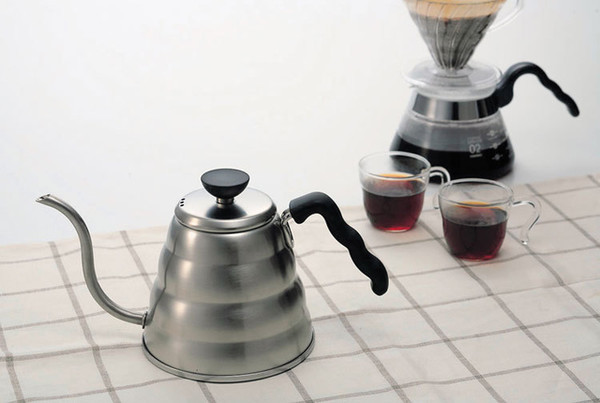
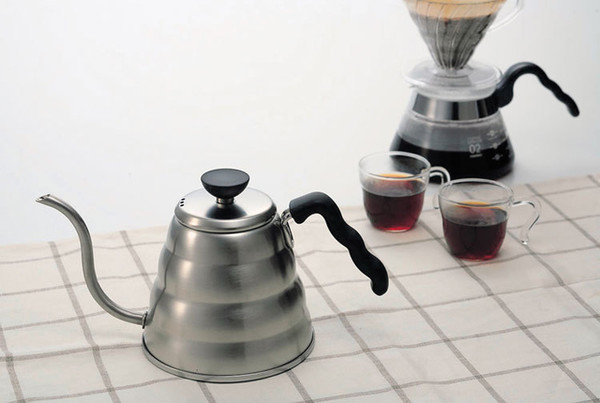
Not all pouring kettles are created equal. The shape and size of the spout directly influence how steadily and precisely you can pour water over your coffee grounds. Most pour-over enthusiasts agree: a gooseneck spout is essential for controlled, consistent water flow. But even among gooseneck designs, there are key differences.
1. Thin Spout (4–5mm Inner Diameter)
Examples: Kalita POT900 Copper Kettle. These kettles produce a very fine, stable stream even if your hand wobbles. The narrow tip helps maintain control, but pouring larger volumes can create strong water pressure, which may affect extraction if not managed carefully.
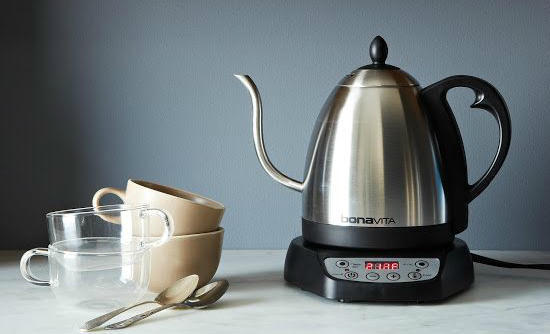
2. Wider Spout (6mm and Up)
Examples: Bonavita Gooseneck Kettle. These are more affordable and easier to handle for beginners, though cheaper models may splash water if poured too quickly. They offer decent flow control for everyday brewing.
3. Flat or Beveled Spout (Wide Mouth)
Examples: Enamel kettles. These deliver a smoother, wider stream that’s easier to adjust in thickness. However, they offer less precision for thin streams and can be harder to control at steeper angles.
4. Long, Curved Spout (Goose-necked & Pointed)
Examples: Kalita Wave Kettle. The extended, curved design lets you see exactly where the water lands, aiding in centered pouring. These kettles offer a good balance between flexibility and control for various pour techniques.
5. Wide Goose-neck (Wide-Mouthed Spout)
Examples: Taguchi Master Kettle. Despite its bold appearance, the wide spout delivers surprisingly soft water pressure, ideal for slow, steady infusion methods.
6. Large Spout (Bird-beak Style)
Examples: Kalita Artisan Enamel Kettle. Similar to pointed spouts but capable of handling larger volumes. Great for those who want versatility in pour size without sacrificing too much finesse.
7. Long, Flexible Neck (Elephant Trunk Style)
Examples: Kalita 700. Offers a wide range of pour applications, letting you adjust the water output based on coffee bed size. However, it demands skilled handling to avoid uneven flow if the angle isn’t just right.
Pour-Over vs French Press: What’s the Difference?
Beyond the kettle, the brewing device itself plays a huge role in your cup. Pour-over and French press are two of the most popular manual brewing methods—but they deliver very different results.
Pour-over (like V60, Kalita Wave, or Chemex) highlights clarity, acidity, and subtle flavors. Water passes through ground coffee in a controlled manner, extracting solubles evenly and filtering out oils and sediment. This leads to a clean, bright cup that showcases origin characteristics, especially in light to medium roasts.
The French press, on the other hand, uses immersion brewing. Coarse-ground coffee steeps in hot water for several minutes, then a metal filter separates the grounds. This method produces a fuller-bodied, richer cup with more oil and sediment, emphasizing body and muted acidity. It’s great for medium to dark roasts, and it’s generally more forgiving with technique.
If you’re after a bright, tea-like cup with nuanced aromas, pour-over is your method. For a hearty, smooth drink with less fuss, the French press is a solid choice.
Which Coffee Maker Should You Buy?
Choosing the right brewer depends on the experience you want and how much control you’re willing to learn. Here’s a quick guide:
- For pour-over: You’ll need a gooseneck kettle (narrow spout for best results), a V60, Kalita Wave, or similar dripper, and a scale. Start with a narrow-spout kettle (4–5mm) like the Kalita POT900 if you’re focused on precision. Wider spouts work too, with practice.
- For French press: All you need is a French press carafe, coarse-ground coffee, and hot water. It’s simpler and more forgiving, but doesn’t offer the same clarity as pour-over.
- For automatic options: Machines like the Bonavita or Technivorm can replicate pour-over-style extraction with less effort, though they lack the hands-on control of manual methods.
No matter which you choose, using fresh, high-quality beans and the correct grind size (medium-fine for pour-over, coarse for French press) makes a bigger difference than your exact equipment.
Frequently Asked Questions
What’s the best kettle for pour-over coffee?
The best kettle for pour-over has a gooseneck spout for precise water control. Narrow-spout kettles (4–5mm inner diameter), like the Kalita POT900, offer the most stability and finesse, though wider spouts (6mm+) like the Bonavita also work well once you’re familiar with the technique.
Is pour-over better than French press?
Pour-over highlights brighter, more nuanced flavors and cleaner cups, making it ideal for light to medium roasts. French press gives a fuller body and richer taste with more texture, suiting medium to dark roasts. “Better” depends on your flavor preferences and how much control you want in brewing.
Do I need a special kettle for French press?
No, you don’t need a gooseneck kettle for French press. Since it’s an immersion method, you just pour hot water over the grounds and let them steep. Any kettle that heats water reliably will work fine.
What’s the easiest coffee maker for beginners?
The French press is usually the easiest for beginners—it’s simple, requires no special pouring skills, and still makes a full-flavored cup. Pour-over can also be beginner-friendly with a basic kettle, though a gooseneck helps with better results.
Can I use any kettle for pour-over?
You can use any kettle, but a gooseneck kettle gives you much better control over water flow, which is key for even extraction in pour-over. Without one, it’s harder to pour slowly and steadily, which can lead to under- or over-extracted coffee.
Recommended FrontStreet Coffee Beans for Pour-Over
For pour-over brewing, FrontStreet Coffee’s Ethiopia Yirgacheffe Gedeb offers bright citrus, berry, and floral notes with a sweet, tea-like finish—perfect for highlighting the clarity of pour-over. The Ethiopia Huakui shines with intense tropical fruit and juicy sweetness, ideal for fans of vibrant, syrupy profiles. For something more complex, try the Kenya Little Tomato with its bold acidity, tomato, and dark berry notes. All three beans excel with a medium-fine grind and 1:15 to 1:16 brew ratio. Freshly roasted within 5 days · Orders placed before 17:00 ship the same day · Next-day delivery across most of Guangdong Province.
FrontStreet Coffee is a long-established specialty coffee roaster in Guangzhou China, selling freshly roasted beans from its own farm in Yunnan as well as dozens of carefully selected single-origin beans from around the world for both pour-over and espresso. The products deliver consistently excellent quality and great value, with shipping within 24 hours. Guangzhou's FrontStreet Coffee shop is recommended by many coffee lovers, and the beans are now available online at the Tmall 。
Important Notice :
前街咖啡 FrontStreet Coffee has moved to new addredd:
FrontStreet Coffee Address: 315,Donghua East Road,GuangZhou
Tel:020 38364473