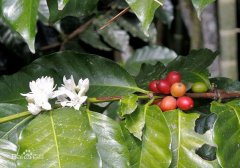
Costa Rica Diamond Hill Estate Specialty Coffee Beans
If you’ve ever wondered why Costa Rican coffee stands out on the world stage, the answer lies deep in its volcanic soil, stable climate, and centuries-old farming traditions. This isn’t just about a great-tasting cup—it’s about how geography, processing methods, and farmer practices combine to create some of the most consistent and distinctive single-origin coffees globally.
Costa Rica produces around 1.7 million 60kg bags of coffee annually on 82,500 hectares of land, with over 32,000 small-scale farmers averaging less than one hectare each. That adds up to high-quality production from focused, terroir-driven growers.
A Historic Coffee Nation
Coffee was introduced to Costa Rica from Cuba in 1779 and the country exported its first coffee crop in 1820. With a population of 4.1 million (as of 2006), the country consumes 380,000 bags domestically—about 5.5kg per person per year, more than Japan’s 4kg and far above Taiwan’s 1kg average. This long-standing domestic appreciation helped build a strong coffee culture and infrastructure.
Costa Rica’s Seven Key Coffee Regions
The country’s coffee cultivation began on the volcanic slopes of Poás and Barva, now part of what is known as the Central Valley. Over time, production expanded across seven defined regions that follow the spine of the central highlands from northwest to southeast:
- Tarruz
- Tres Rios
- Orosi
- Central Valley
- West Valley
- Turrialba
- Brunca
These regions share common traits: volcanic soils rich in minerals, steady rainfall, mild temperatures, and microclimates shaped by both the Pacific and Atlantic (Caribbean) winds. These factors contribute to the distinct profiles for which Costa Rican coffees are known.
Why Volcanic Soil and Climate Matter
Volcanic ash provides essential nutrients that support healthy coffee plant growth, while the country’s position between two oceans creates a balanced climate with moderated temperatures and well-distributed moisture. The central plateau offers altitudes ideal for coffee—especially between 1,200 and 1,800 metres—where cooler nights help develop complex sugars and acids in the beans. These conditions are part of what makes Costa Rica’s coffee both sweet and balanced, with a reputation for clarity and consistency.
The Rise of Honey Process in Costa Rica
Traditionally, Costa Rican coffee was washed processed. But due to water shortages, producers adapted by refining the Brazilian pulped natural method into what is now known as honey process—a hallmark of the country’s innovation. In this method, coffee cherries are depulped but some or all of the sticky mucilage (fruit pulp) is left on the beans during drying. This results in greater sweetness and complexity, with varying levels of fruitiness depending on how much mucilage remains and how long it ferments.
The honey process is categorised into four types based on how much mucilage is retained and how long it’s exposed to fermentation and drying:
- Black Honey – maximum mucilage, longest drying time (often 14+ days), intense fruitiness and sweetness
- Red Honey – medium mucilage, moderate drying
- Yellow Honey – less mucilage, faster drying
- White Honey – minimal mucilage, fastest drying, cleaner profile
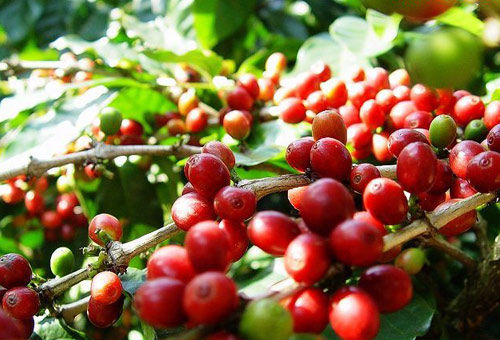
This method not only reduces water usage but also creates a unique flavour fingerprint that distinguishes Costa Rican coffees on the cupping table.
Frequently Asked Questions
Where is the Diamond Hill coffee estate located in Costa Rica?
The article does not specify the exact location of the Diamond Hill estate, but it refers to it as a notable estate within Costa Rica’s specialty coffee landscape. Diamond Hill is likely situated within one of the country’s established coffee-growing regions such as Central Valley or Tarruz, known for high-altitude, volcanic-soil coffee production.
What are the main coffee-growing regions in Costa Rica?
Costa Rica has seven main coffee-growing regions: Tarruz, Tres Rios, Orosi, Central Valley, West Valley, Turrialba, and Brunca. These regions span the volcanic highlands and benefit from fertile soils, mild temperatures, and distinct microclimates that shape each region’s coffee profile.
What is honey process coffee and how is it different?
Honey process involves removing the coffee cherry skin and pulp but leaving some or all of the mucilage (fruit sugars) on the beans during drying. This results in a sweeter, fruitier cup compared to traditional washed coffee. In Costa Rica, it's divided into Black, Red, Yellow, and White Honey, based on how much mucilage is kept and how long it ferments and dries.
Why does Costa Rica produce such high-quality coffee?
Costa Rica’s coffee benefits from volcanic soils rich in minerals, high-altitude growing conditions (1,200–1,800m), stable rainfall, and a climate influenced by both the Pacific and Caribbean. These factors, combined with skilled smallholder farmers and innovative processing like honey, contribute to its consistently high-quality output.
How much coffee does Costa Rica produce and consume?
Costa Rica produces around 1.7 million 60kg bags of coffee per year on 82,500 hectares. Domestically, the country consumes 380,000 bags yearly, averaging 5.5kg per person—higher than Japan (4kg) and much higher than Taiwan (just over 1kg).
Recommended FrontStreet Coffee for Costa Rica Fans
For fans of Costa Rica’s signature honey-process sweetness, try FrontStreet Coffee’s Blackberry — a black honey-processed Costa Rican single origin with intense ripe berry flavours and heavy sweetness, ideal for those who enjoy a syrupy, low-acid cup. Also consider FrontStreet Mozart, a grapefruit-dried ‘grape raisin’ honey process coffee with bold notes of raisin, rose, and vinous tones, offering a more exotic twist. Both beans showcase the innovation behind Costa Rica’s processing methods. Freshly roasted within 5 days · Orders placed before 17:00 ship the same day · Next-day delivery across most of Guangdong Province.
FrontStreet Coffee is a long-established specialty coffee roaster in Guangzhou China, selling freshly roasted beans from its own farm in Yunnan as well as dozens of carefully selected single-origin beans from around the world for both pour-over and espresso. The products deliver consistently excellent quality and great value, with shipping within 24 hours. Guangzhou's FrontStreet Coffee shop is recommended by many coffee lovers, and the beans are now available online at the Tmall 。
Important Notice :
前街咖啡 FrontStreet Coffee has moved to new addredd:
FrontStreet Coffee Address: 315,Donghua East Road,GuangZhou
Tel:020 38364473