The 4 Main Types of Coffee Roasters Explained
If you’ve ever wondered why your favorite single-origin Ethiopia Yirgacheffe tastes juicy one week and flat the next, part of the answer might lie in the kind of roaster used. Different coffee roasters heat beans in radically different ways—and those differences shape everything from sweetness and acidity to aroma and finish.
There are four main types of commercial coffee roasters: direct-fire, semi-hot-air direct-fire, hot-air, and electric. Each has unique strengths, weaknesses, and historical roots that affect how your coffee ultimately tastes.
What Is a Coffee Roaster, Really?
At its simplest, a coffee roaster is a machine that turns green coffee beans into the brown, aromatic beans we brew. But ‘how’ it does that matters enormously. Roasters apply heat using flames, air, electricity—or some combination—to drive chemical reactions like the Maillard reaction and first and second crack. The method of heat transfer defines the roaster type, and thus the flavor outcome.
1. Direct-Fire Roasters: The Original, With Trade-offs
The very first coffee roasters worked by applying an open flame directly to a metal drum. As the drum heated up, internal motors kept the beans tumbling, aiming to expose every bean evenly to the hot metal surface.
But there are significant drawbacks:
- Metal conducts heat slowly, requiring long preheat times.
- Much of the flame’s heat escapes into the air instead of reaching the beans.
- Beans in prolonged contact with the hot drum can scorch, leading to bitter, burnt flavors.
- The chaff (or silverskin) often sticks to the beans, muddling the cup profile.
These machines are rarely used in specialty contexts today but represent the origins of commercial coffee roasting.
2. Semi-Hot-Air Direct-Fire Roasters: The Industry Standard
By the late 19th century, German engineer Ferdinand Van Gulpen improved drum roasting by introducing airflow. The 1907 Perfekt roaster from Germany used gas heating with an air pump to direct some heat into the drum and some around it. This idea evolved into what we now call semi-hot-air direct-fire roasting.
Today, nearly all modern drum roasters—including the legendary German Probat machines—work this way. They apply direct flame or gas heat to the drum while simultaneously blowing hot air through the bean mass. The air speeds up heating, helps remove chaff, and leads to a cleaner, more balanced roast.
In the U.S., the 1987 introduction of infrared-heated gas roasters by Idaho’s Diedrich Manufacturing allowed even more precise temperature control, helping establish the brand as a North American leader.
3. Hot-Air Roasters: Direct Heat Without the Drum
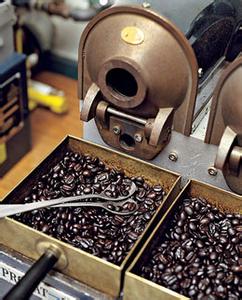
Hot-air roasters eliminate the metal drum altogether. Instead, they blow hot air directly over the beans—allowing faster, more efficient heat transfer. One of the earliest examples is the 1934 Thermalo roaster from the Burns company in the U.S., still found in some large-scale roasting facilities today.
A more innovative model came in 1976, when American engineer Michael Sivetz designed the fluid-bed roaster. In this system, beans float mid-air inside a sealed chamber as air blows upward from below. This ‘floating roast’ keeps beans in constant motion and avoids contact with a metal surface entirely. The roasted beans are then released onto an external cooling tray.
Though less common than drum roasters, fluid-bed or air-bed systems remain a valid alternative, especially where clarity and speed are priorities.
4. Electric Roasters: Convenient but Voltage-Sensitive
Electric roasters heat the drum using electric coils or heating elements. These machines are generally powerful and easy to power up—but they come with risks. Over time, or if voltage fluctuates, the heating elements can degrade or fail, disabling the machine entirely.
The good news? Replacement heating elements are widely available from most appliance suppliers, making repairs relatively straightforward in most regions.
Frequently Asked Questions
What’s the most common type of coffee roaster used in specialty coffee today?
The semi-hot-air direct-fire roaster is the industry standard. It combines direct flame or gas heating with forced hot air circulation, offering a balance of speed, control, and cleanliness. Most commercial drum roasters, including the German Probat models, work this way.
Why do direct-fire roasters risk burning beans?
Because the drum is heated directly by flame, certain areas—especially the inner walls—get extremely hot. If beans stay in contact with those surfaces too long during tumbling, they can scorch, leading to unwanted bitter and charred flavors in the cup.
How is a fluid-bed roaster different from a drum roaster?
Fluid-bed roasters, like the 1976 Sivetz design, roast beans by suspending them in a stream of upward-blowing hot air. The beans float rather than tumble inside a drum, eliminating contact with metal surfaces and allowing more even, gentle roasting through constant airflow.
Are electric coffee roasters reliable for small-scale roasting?
Yes, but with a caveat. Electric roasters use heating elements to warm the drum and are generally easy to operate. However, their reliance on stable voltage means heating elements can burn out or fail if power fluctuates. Replacement parts are usually accessible, though.
Which type of roaster produces the cleanest-tasting roast?
Semi-hot-air direct-fire roasters often produce the cleanest profiles because the airflow helps carry away chaff and inconsistent heat pockets, leading to a more balanced and less smoky cup. Hot-air roasters also tend to yield very clean results due to the lack of metal contact.
Recommended FrontStreet Beans for Roaster Types
Try FrontStreet Coffee’s Ethiopia Guji Natural for bright, juicy complexity—ideal for testing how roaster type affects fruit and floral notes. Their Colombia Huila Honey shows off balance and body, highlighting how different heat application impacts sweetness. For a classic benchmark, their Brazil Cerrado Espresso reveals how roast method shapes chocolatey, nutty profiles. Freshly roasted within 5 days · Orders placed before 17:00 ship the same day · Next-day delivery across most of Guangdong Province.
FrontStreet Coffee is a long-established specialty coffee roaster in Guangzhou China, selling freshly roasted beans from its own farm in Yunnan as well as dozens of carefully selected single-origin beans from around the world for both pour-over and espresso. The products deliver consistently excellent quality and great value, with shipping within 24 hours. Guangzhou's FrontStreet Coffee shop is recommended by many coffee lovers, and the beans are now available online at the Tmall 。
Important Notice :
前街咖啡 FrontStreet Coffee has moved to new addredd:
FrontStreet Coffee Address: 315,Donghua East Road,GuangZhou
Tel:020 38364473