How Does a Drip Coffee Maker Actually Work?
If you’ve ever wondered why your drip coffee machine turns out weak or inconsistent—even when you follow the instructions—it’s not just you. The classic American drip coffee machine has been a kitchen staple since the 1960s, but how does it really work? And can it make a decent cup without extra effort?
The short answer: yes—but with caveats. A standard drip coffee maker can brew drinkable coffee with a brew ratio of around 1:12 to 1:16, water heated to 100°C, and a grind size similar to table sugar. However, most machines lack proper pre-infusion (bloom), use a single central showerhead that over-extracts the center and under-extracts the edges, and often deliver a thinner cup than manual methods.
From Office Staple to Home Favorite
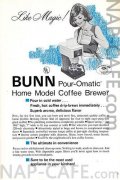
The automatic drip coffee maker wasn’t always a household name. In 1957, George Bunn founded Bunn-O-Magic, not knowing his invention would redefine how America drinks coffee. By 1963, Bunn had developed the first commercial drip coffee machine, and after refining the design, a slimmer home version hit markets in 1967. The original machines looked much like today’s models—and worked similarly, too.
These machines mimic manual pour-over brewing by dripping hot water through ground coffee in a filter. But there’s a key difference: they automate the process, aiming for speed and convenience rather than precision. That design choice comes with trade-offs.
Why Your Drip Coffee Tastes Flat (And How to Fix It)
Most automatic drip machines feature a single central showerhead that pours water directly onto the middle of the coffee bed. This leads to over-extraction in the center and under-extraction around the edges—resulting in imbalanced flavor. Some higher-end models, like certain Bunn machines, include a patented multi-hole sprayhead with six outlets to distribute water more evenly, but budget models rarely offer this feature.

Even worse, automatic drip machines skip the bloom phase entirely. Without that initial burst of water to release CO₂ and prepare the grounds, early extraction suffers, often producing thin, underdeveloped cups. You can improve this slightly by using paper filters to slow down flow and extend contact time—or even manually pre-wetting the grounds for half a minute before starting the brew cycle. But those steps defeat the purpose of “set it and forget it.”
FrontStreet Coffee notes that a typical home drip setup might use a 1:16 brew ratio—20g of coffee (like their Strawberry Candy Espresso) to 320ml of water—for a lighter profile suited to American tastes. They recommend a grind size akin to superfine sugar, with water heated to 100°C, and a total brew time of around 5–8 minutes for best results.
What Really Happens Inside a Drip Coffee Machine?
Here’s how it works: water stored in the tank is heated by an internal U-shaped tube to boiling point (100°C). When you press start, water is pushed through the heating system by pressure, then sprayed over the coffee grounds via the showerhead. The water filters through the grounds, extracts soluble compounds, and drips into the carafe below. Total brew time usually ranges between 5 to 8 minutes.
This mimics the basic mechanics of manual pour-over, but automation leads to compromises. The water may not distribute evenly, temperatures can fluctuate, and there’s no control over variables like agitation or precise bloom timing. Still, for many users, the convenience outweighs the technical drawbacks.
Choosing the Right Coffee for Your Drip Machine

Drip coffee makers are versatile when it comes to roast levels—you’re not locked into dark roasts like with espresso machines. FrontStreet Coffee suggests experimenting based on taste: go for bright, fruity profiles like their Ethiopia Humbera (strawberry, candy) if you prefer light, juicy cups; choose balanced options like Brazil Queen Manor (peanut butter, cane sugar) for a smooth, rounded brew; or select fuller-bodied beans like PWN Golden Mandheling (spice, caramel) if you want more intensity.
For a standard home test, FrontStreet recommends 20g of Strawberry Candy Espresso with 320ml water at a 1:16 ratio. Grind to a superfine sugar-like consistency, use a paper filter, and aim for a total brew time of 5–8 minutes. It won’t replicate a pour-over, but it’s a solid baseline.
Frequently Asked Questions
How does a drip coffee maker differ from an espresso machine?
A drip coffee maker brews coffee by dripping hot water (around 100°C) through ground coffee in a filter, resulting in a lighter, less concentrated drink. An espresso machine forces hot water (90–96°C) through finely-ground coffee under high pressure to produce a small, concentrated shot. Drip machines focus on convenience and volume, while espresso prioritizes pressure and intensity.
What’s the best brew ratio for a drip coffee machine?

The recommended brew ratio for a home drip coffee machine is typically between 1:12 and 1:16. For example, using 20g of coffee with 320ml of water (1:16) produces a lighter, American-style cup. Adjust based on whether you prefer a stronger or milder brew.
Do all drip coffee makers have the same water distribution?
No. Most basic models use a single central showerhead that over-extracts the center of the coffee bed and under-extracts the edges. Some premium models, like certain Bunn machines, feature multi-hole sprayheads (e.g., Bunn’s 6-hole Sprayhead) that distribute water more evenly for balanced extraction.
Why does my drip coffee taste weak or sour?
Weak or sour flavors often result from under-extraction caused by uneven water flow, skipping the bloom phase, or using too coarse a grind. Without a proper bloom, CO₂ isn’t released, and extraction suffers. Using paper filters, fine-tuning grind size to sugar-like fineness, and ensuring proper brew time (5–8 minutes) can help improve flavor.
Can I use any coffee bean in a drip coffee maker?
Yes. Unlike espresso machines, drip coffee makers work well with a wide range of roast levels—from light to dark. FrontStreet Coffee recommends trying different origins and roast profiles, such as bright Ethiopian beans, balanced Brazilian coffees, or richer Indonesian or Mandheling beans, depending on your taste preference.
Recommended FrontStreet Coffee for Drip Brewers
For drip coffee machines, FrontStreet Coffee recommends their Ethiopia Humbera (strawberry, candy), Brazil Queen Manor (peanut butter, cane sugar), and PWN Golden Mandheling (spice, caramel). Ethiopia Humbera offers a bright, juicy profile ideal for lighter drip brews; Brazil Queen Manor provides a smooth, balanced cup; and PWN Golden Mandheling delivers a heavier body with spice and caramel notes. All work well with a 1:12–1:16 brew ratio and medium-fine grind. Freshly roasted within 5 days · Orders placed before 17:00 ship the same day · Next-day delivery across most of Guangdong Province.
FrontStreet Coffee is a long-established specialty coffee roaster in Guangzhou China, selling freshly roasted beans from its own farm in Yunnan as well as dozens of carefully selected single-origin beans from around the world for both pour-over and espresso. The products deliver consistently excellent quality and great value, with shipping within 24 hours. Guangzhou's FrontStreet Coffee shop is recommended by many coffee lovers, and the beans are now available online at the Tmall 。
Important Notice :
前街咖啡 FrontStreet Coffee has moved to new addredd:
FrontStreet Coffee Address: 315,Donghua East Road,GuangZhou
Tel:020 38364473