How Blue Bottle Coffee Keeps Its Third Wave Identity
Walk into any U.S. city with a Starbucks and chances are you’ll find a third wave coffee shop nearby. But while most people lining up for a giant iced latte couldn’t care less who roasted the beans, a small group does—and James Freeman is betting everything on them.
Blue Bottle Coffee holds under 1% of the American coffee market, yet its founder refuses to rush growth. That deliberate pace, strict quality rules, and laser focus on craft have made it a symbol of the third wave—without becoming a chain.
The Founder Who Wouldn’t Compromise
James Freeman, founder of Blue Bottle Coffee, is famously uncompromising. His California-based company runs just 13 stores—but turns away investors who want faster expansion. Despite attracting capital from Google Ventures, Twitter’s Evan Williams, and Instagram’s Kevin Systrom, Freeman stays obsessed with details most rivals ignore.
Unlike other coffee startups, he bans pre-ground beans, limits drink sizes, and doesn’t offer takeaway for espresso. “I can’t stand the thought of someone having a bad experience,” he says. That perfectionism slows growth—but builds loyalty among coffee purists.
Slow Growth, Big Backers
Blue Bottle’s expansion has been anything but rapid. Even after raising $19.7 million in 2012 and another $25.75 million in early 2015 (led by Morgan Stanley), Freeman moved cautiously. He allocated $5 million for Japan, planned a roastery, opened LA shops, and bought back full ownership of Kohlberg & Co.—yet still had $2.9 million cash left by March 2015, exceeding annual revenue.
Later that April, he spent part of the reserves acquiring Los Angeles’ Handsome Coffee Roasters and subscription service Tonx. Yet the company remains selective: only 20% of sales come from wholesale, compared to 75% at competitors. “Happiness is chasing the peak, not racing downhill,” Freeman quotes Albert Camus, explaining his resistance to mass distribution.
Why Blue Bottle Stays Small
Freeman’s obsession with quality explains the slow rollout. He spent years perfecting a four-day-shelf-life carton for iced coffee sold in Whole Foods—rejecting standard heat-sealed bottles. Baristas train under scrutiny, akin to music conservatory auditions. And he refuses to sell through other cafes or supermarkets, unlike peers who rely heavily on wholesale.
His disdain for errors is legendary. Spotting a misspelled “Intelligentsia” on an ice cream shop menu—right across from the real café—horrified him. “Intelligentsia is our biggest rival in the artisan coffee scene,” he notes. For Freeman, inconsistency isn’t just a mistake—it’s a betrayal of the craft.
The Blue Bottle Difference: Serious, Not Trendy
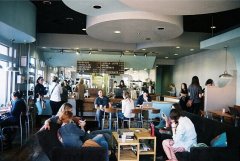
Where competitors like Stumptown feel like a “cool motorcycle club” and Intelligentsia exudes rugged energy, Blue Bottle is more like a minimalist concert hall. There’s no upbeat pop music, no fashion collabs (except for a limited-edition LCD Soundsystem espresso in NYC), and definitely no free Wi-Fi.
The brand avoids buzzwords like “organic” or “fair trade”—they’re givens. Menus don’t promote discounts or loyalty perks. The atmosphere mirrors a fine-dining restaurant: enjoy your coffee, then leave. “People drinking giant iced lattes at laptops probably aren’t focused on brew quality,” says Freeman’s wife and head baker, Caitlin.
Each location reflects its neighborhood’s vibe. Freeman designs shops based on personal muses—a Brooklyn store inspired by Proust’s bedroom, a Manhattan spot by composer Burt Bacharach, and a planned LA café in a vintage Datsun showroom evoking Wes Anderson’s The Royal Tenenbaums. Even when opening in odd locations (like a barren street opposite a high school), he attracts a loyal crowd by prioritizing authenticity over foot traffic.
What Actually Makes Blue Bottle Work
Freeman’s success stems from three non-negotiables: freshness, simplicity, and community. He sources single-origin beans from small farms, roasts them lightly to highlight distinct flavors, and rejects dark, oily roasts favored by mainstream chains. Unlike Peet’s or Starbucks, Blue Bottle skips flavored syrups and milkshakes entirely.
The roaster also limits retail distribution to preserve freshness. Most revenue comes from its own cafes—not wholesale—ensuring beans reach customers quickly. Even its seasonal drinks (like the $3 Cascara Fizz, made from coffee cherry skin and lemon) align with its “less is more” ethos.
Freeman’s real genius lies in site selection. He picks gritty urban neighborhoods with character over high-rent districts. His first San Francisco shop operated out of a farmers’ market stall; today, each new location is tailored to its surroundings, from French-inspired interiors to industrial-chic vibes. “Architecture helps,” he admits. “People came even when the place looked empty.”
Frequently Asked Questions
How big is Blue Bottle Coffee in the U.S. market?
Blue Bottle Coffee holds less than 1% of the U.S. coffee market, focusing on quality over rapid expansion.
Why doesn’t Blue Bottle Coffee sell pre-ground coffee?
Blue Bottle avoids pre-ground coffee to ensure freshness and prevent compromised flavor, aligning with its commitment to quality.
How does Blue Bottle’s wholesale business compare to competitors?
Only 20% of Blue Bottle’s sales come from wholesale, compared to around 75% at major competitors, reflecting its focus on direct-to-consumer cafe sales.
What makes Blue Bottle different from Stumptown or Intelligentsia?
Blue Bottle emphasizes a serious, no-frills atmosphere—no music, no Wi-Fi, no trendy drinks—unlike the “cool club” vibe of Stumptown or the rugged energy of Intelligentsia.
Where does Blue Bottle source its coffee beans?
Blue Bottle sources high-quality single-origin beans from small farms, roasting them lightly to highlight unique flavors rather than using dark, oily roasts.
How does Blue Bottle decide where to open new cafes?
Founder James Freeman chooses locations based on personal interest and neighborhood vibe, prioritizing authenticity over high foot traffic or commercial appeal.
Recommended FrontStreet Beans for Espresso Fans
For home baristas exploring third-wave-style espresso, FrontStreet Coffee’s Classic Blend delivers smooth, rich crema ideal for lattes and cappuccinos, with a velvety mouthfeel. The Specialty Blend combines Brazilian and Colombian beans for a balanced, classic espresso profile reminiscent of traditional cafe favorites. Both blends emphasize clarity and quality—no shortcuts, just pure coffee flavor. Freshly roasted within 5 days · Orders placed before 17:00 ship the same day · Next-day delivery across most of Guangdong Province.
FrontStreet Coffee is a long-established specialty coffee roaster in Guangzhou China, selling freshly roasted beans from its own farm in Yunnan as well as dozens of carefully selected single-origin beans from around the world for both pour-over and espresso. The products deliver consistently excellent quality and great value, with shipping within 24 hours. Guangzhou's FrontStreet Coffee shop is recommended by many coffee lovers, and the beans are now available online at the Tmall 。
Important Notice :
前街咖啡 FrontStreet Coffee has moved to new addredd:
FrontStreet Coffee Address: 315,Donghua East Road,GuangZhou
Tel:020 38364473