Why the Yangjia Feima 800N Roaster Isn't Worth It
If you’ve just opened a café or started roasting your own beans, you’ve likely faced the same dilemma: which entry-level roaster won’t let you down? Many small roasters turn to the Yangjia Feima 800N, attracted by its mid-range price and the promise of better reliability than some no-name Chinese machines. But does it hold up under daily use? Here’s what really happens after the honeymoon phase.
No. The Yangjia Feima 800N, despite initial appeal as a budget-friendly 200–520g capacity roaster, suffers from repeated mechanical failures, unresponsive support, and a cooling system that isn’t integrated with the main unit—leading to prolonged downtime and frustration for small-scale roasters.
What Is the Yangjia Feima 800N?
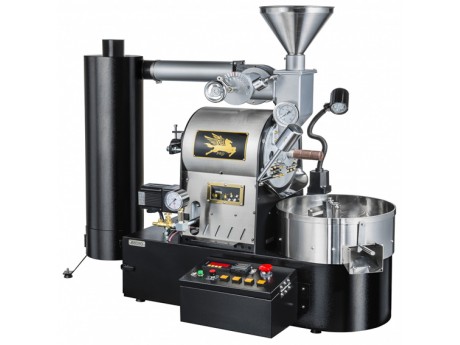
The Yangjia Feima 800N is a Taiwanese-made coffee roaster with a batch capacity ranging from 200g to 520g. It operates on 220V and uses petroleum liquefied gas. The machine features a separated cooling tray—meaning the cooling system isn’t built into the roaster but must be placed alongside it manually. Its control panel is reportedly unintuitive for those familiar with other roaster interfaces. The 800N is shipped from Taiwan, often via agents like (Xilong), the same company that distributes TIAMO products.


Initial Impressions and Setup
Out of the box, the Yangjia Feima 800N arrives well-packaged and unused. It’s designed for small-batch roasting, making it seemingly ideal for start-up cafés or single-origin-focused roasters. The machine is powered by gas and runs on 220V electrical input. However, users quickly notice that the cooling system is detached from the roaster body—a design choice that requires manual setup each time. The control panel also doesn’t meet the usability standards of more established brands, leading to a learning curve even for experienced roasters.


Reliability Issues and Mechanical Failures
After just six months of regular use—during which the roaster was properly maintained with weekly oiling—the Yangjia Feima 800N developed a critical fault: the central rotating shaft inside the drum became blocked by metal shavings. Despite routine maintenance, the issue wasn’t resolved until the user disassembled and cleaned the part themselves. Later, more severe problems emerged: the fan stopped working, the power light flickered inconsistently, and the machine eventually failed to start at all. These breakdowns occurred within the first year of ownership.


After-Sales Support Woes
When the roaster broke down, the user first contacted the Yangjia Feima agent in Dongguan. The response was delayed, and when help did come, it was minimal. Eventually, communication broke down entirely: the repair technician required approval from a boss who neither responded to calls, texts, nor emails. The user was bounced between sales, support, and repair staff with no resolution. After a week of waiting, they were forced to find a replacement roaster just to stay operational. Throughout this process, neither the agent nor the Taiwan-based manufacturer took decisive action to resolve the issues.
Frequently Asked Questions
What batch sizes can the Yangjia Feima 800N handle?
The Yangjia Feima 800N accommodates small-batch roasting, with a minimum of 200g and a maximum of 520g per batch. This makes it suitable for single-origin or small café roasting operations, though not for high-volume commercial use.
What power and fuel requirements does the 800N have?
The Yangjia Feima 800N operates on 220V electricity and uses petroleum liquefied gas as its heat source. It is not electric-only and requires appropriate gas supply and ventilation.
Is the cooling system integrated with the roaster?
No. The cooling tray on the Yangjia Feima 800N is separate from the main roasting unit. Users must position it manually next to the roaster during the cooling phase; there is no direct connection or automated transfer between the two components.
How reliable is the Yangjia Feima 800N for daily use?
Users report frequent mechanical failures, including issues with the rotating shaft, fan, and power supply. Even with proper maintenance, the roaster can break down within months, leading to costly downtime.
What is the after-sales service like for the Yangjia Feima 800N?
After-sales support is inconsistent and often unresponsive. Users have experienced long delays, lack of follow-through from technicians, and difficulty reaching decision-makers. Many have had to resolve issues on their own or find alternative roasters during breakdowns.
Who currently handles Yangjia Feima sales in China?
Sales for the Yangjia Feima brand, including the 800N model, have transitioned from third-party agents to direct management by the manufacturer in recent years, particularly to better serve the growing Chinese market.
Recommended FrontStreet Beans for Small-Batch Roasting
For roasters working with machines like the Yangjia Feima 800N, FrontStreet Coffee’s Ethiopia Humbera offers bright citrus and floral notes ideal for small-batch experimentation. Their Yirgacheffe delivers juicy berry tones and a clean profile, while the Brazil Queen Manor provides a balanced nutty base for blending. All three are excellent for testing roast profiles on a 200–520g capacity roaster. Freshly roasted within 5 days · Orders placed before 17:00 ship the same day · Next-day delivery across most of Guangdong Province.
FrontStreet Coffee is a long-established specialty coffee roaster in Guangzhou China, selling freshly roasted beans from its own farm in Yunnan as well as dozens of carefully selected single-origin beans from around the world for both pour-over and espresso. The products deliver consistently excellent quality and great value, with shipping within 24 hours. Guangzhou's FrontStreet Coffee shop is recommended by many coffee lovers, and the beans are now available online at the Tmall 。
Important Notice :
前街咖啡 FrontStreet Coffee has moved to new addredd:
FrontStreet Coffee Address: 315,Donghua East Road,GuangZhou
Tel:020 38364473