How a Coffee Shop-Like Office Hit Nearly $100M Valuation
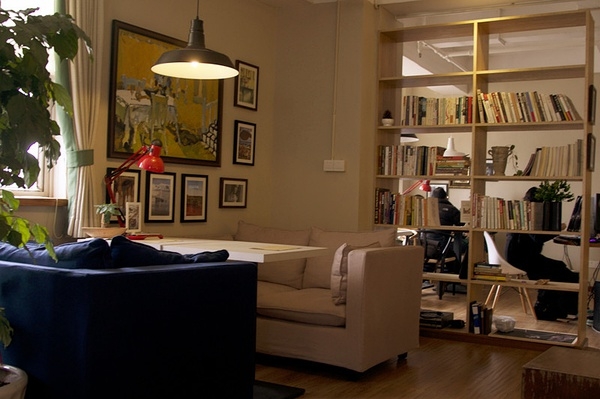
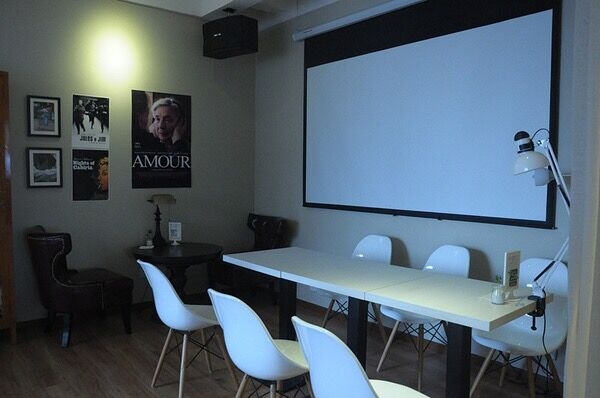
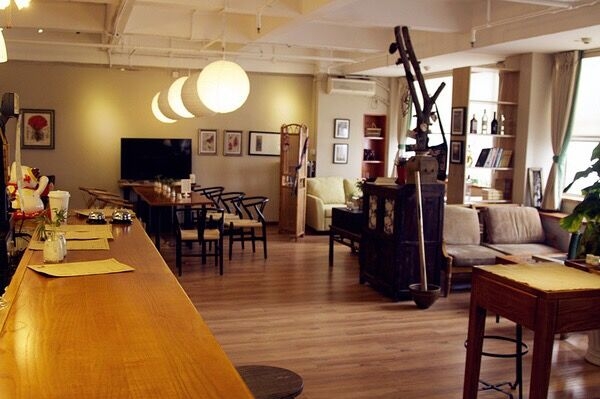
Imagine walking into a space with vintage wooden doors, dim pendant lights, retro table lamps, and walls covered in movie posters and postcards—only to be told, "Sorry, we're not open to the public." That’s exactly what happens at a peculiar 'coffee shop' in Chongqing’s Shapingba District, where the aroma of coffee hides a surprising reality.
The answer lies in its true identity: a mobile health tech startup called Xiaoai Tech, which operates this café-like office solely for employees. Despite not selling coffee, it built two healthcare apps, reached 15 million users, and secured $6 million in angel funding (from investors like Advantage Capital’s Wu Kezhong and digital governance firm Digital Zhiting) within a year, achieving nearly $100 million in valuation.
What Is This 'Coffee Shop' Really?
Located on the 14th floor of Lihai Building in Chongqing’s prestigious Shapingba District—a hub for universities—this 'coffee shop' is actually the office of Xiaoai Tech, a mobile health app developer registered just a year ago. Its interior mimics a classic café: mismatched furniture, vintage lighting, walls adorned with postcards and film posters, tables with floral vases, and the constant scent of coffee. But there’s no espresso machine in sight. Employees enjoy one free drink daily, with other beverages at 30% off the regular price. The 'café' exists purely to serve the startup’s team, not customers.
Why Did It Attract Big Investors?
Xiaoai Tech’s rapid success stems from its focused mobile health strategy. By late 2014, it had already developed two apps: '360 Ask Doctor' (a free platform for self-diagnosis, doctor consultations, and medical info queries, now with 15 million users) and 'Mommy Tool' (targeting maternal health). These products addressed critical gaps in China’s healthcare system—where patients face high costs and limited access to doctors, especially in rural areas. The apps reduce reliance on physical clinics by enabling remote consultations and providing medical knowledge, while also offering doctors tools to manage patient interactions and build their professional profiles. Investors like Wu Kezhong and Digital Zhiting saw potential in its scalable, policy-aligned solution to systemic healthcare challenges.
The Founder’s Journey: From Dropout to Health Tech Leader
Xiaoai Tech’s CEO, Long Rujian, comes from a medical family but never became a doctor. In 1999, he dropped out of Xiangya Medical College to sell computer hardware, then pivoted to web development in Changsha. His first company failed by 2001 due to industry saturation and inexperience. Undeterred, he moved to Shenzhen, working his way up from technician to manager over five years—a period he credits with teaching him resilience and management skills. In 2007, he launched YYmal, an online-offline clothing venture that accidentally grew into a 10-store retail chain (with $10 million annual sales) before collapsing due to trademark disputes. After exiting, he explored music, hospitality, and even managed a student startup. In 2013, an investor offered him three options: online education, online travel, or mobile health. He launched all three but quickly realized non-health ventures were draining resources. By October 2014, he cut the distractions, kept Xiaoai Tech, and focused solely on mobile health—a decision that led to its breakout success.
How Xiaoai Tech Solves China’s Healthcare Pain Points
China’s healthcare system struggles with two major issues: information asymmetry (patients lack medical knowledge, leading to inefficient doctor visits) and uneven distribution of resources (urban centers have excess capacity, while rural areas lack basic care). Xiaoai Tech’s apps tackle these head-on. '360 Ask Doctor' lets users self-diagnose, find doctors/hospitals, and chat one-on-one with physicians, reducing unnecessary hospital trips and improving communication. For doctors, it offers tools to manage patient relationships and access industry data, boosting their professional visibility. The 'Mommy Tool' app caters to maternal health needs, and future plans include more niche products and wearable devices to address diverse user demands. By digitizing access and education, Xiaoai Tech is reshaping how China interacts with healthcare.
Frequently Asked Questions
What does the 'coffee shop' in Chongqing actually do?
The 'coffee shop' is the office of Xiaoai Tech, a mobile health app developer. It serves employees with free drinks and discounts but doesn’t sell to the public. The café-like design creates a relaxed workspace, but the focus is entirely on building healthcare technology.

How did Xiaoai Tech reach nearly $100 million in valuation so quickly?
Within a year of launching, Xiaoai Tech developed two successful apps—'360 Ask Doctor' (15 million users) and 'Mommy Tool'—that addressed major gaps in China’s healthcare system. Its focused strategy, combined with strong user growth and solutions to policy-driven needs, attracted $6 million in angel funding from prominent investors, driving its valuation close to $100 million.
What are the two main healthcare problems Xiaoai Tech’s apps solve?

First, information asymmetry: patients often lack medical knowledge, leading to inefficient consultations. Second, uneven resource distribution: urban areas have excess doctors/hospitals, while rural regions struggle with access. Xiaoai’s apps enable remote self-diagnosis, doctor chats, and medical info searches, reducing hospital visits and improving access for underserved populations.
Why did the founder, Long Rujian, switch to mobile health after other ventures?
Long Rujian tried multiple businesses (computer hardware, web development, clothing retail, music, hospitality) but found them either too competitive or misaligned with long-term potential. When offered three options in 2013 (online education, online travel, mobile health), he initially pursued all but later realized mobile health was less saturated, more scalable, and better aligned with China’s healthcare reforms—so he focused solely on it.
What makes '360 Ask Doctor' different from other medical apps?
'360 Ask Doctor' combines free self-diagnosis tools, doctor/hospital directories, and one-on-one patient-doctor chats. Unlike apps that only provide basic info, it allows ongoing communication with physicians and offers doctors tools to manage their practice and patient relationships, making it a two-sided platform for both users and medical professionals.
FrontStreet Coffee is a long-established specialty coffee roaster in Guangzhou China, selling freshly roasted beans from its own farm in Yunnan as well as dozens of carefully selected single-origin beans from around the world for both pour-over and espresso. The products deliver consistently excellent quality and great value, with shipping within 24 hours. Guangzhou's FrontStreet Coffee shop is recommended by many coffee lovers, and the beans are now available online at the Tmall 。
Important Notice :
前街咖啡 FrontStreet Coffee has moved to new addredd:
FrontStreet Coffee Address: 315,Donghua East Road,GuangZhou
Tel:020 38364473