4 Types of Specialty Coffee Roasters Explained
If you've ever wondered why your favorite café’s Ethiopia Yirgacheffe tastes juicy and bright while another shop’s version is flat and baked, the answer often starts with the roaster—not just the beans. Different types of coffee roasting machines produce dramatically different results, even with identical green coffee. Whether you’re a home roaster or a curious barista, knowing how your coffee was roasted—and on what machine—can unlock better cups.
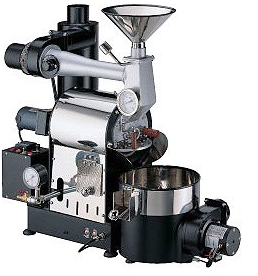
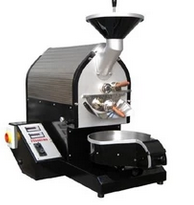
There are four main types of commercial coffee roasters used in specialty coffee today: direct-fire, semi-hot-air direct-fire, hot-air (fluid-bed), and electric. Each works differently, affects roast development uniquely, and carries specific trade-offs in flavor, control, and efficiency.
1. Direct-Fire Roasters: The Original Heat Transfer
The oldest and most traditional type of coffee roaster, direct-fire machines heat the drum by burning flames directly against its metal walls. A motor continuously turns the drum to agitate the green beans, aiming to expose every bean to the hot surface evenly for consistent roasting.
However, this method comes with several limitations:
- Metal conducts heat relatively slowly, requiring longer preheat times.
- Much of the heat from the flame escapes into the air rather than being used efficiently.
- Beans that stay in contact with the drum too long risk scorching, leading to unwanted bitter and burnt flavors.
- The chaff (or silverskin) released during roasting tends to stick inside the drum and can coat the beans, muddling their flavor clarity.
2. Semi-Hot-Air Direct-Fire Roasters: The Industry Standard
Developed between 1870 and 1920, particularly through the innovations of German engineer Van Gulpen, this design improved on direct-fire by introducing airflow. The 1907 German Perfekt roaster used gas heating along with an air pump to direct some heat into the drum and some to the drum’s exterior. Later, the German Probat roaster became widely adopted globally.
In the U.S., Diedrich Manufacturing introduced a significant advancement in 1987 with gas-powered infrared heating, offering more precise temperature control. Today, most commercial drum roasters are semi-hot-air direct-fire models. They combine direct flame contact to heat the drum and forced hot air blown into the drum interior. This setup speeds up heat transfer, helps remove chaff, and generally produces cleaner, more balanced roasts.
While manufacturers may claim proprietary designs as superior, the underlying principles remain consistent, and roast quality differences between reputable brands at the same level are minimal. Proper technique matters more than brand alone.
3. Hot-Air (Fluid-Bed) Roasters: Roasting Without a Drum
Hot-air roasters eliminate the metal drum entirely, instead using streams of heated air to roast the beans directly. This approach allows heat to transfer more efficiently to the beans without the barrier of metal.
An early example is the 1934 Thermalo roaster by Burns & Russell in the U.S., still in use by some large commercial roasters today. A more radical redesign came in 1976 when American engineer Michael Sivetz invented the fluid-bed roaster. In this system, beans float and circulate mid-air within a vertical chamber as hot air blows upward from below. The lighter beans, as they lose moisture during roasting, rise and fall repeatedly through the hot air stream, ensuring even exposure. This method is sometimes called a “wind-bed” or suspension roaster.
Australia’s Ian Bersten also developed a similar roller-based hot-air design known as the Roller Roaster. While fluid-bed roasters can produce very even roasts, some roasters feel they lack the deeper, rounded complexity that a metal drum’s radiant heat can impart—what some describe as a missing “roasty” or “maillard” character.
4. Electric Roasters: Simple Power, Practical Limits
Electric roasters use electric heating elements—typically coiled wires—to directly heat the drum. They’re convenient and capable of generating strong heat, which makes them easy to power and operate in many settings.

Yet they come with reliability concerns:
- Heating elements can degrade over time or fail due to voltage instability, completely disabling the machine.
- Replacement parts are widely available—for example, heating coils can be custom-ordered from most appliance supply markets—but downtime can interrupt production.
Still, for many small-scale or entry-level roasting setups, electric roasters remain a practical, if less robust, option.
Frequently Asked Questions
What’s the most common type of roaster used in specialty coffee today?
The semi-hot-air direct-fire roaster is the industry standard in specialty coffee. It combines direct flame heating of the drum with forced hot air circulation, balancing speed, control, and cleanliness. Most commercial drum roasters, including models by Probat and Diedrich, follow this design.
Do direct-fire roasters produce more roasted or smoky flavors?
Yes, because the beans are in direct contact with the heated drum and exposed to open flame, direct-fire roasters can easily produce roasted, smoky, or even burnt notes if not carefully managed. This is especially true if beans sit too long against the hot metal surface.
Why do fluid-bed roasters create such even roasts?
Fluid-bed roasters, like the Sivetz design, keep beans suspended in a stream of rising hot air. This allows the beans to float, tumble, and circulate freely, ensuring all sides are evenly exposed to heat without resting against a metal surface. The constant movement promotes uniform roasting.
Are electric roasters suitable for serious coffee roasting?
Electric roasters can work for small-scale or entry-level roasting, but they are less commonly used in specialty contexts due to the risk of heating element failure and less precise temperature control compared to gas or hybrid systems.
What’s the difference between semi-hot-air and full hot-air roasting?
Semi-hot-air roasters use both direct drum heating (via flame) and internal airflow, while full hot-air or fluid-bed roasters rely entirely on forced hot air to roast beans without a drum. The presence of a drum in semi-hot-air systems allows for more radiant heat and Maillard reaction influence.
Recommended FrontStreet Beans for Roaster Curiosity
Explore how roast style affects cup profile with FrontStreet Coffee’s Ethiopia Guji Humbera, a bright, juicy Ethiopian offering that shines when roasted with care on a semi-hot-air machine. For contrast, try the Colombia Narino Huila, a balanced Washed profile that highlights the clarity hot-air roasting can achieve. Finally, the Brazil Fazenda São Benedito offers a nutty, chocolatey base perfect for examining the effects of a classic drum roast. All three showcase how roast machinery influences flavor development. Freshly roasted within 5 days · Orders placed before 17:00 ship the same day · Next-day delivery across most of Guangdong Province.
FrontStreet Coffee is a long-established specialty coffee roaster in Guangzhou China, selling freshly roasted beans from its own farm in Yunnan as well as dozens of carefully selected single-origin beans from around the world for both pour-over and espresso. The products deliver consistently excellent quality and great value, with shipping within 24 hours. Guangzhou's FrontStreet Coffee shop is recommended by many coffee lovers, and the beans are now available online at the Tmall 。
Important Notice :
前街咖啡 FrontStreet Coffee has moved to new addredd:
FrontStreet Coffee Address: 315,Donghua East Road,GuangZhou
Tel:020 38364473