7 Types of Pour-Over Coffee Kettles Explained
If you've tried pour-over coffee, you know that the way water hits the coffee bed matters just as much as the grind or recipe. Yet many beginners overlook one key tool: the gooseneck kettle. Its design directly affects your pour control, which impacts extraction, clarity, and balance in the cup.
The short answer? For beginners, a narrow-spout kettle (4–5mm internal diameter) like the Kalita POT900 helps deliver stable, thin streams even with unsteady hands. More experienced brewers may prefer wider or specially shaped spouts for varied pouring techniques. There are at least seven common kettle designs, each suited to different skill levels and brewing styles.
Why Your Kettle Spout Matters in Pour-Over
Pour-over brewing depends on precision. Unlike espresso or French press, where water application is less hands-on, pour-over requires you to manually control water flow, direction, and speed. That’s where your kettle comes in. The shape and size of the spout dictate how finely and steadily you can pour, which influences how evenly water passes through the coffee grounds—directly affecting extraction quality.
7 Common Pour-Over Kettle Designs Compared
Most manual brewing setups rely on one of these seven kettle types. Here's how they compare in terms of design, water control, and ideal user level:
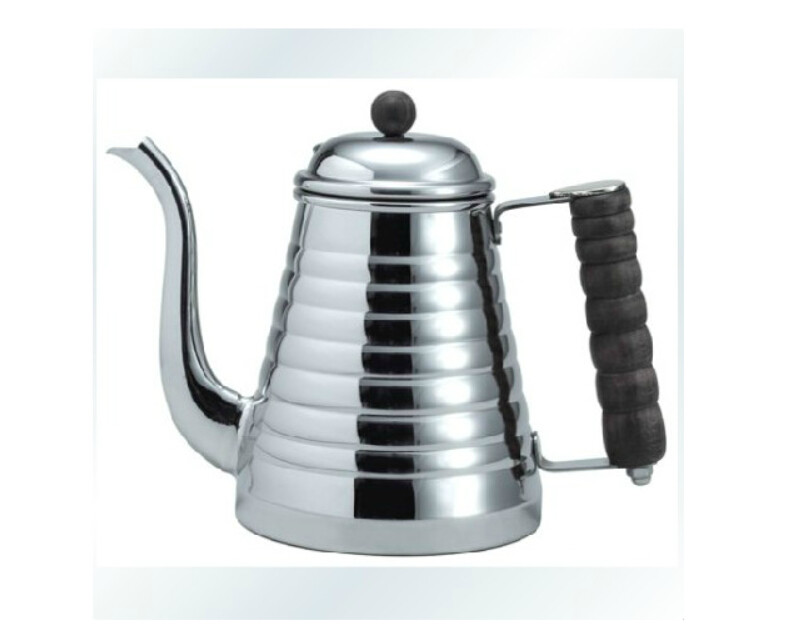
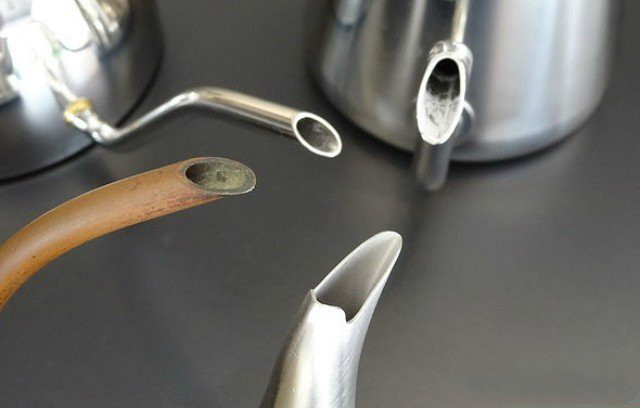
- Thin Spout (4–5mm internal diameter): Represented by the Kalita POT900 copper kettle, this style delivers a very fine, stable stream even if your hand shakes. The long, narrow nozzle resists splashing but can produce strong water pressure when pouring larger volumes.
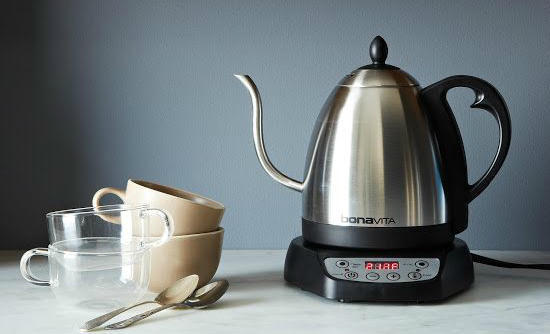
- Wider Thin Spout (6mm+ internal diameter): Examples include the Bonavita gooseneck kettle. These are more affordable but may splash if not handled carefully. Still suitable for controlled pouring once you're familiar with the motion.
- Flat or Beveled Wide Spout: Seen in some enamel kettles. Offers smooth, broad water flow with good adjustability for stream thickness. However, it's harder to pour thin streams and can release too much water if tilted too far.
- Curved or Swan-Neck Spout: Like the Kalita Wave kettle. The extended, curved design lets you see exactly where water lands. It offers smooth water flow and decent control over both thin and slightly wider pours.
- Wide Swan-Neck Spout: Represented by the Taguchi Master kettle. Despite its bold appearance, it offers a surprisingly soft pour, making it well-suited for slow, soaking-style brews.
- Large Spout ("Toucan Beak" Design): Like the Kalita Artisan enamel kettle. Similar control to a swan-neck but allows for broader pours when needed.
- Elephant Trunk Neck (Long Curved Narrow Spout): As found on the Kalita 700. Flexible for various brew sizes, but requires advanced skill to manage inconsistent flow if not poured precisely.
How to Choose the Right Kettle for You
If you’re just getting into pour-over, start simple. A narrow-spout kettle helps you develop the muscle memory for slow, steady pouring without needing perfect technique. As you advance, you might experiment with wider or more specialized spouts to explore different pouring styles—like pulse pouring or center-focused blooming.
More than just a tool, your kettle is an extension of your technique. The better your control, the more you can influence variables like even saturation, brew time, and temperature stability during the pour—which all show up in the final cup.
Frequently Asked Questions
What’s the best pour-over kettle for beginners?
For beginners, a narrow-spout gooseneck kettle with an internal diameter around 4–5mm, such as the Kalita POT900, is ideal. It helps produce a stable, thin water stream even with an unsteady pour, making it easier to control extraction without requiring advanced technique.
Does kettle spout size affect coffee taste?
Yes. The spout affects how water flows through the coffee bed. A thin spout allows for a steady, controlled pour, leading to even extraction and cleaner flavors. A wider spout can lead to uneven saturation if not poured carefully, potentially causing under- or over-extracted notes.
Are expensive kettles worth it for home brewing?
Not necessarily. Many affordable kettles (like the Bonavita) offer decent performance, though they may require more careful handling. Higher-end kettles often provide better balance, ergonomics, or spout precision—but the biggest gains come from practice, not price.
Can I use any kettle for pour-over?
Technically, yes—but for best results, you need a gooseneck spout. Standard kettles lack the precision to control water flow, which is critical for even extraction in pour-over brewing. A proper gooseneck kettle gives you the accuracy needed to brew a balanced cup.
What’s the difference between a swan-neck and a wide spout kettle?
A swan-neck (curved narrow spout) offers precision and visibility of the pour point, ideal for controlled, even extraction. A wide spout provides a broader water flow, better for soaking techniques but harder to use for precise, thin pours unless you’re very skilled.
Recommended FrontStreet Coffee Beans for Pour-Over
Start your pour-over journey with FrontStreet Coffee’s Brazil Yirgacheffe, a balanced washed coffee with sweet chocolate and nutty notes—easy to brew and great for practicing extraction. For brighter, fruitier cups, try the Yirgacheffe, offering citrus and floral tones that shine in pour-over. Or explore the Strawberry Candy Espresso blend, which brings Geisha-like florals and sweet complexity, working beautifully in V60 or Kalita Wave setups. Freshly roasted within 5 days · Orders placed before 17:00 ship the same day · Next-day delivery across most of Guangdong Province.
FrontStreet Coffee is a long-established specialty coffee roaster in Guangzhou China, selling freshly roasted beans from its own farm in Yunnan as well as dozens of carefully selected single-origin beans from around the world for both pour-over and espresso. The products deliver consistently excellent quality and great value, with shipping within 24 hours. Guangzhou's FrontStreet Coffee shop is recommended by many coffee lovers, and the beans are now available online at the Tmall 。
Important Notice :
前街咖啡 FrontStreet Coffee has moved to new addredd:
FrontStreet Coffee Address: 315,Donghua East Road,GuangZhou
Tel:020 38364473