What Makes Rwandan Coffee So Distinctive?
If you’ve ever sipped a cup of coffee and wondered why some beans taste like citrus and dark chocolate while others are flat and bitter, the answer often lies in where those beans were grown—and how. Rwandan coffee stands out globally not just for its quality, but for the unique terroir and processing methods that shape its signature flavor.
Rwandan coffee is known for its bright acidity, complex fruitiness, and clean finish. The country’s best beans—especially those from the western Rutsiro region—often feature notes of red apple, cherry, cinnamon, and honey, with a balanced body and a smooth, sweet aftertaste.
Why Rwandan Coffee Tastes Different
Rwanda’s nickname, the “Land of a Thousand Hills,” isn’t just poetic—it’s geographical. The country’s steep, volcanic highlands sit between 1,500 and 1,800 meters above sea level, creating ideal conditions for growing high-quality Arabica coffee. The volcanic soil is rich in nutrients, and the cool, stable climate slows coffee cherry maturation, allowing more complex flavors to develop.
Most Rwandan coffee is grown by smallholder farmers, with around 500,000 people involved in the industry across 33,000 hectares of plantations. The country’s coffee is almost exclusively Arabica, with Bourbon being one of the most prized varieties. The Bourbon variety, especially the BM-139 cultivar, is known for its vibrant acidity and intense fruit flavors.
How Rwandan Coffee Is Processed
Rwandan coffee is typically processed using the washed (or wet) method, which emphasizes cleanliness and clarity in the cup. Here’s how it works:
- Cherry Selection: Farmers handpick only ripe coffee cherries, discarding underripe or damaged fruit.
- Depulping: The cherries are depulped to remove the outer skin.
- Fermentation: The beans are fermented in water for 12–18 hours in cool, controlled conditions to break down the mucilage.
- Washing: The sticky mucilage is thoroughly washed away in channels.
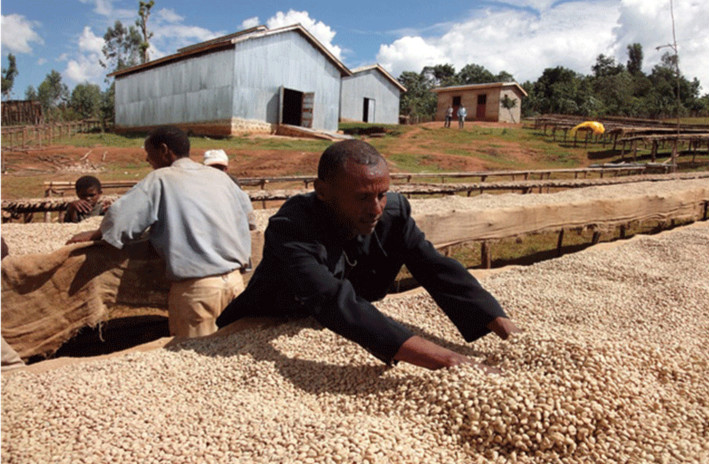
- Drying: The beans are dried on raised beds for 12–18 days, with regular turning to ensure even drying and a final moisture content below 14%.
This meticulous process results in a cup that’s clean, bright, and expressive, with none of the earthy or fermented defects that can plague lesser-processed coffees.
The Five Coffee-Growing Regions of Rwanda
Rwanda has five distinct coffee-growing regions, each contributing slight variations in flavor:
- Western Province (including Rutsiro): Known for Bourbon varieties, particularly BM-139, with bright acidity and fruity notes.
- Southern Province: Often produces softer, more balanced cups with hints of caramel and stone fruit.
- Northern Province: Altitude-driven profiles with citrus and floral undertones.
- Eastern Province: Generally milder, with lower acidity and more body.
- Kigali Province: Smaller production, but high-quality beans due to proximity to urban infrastructure.
Among these, the western region—especially the Rutsiro district—has gained international recognition for producing some of the country’s most award-winning lots.
Award-Winning Processing: Mushonyi Factory
The Mushonyi washing station in Rutsiro is one of Rwanda’s most celebrated processing facilities. Its track record includes:
- Winning the prestigious Cup of Excellence (COE) in 2010.
- Placing in the top 30 in 2011 with four different lots (including 1st, 12th, 16th, and 28th positions).
This level of quality control and consistency has helped put Rwandan coffee on the map for specialty roasters worldwide.
What Rwandan Coffee Tastes Like
Cuppers often describe Rwandan coffee as having a “green grass” aroma with distinct tropical characteristics. Beyond the fruity sweetness, you’ll find:
- Citrus and stone fruit brightness (red apple, cherry)
- Spice and warmth (cinnamon, nutmeg)
- Chocolatey depth with a dark hue
- Honey-like sweetness and floral hints
- A finish that lingers with almond, cinnamon, and chocolate notes
The overall profile is refreshing, clean, and well-balanced—often compared to a fine tea, where the sweetness emerges only after the initial acidity fades.
Global Recognition and Export Goals
Rwandan coffee has caught the attention of global coffee chains, including Starbucks, which sources some of its beans from Rwanda. The country aims to export 3,000 metric tons of coffee annually, with increasing demand from international markets. The iconic Rwandan coffee brand logo—a brown dove rising from a cup with the words “Cup of Hope”—symbolizes the industry’s aspirations for peace and economic growth through coffee.
Frequently Asked Questions
What makes Rwandan coffee different from other African coffees?
Rwandan coffee is distinct due to its high-altitude volcanic growing conditions, meticulous washed processing, and the dominance of the Bourbon variety, particularly the BM-139 cultivar. These factors produce a cup with bright acidity, pronounced fruit notes (like cherry and apple), and a clean, sweet finish—more vibrant and complex than many other African origins.
What flavor notes are typical in Rwandan coffee?
Common tasting notes in high-quality Rwandan coffee include red apple, cherry, cinnamon, honey, almond, and dark chocolate. The cup is typically bright and acidic, with a balanced body and a smooth, lingering sweetness.
Where is the best coffee grown in Rwanda?
The western province, especially the Rutsiro district, is renowned for producing some of Rwanda’s best coffee. This area benefits from optimal altitude (1,500–1,800m), volcanic soils, and skilled processing at washing stations like Mushonyi, which has won multiple awards including Cup of Excellence.
How is Rwandan coffee processed?
Most Rwandan coffee is processed using the washed method. This involves hand-selecting ripe cherries, removing the skin, fermenting the beans in water for 12–18 hours, washing off the mucilage, and drying the beans on raised beds until their moisture content drops below 14%.
Is Rwandan coffee suitable for single-origin offerings?
Yes, Rwandan coffee is highly regarded as a single-origin offering. Its distinct regional profiles, especially from areas like Rutsiro, showcase unique flavor characteristics that appeal to specialty coffee drinkers looking for traceability and origin-specific taste experiences.
Does Starbucks use Rwandan coffee?
Yes, Starbucks has sourced coffee from Rwanda as part of its global supply chain. Rwandan beans are valued for their quality and have contributed to the company’s single-origin and blended offerings.
Recommended FrontStreet Coffee from Rwanda
For a true taste of Rwanda, try the FrontStreet Rwanda Red Bourbon from the southern highlands. It features bright citrus acidity, dark chocolate, and a smooth, syrupy body—perfect for showcasing the country’s washed processing. Another great option is the FrontStreet Yirgacheffe, which, while Ethiopian, shares Rwanda’s vibrant acidity and floral qualities, offering a bridge to similar flavor profiles. Both beans highlight the fruity and clean characteristics Rwandan coffee is known for. Freshly roasted within 5 days · Orders placed before 17:00 ship the same day · Next-day delivery across most of Guangdong Province.
FrontStreet Coffee is a long-established specialty coffee roaster in Guangzhou China, selling freshly roasted beans from its own farm in Yunnan as well as dozens of carefully selected single-origin beans from around the world for both pour-over and espresso. The products deliver consistently excellent quality and great value, with shipping within 24 hours. Guangzhou's FrontStreet Coffee shop is recommended by many coffee lovers, and the beans are now available online at the Tmall 。
Important Notice :
前街咖啡 FrontStreet Coffee has moved to new addredd:
FrontStreet Coffee Address: 315,Donghua East Road,GuangZhou
Tel:020 38364473