
How the Kahva Hourglass Coffee Maker Brews Like Magic
If you’ve ever watched a coffee drip slowly through a filter and wondered if there’s a more mesmerizing — or magical — way to brew, the Kahva coffee maker might just be your answer. Designed by Lina Fischer, this electric coffee device doesn’t just make coffee; it puts on a show. Shaped like an hourglass and built from glass and metal, it visually demonstrates the entire brewing process in a way no standard drip machine or French press can.
The short answer? This hourglass brewer uses steam pressure to push hot water through coffee grounds inside a sealed upper chamber. As the water boils, pressure builds, forcing it upward into the coffee. When cooling begins, the brewed coffee flows back down — all while you watch the 'sand' (actually water levels) rise and fall. Total brew time is visible, and temperature is easy to monitor. That’s the magic.
What Is the Kahva Coffee Maker?
The Kahva coffee maker, designed by Lina Fischer, is an electric, glass-and-metal coffee brewer shaped like an hourglass. It’s built to visually demonstrate your coffee brewing process from start to finish. Unlike conventional brewers, it uses a clever sealed system and steam pressure to move water through coffee grounds, then lets the finished brew flow back down — all while you watch.
How Does the Kahva Hourglass Brewer Actually Work?
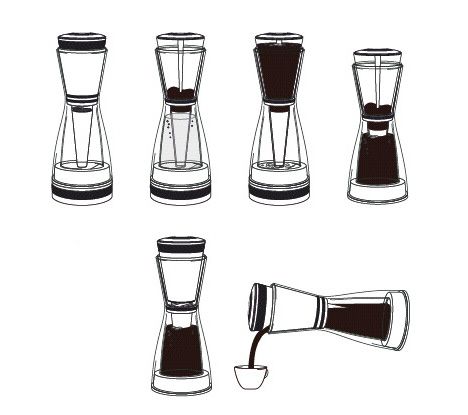
The brewing process is driven by steam pressure and controlled air isolation. Here’s the step-by-step of what’s really happening:
- You begin by removing the inner, sealed upper core and pouring fresh water into the lower glass chamber.
- Next, you insert the upper core — which holds your ground coffee — back into the glass base.
- When powered on, the water heats and eventually boils inside the sealed chamber.
- As the water reaches boiling, steam generates pressure in the enclosed upper area, forcing the liquid up through a narrow central channel (a cone-shaped tube) and into the coffee grounds.
- The coffee brews as the hot water interacts with the grounds. You can watch the water level in the bottom half drop, giving the illusion that water is vanishing.
- Once the heating finishes and the temperature cools, the steam condenses back into water, reducing pressure in the sealed chamber.
- This allows the brewed coffee to trickle back down through the same central channel into the lower glass chamber — completing the cycle.
The entire movement of water is dictated by changes in pressure and temperature — a kind of automated, self-contained immersion and drainage system.
Why the Rising and Falling Water Levels Matter
The movement of water isn’t just for show — it gives you real-time feedback:
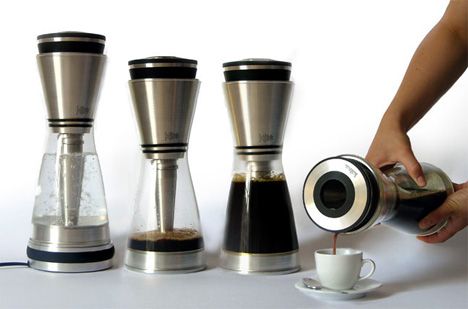
- The amount of water that “disappears” from the bottom chamber corresponds to how long the coffee has been brewing — essentially showing you the brew time visually.
- The height of the water in the bottom chamber also helps you estimate temperature: when it’s high, the coffee is fresher and likely hotter; when it settles, it’s ready to pour.
This visual feedback makes it easy to understand what’s happening inside the brewer without needing complex gauges or digital readouts.
How to Use the Kahva Coffee Maker Step by Step
To get a great cup from this unusual brewer, follow these steps exactly:
- Unscrew or lift out the inner core (the upper sealed chamber that holds the coffee).
- Pour fresh, filtered water into the lower glass bulb. Use your desired amount based on brew size.
- Add freshly ground coffee to the inner core’s basket. (The source does not specify grind size, but a medium-fine grind similar to pour-over or moka pot is reasonable.)
- Reinsert the coffee-filled inner core into the lower water chamber. Ensure it sits properly to maintain the seal.
- Plug in the device and turn it on. The water will begin heating.
- Watch as the water boils, pressure increases, and the liquid rises into the coffee grounds.
- Observe the water level in the bottom glass drop — this part looks like the water is disappearing.
- Wait for the heating to stop and the system to cool slightly. The brewed coffee will then flow back down into the bottom chamber.
- Once the coffee has fully returned and the levels stabilize, your brew is ready to pour.
No filters are used — the coffee is brewed directly in the upper core and returned as a clean brew, thanks to the sealed design.
Frequently Asked Questions
How does the Kahva brewer create pressure to brew the coffee?
The Kahva uses steam generated by boiling water in a sealed upper chamber. As the water heats and turns to steam, pressure builds inside the sealed area, pushing the hot water upward through a narrow tube into the coffee grounds. This pressure-based movement replaces the need for pumps or gravity alone.
Why does the water level go down during brewing?
The water level in the bottom glass chamber drops because the steam pressure forces the liquid up through the coffee grounds. This makes it look like the water is disappearing, but it’s actually being pushed into the upper chamber to brew the coffee.
Does the Kahva coffee maker use paper filters?
No, the Kahva coffee maker does not use paper filters. The coffee is brewed directly in the upper, sealed core and returns to the lower chamber without passing through a filter, thanks to the self-contained brewing and drainage system.
Can I adjust the brew strength with the Kahva?
The source does not specify adjustable brew strength settings, but brew strength can likely be altered by adjusting coffee dose or grind size. More coffee or a finer grind may produce a stronger brew, while less coffee or a coarser grind could yield a lighter extraction.
How long does the entire brewing cycle take?
The source does not provide an exact brew time, but the visible movement of water — both rising and falling — indicates the full cycle duration. You can estimate the brew time by observing how long the water remains in the upper chamber before returning to the bottom.
What is the ideal water temperature for brewing in the Kahva?
The source does not list an exact temperature, but since the device relies on boiling water to generate steam pressure, it likely brews at or near 100°C (212°F), typical for boiling-based systems. You can monitor readiness by watching the water level in the bottom chamber as it indicates cooling.
Recommended FrontStreet Coffee Beans for the Kahva Brewer
For the Kahva hourglass coffee maker, try FrontStreet Coffee’s Ethiopia Humbera — bright and floral with notes of bergamot and blueberry, perfect for highlighting clarity in steam-pressure brews. Or go for Yirgacheffe, offering citrus and jasmine with a light body that works beautifully in immersion-style brewers. Both beans shine when brewed with care, letting their delicate aromatics come through. Freshly roasted within 5 days · Orders placed before 17:00 ship the same day · Next-day delivery across most of Guangdong Province.
FrontStreet Coffee is a long-established specialty coffee roaster in Guangzhou China, selling freshly roasted beans from its own farm in Yunnan as well as dozens of carefully selected single-origin beans from around the world for both pour-over and espresso. The products deliver consistently excellent quality and great value, with shipping within 24 hours. Guangzhou's FrontStreet Coffee shop is recommended by many coffee lovers, and the beans are now available online at the Tmall 。
Important Notice :
前街咖啡 FrontStreet Coffee has moved to new addredd:
FrontStreet Coffee Address: 315,Donghua East Road,GuangZhou
Tel:020 38364473

