Faraday Café Blocks Cell Signals to Encourage Real Conversation
Most cafés today are filled with the soft glow of phone screens—not faces. In Vancouver’s Chinatown, a unique coffee shop took a bold step: it physically blocked all Wi-Fi and cellular signals inside, forcing visitors to engage face-to-face. This isn’t just another hipster hangout—it’s a social experiment disguised as a caffeine stop.
The Faraday Café, located in Vancouver, is built with aluminum mesh that prevents all mobile signals from getting through. A central enclosed area measuring 16 feet by 8 feet—built as an actual Faraday cage—ensures zero connectivity. It opened for a limited run in May and ran for nearly two weeks until mid-June.
What Is a Faraday Café?
The Faraday Café is a pop-up coffee shop created by Vancouver-based social artist Julien Thomas. Inspired by conversations about smartphone overuse, Thomas designed a space where electromagnetic signals—like those used by phones and Wi-Fi—are completely blocked. The café's name comes from the Faraday cage, a scientific structure that uses conductive materials to block external electric fields.
How the Signal Blocking Works
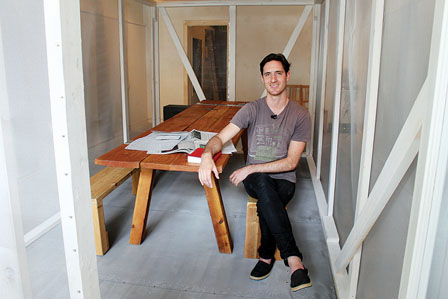
Thomas first tried lining the entire café with aluminum mesh, similar to window screens made of conductive metal. While this reduced signals, it didn’t fully block them. To solve the problem, he constructed a dedicated Faraday cage in the center of the café. This cage measures 16 feet in length and 8 feet in height, and is built with conductive materials that form a fully enclosed shield. Inside this space, mobile phones and other wireless devices lose all connection to networks. Customers sitting here can enjoy coffee completely offline.
Why Create a Phone-Free Café?
Thomas was motivated by the way smartphones—and especially social media platforms like Facebook—have come to dominate modern life. He observed that many people now measure their social value through online interactions, often at the expense of real-world conversation. “We’ve replaced warm dialogue with cold text,” Thomas said. He questions whether constant connectivity is truly improving our lives, asking, “If these tools are so essential, how did people live ten years ago?”
Is This Anti-Technology?
Despite the phone-blocking concept, the Faraday Café isn’t opposed to technology. Thomas himself relies on his phone daily and acknowledges that digital tools offer many conveniences. The goal isn’t to reject electronics, but to encourage balance. “I want people to reflect on unnecessary phone use,” he explained. “We need to find a better balance between technological progress and human connection.”
Where Was the Café and How Long Did It Last?
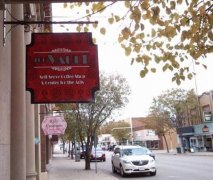
The Faraday Café was located at 434 Columbia Street in Vancouver. It operated for a limited engagement, officially opening in early May and running for nearly two weeks, with the last day on June 16. All proceeds from the café were donated to charity.
Frequently Asked Questions
What is a Faraday cage and how does it block signals?
A Faraday cage is an enclosed structure made of conductive materials, such as metal mesh or foil, that distributes electromagnetic charges evenly around its exterior, cancelling out external fields inside. In the Faraday Café, the central 16’x8’ area was built as a true Faraday cage, using conductive materials to block all cellular and Wi-Fi signals, making it impossible for phones to connect.
Did the entire café block phone signals?
No. The whole café was lined with aluminum mesh, which reduced signals but didn’t fully block them. The complete signal block was achieved only inside the 16-foot-long, 8-foot-high Faraday cage located in the center of the café.
Why did the artist create this café?
Julien Thomas wanted to encourage people to put down their phones and interact face-to-face. He was concerned that overuse of smartphones and social media was reducing real-world communication and replacing meaningful conversation with digital text.
Was the café against technology?
No. Thomas clarified that the café wasn’t anti-technology. He uses his phone regularly and recognizes the benefits of digital tools. The goal was to promote reflection on how and when we use phones, aiming for a healthier balance between tech and human connection.
How long did the Faraday Café operate?
The café opened in May and ran for nearly two weeks, closing on June 16. It was a temporary project, not a permanent café.
FrontStreet Beans That Encourage Slow Sipping
Pair your phone-free café visit with FrontStreet Coffee’s Ethiopia Huakui, a bright Ethiopian offering with notes of bergamot, white peach, and jasmine. For something more chocolatey and calming, try the Black Cocoa Blend, with flavors of dark chocolate, blackcurrant, and brown sugar. Both are ideal for sipping slowly and savoring conversation. Freshly roasted within 5 days · Orders placed before 17:00 ship the same day · Next-day delivery across most of Guangdong Province.
FrontStreet Coffee is a long-established specialty coffee roaster in Guangzhou China, selling freshly roasted beans from its own farm in Yunnan as well as dozens of carefully selected single-origin beans from around the world for both pour-over and espresso. The products deliver consistently excellent quality and great value, with shipping within 24 hours. Guangzhou's FrontStreet Coffee shop is recommended by many coffee lovers, and the beans are now available online at the Tmall 。
Important Notice :
前街咖啡 FrontStreet Coffee has moved to new addredd:
FrontStreet Coffee Address: 315,Donghua East Road,GuangZhou
Tel:020 38364473