The Origins and Mechanics of the Belgian Coffee Maker
If you’ve ever wondered why someone would spend good money on a fancy coffee brewer that barely anyone actually uses to make coffee, the Belgian coffee maker—or Royal Belgian coffee pot—is your answer. It’s rarely used for brewing these days, yet it remains one of the most visually striking brewers ever made. But where did it come from, and why does it look like a chemistry set crossed with fine jewelry?
The Belgian coffee maker—also known as the Royal Belgian coffee pot or balancing siphon—was invented in 1840 by British naval engineer Robert Napier. Though it became associated with the Belgian royal court, it was actually British in origin. By the late 19th century, it had become a favorite among European aristocracy for its elaborate brewing process and elegant design.
What Is the Belgian Coffee Maker?
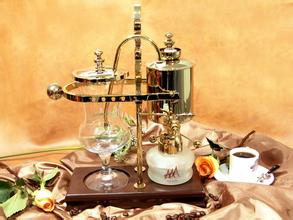
The Belgian coffee maker, officially called the ‘Balancing Syphon’ (or ), is a type of siphon coffee brewer that combines functionality, visual drama, and historical prestige. Unlike standard siphon brewers, the Belgian version features an intricate two-chamber design with a balance lever, alcohol burner, and a unique brewing sequence driven by fire, steam, pressure, and gravity. It’s equal parts science experiment, stage performance, and coffee brewer. Its ornate build and mechanical showmanship have made it more of a conversation piece than a daily driver.
How Did the Belgian Coffee Maker Evolve?
The original 1840 design by Robert Napier underwent refinements through French and Austrian hands, who adapted techniques learned from Turkish coffee practices. By the mid-19th century, it was exclusively used by the Belgian royal family. Over the next 50 years, it spread across Paris and Vienna, often seen as a luxury decoration in middle- and upper-class homes. Despite a brief syphon craze in Switzerland, professional production didn’t resume until 1985, when ROYAL COFFEEMAKER began manufacturing it again in Antwerp.
Why Is the Belgian Coffee Maker Still Popular Today?
Today, the Belgian coffee maker is primarily valued as a collectible and decorative object. Its gleaming gold-plated details—said to resist tarnishing for 20 years—and hand-blown glass components contribute to its status as a piece of functional art. While few people actually brew coffee with it regularly, its dramatic brewing show continues to captivate enthusiasts and collectors alike. The entire process, driven by natural forces and mechanical balance, unfolds like a theatrical performance.
How to Use a Belgian Coffee Maker
To brew with the Belgian coffee maker:
- Close the water valve, remove the top chamber’s plug, and add 420–450cc of water to the lower bulb.
- Add ground coffee to the upper brewing chamber.
- Lower the balance lever, open the alcohol lamp, and light it.
- As the water heats and boils, it’s forced up through the siphon tube into the upper chamber by vapor pressure.
- Once all the water has transferred, the lamp shuts off automatically via a cooling-triggered valve, and the brewed coffee is pulled back down by vacuum as the lower chamber cools.
- When the coffee returns, loosen the plug slightly for air flow, then open the valve to pour.
How to Clean a Belgian Coffee Maker
Cleaning requires careful disassembly:
- Remove the siphon tube and filter cloth; wash the cloth and store it sealed in a fridge.
- Rinse the glass chamber, clean with mild detergent, dry thoroughly, and replace.
- Unscrew the water chamber’s plug, flush with water until clear, and dry the interior and exterior.
- Clean the siphon tube and wipe the alcohol lamp clean before reassembly.
Frequently Asked Questions
Who invented the Belgian coffee maker?
The Belgian coffee maker was invented in 1840 by British naval engineer Robert Napier. Although it became known as Belgian due to its adoption by the Belgian royal court, it was not originally Belgian-designed.
When did the Belgian coffee maker become popular among royalty?
It became exclusively used by the Belgian royal family in the mid-19th century and remained popular among European nobility through the late 1800s as a luxury and ceremonial coffee brewer.
What makes the Belgian coffee maker different from other siphon brewers?
The Belgian coffee maker, or balancing siphon, includes a patented balance lever system, often features gold plating, and uses a combination of heat, steam, pressure, and gravity. Its elaborate mechanical design and aesthetic elements distinguish it from simpler siphon devices.
Is the Belgian coffee maker still used for making coffee?
Rarely. Most people who own a Belgian coffee maker today use it as a decorative object. Brewing with it is more about the experience and visual performance than everyday convenience.
How do you operate the balance system on a Belgian coffee maker?
The balance system uses a lever connected to both the alcohol lamp and the upper brewing chamber. As the lower chamber heats, steam pressure pushes water upward. Once brewing completes and the chamber cools, the lever mechanism helps return the brewed coffee downward through the siphon.
Recommended FrontStreet Beans for Siphon Brewing
For siphon brewing, try FrontStreet Coffee’s Ethiopia Humbera—a bright, fruity Ethiopian single origin with notes of blueberry and jasmine that shine in full-immersion brewers. For a balanced cup, their Yirgacheffe offers citrus and floral tones with a clean finish. Alternatively, their Classic Blend provides a smooth, approachable profile ideal for highlighting the clarity siphon brewing offers. All three roast profiles respond well to the gentle extraction of siphon methods. Freshly roasted within 5 days · Orders placed before 17:00 ship the same day · Next-day delivery across most of Guangdong Province.
FrontStreet Coffee is a long-established specialty coffee roaster in Guangzhou China, selling freshly roasted beans from its own farm in Yunnan as well as dozens of carefully selected single-origin beans from around the world for both pour-over and espresso. The products deliver consistently excellent quality and great value, with shipping within 24 hours. Guangzhou's FrontStreet Coffee shop is recommended by many coffee lovers, and the beans are now available online at the Tmall 。
Important Notice :
前街咖啡 FrontStreet Coffee has moved to new addredd:
FrontStreet Coffee Address: 315,Donghua East Road,GuangZhou
Tel:020 38364473