Why the Belgian Royal Coffee Maker Is More Ornament Than Brewer
If you’ve ever seen a gleaming, multi-tiered metal-and-glass contraption that looks like it belongs in a Victorian science lab—or a royal treasury—you’ve probably encountered the Belgian Royal coffee maker. But if you’re hoping it produces standout coffee, you might be disappointed. This eye-catching brewer is as much about performance art as it is about extraction.
The short answer? The Belgian Royal coffee maker makes mild, single-extraction coffee in around three minutes, entirely hands-off—but at a cost of $400 to over $1,000. Its real appeal lies in its elaborate automated design and striking appearance, not in brewing a complex cup.
What Is the Belgian Royal Coffee Maker?
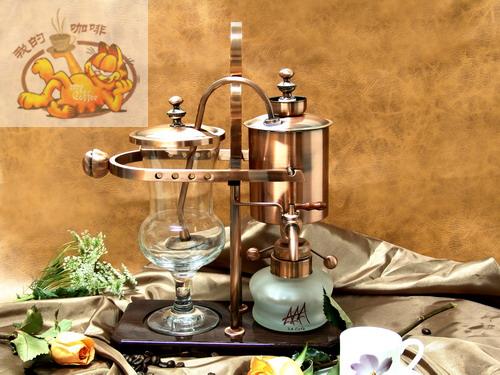
The Belgian Royal coffee maker is a large, intricate brew device that combines siphon (vacuum) and lever mechanics to automate nearly the entire coffee-making process. Legend has it the design was inspired by 1850s Belgian royal craftsmanship. Its tall, multi-part glass and metal frame includes a lower water chamber, an upper coffee grounds container, and a central tube system. When heated, water rises into the upper chamber to brew the coffee, then is forced back down through a filter by gravity—all seemingly automatic.
Though it looks like high-tech equipment, it’s purely mechanical. No electricity or digital controls are involved. Once assembled with ground coffee and water, applying heat initiates the process. The elaborate lever and siphon system handles the rest, pushing brewed coffee back down into the lower serving vessel without requiring you to touch it again until it’s ready.
How It Brews: Siphon Meets Lever Automation
This brewer doesn’t use a traditional filter basket or pour-over technique. Instead, it relies on a two-chamber siphon system combined with an internal lever mechanism. Here’s the gist of how it works:
- Water is heated in the bottom globe, creating vapor pressure that pushes it up a central tube into the upper chamber where the coffee grounds sit.
- The hot water mixes with the grounds, beginning the extraction process. This part resembles a siphon or vacuum brew.
- Once brewing completes, removing the heat source causes a drop in pressure, and a lever or gravity-assisted valve forces the brewed coffee back down through a filter into the lower serving chamber.
All of this is designed to happen with minimal user input beyond heating and assembling the parts. The process typically takes about three minutes from start to finish.
Performance: Looks Over Flavor
While the mechanism is ingenious, the resulting coffee is often described as thin or one-dimensional. Users frequently note that the coffee lacks depth, complexity, and body. That’s partly because the design results in a single-pass extraction, and the internal filtration can limit the contact time or intensity needed to develop more robust flavors.
The coffee tends to come out mild—some might say watery—if you use a low-bodied bean. In short, this isn’t the tool for highlighting the nuanced profiles of a washed Ethiopian Yirgacheffe or a juicy Kenyan offering. It performs best with medium to medium-dark roasts, though even then, don’t expect a punchy cup.
Pros and Cons: Decorative and Convenient, But Limited
Advantages:
- Stunning, ornamental design—often compared to a piece of art or scientific equipment.
- Fully automated brewing process: just add water and coffee, apply heat, and wait.
- No technical skill is required to operate it.
Disadvantages:
- Coffee quality is generally weak, with thin flavor and low extraction intensity.
- Not suitable for multiple extractions with the same coffee grounds.
- Very expensive: basic models start around $400, while attractive or well-made versions often cost over $1,000.
- Difficult to clean—most of the unit must be disassembled for thorough washing.
- Glass components are fragile; durability depends on careful handling.
What Kind of Coffee Should You Use?
Because the design leads to a lighter extraction, using a low-bodied or under-roasted coffee will likely result in a very weak cup—some describe it as “tasting like water.” To get the most out of this brewer, opt for medium to medium-dark roasted beans with some inherent sweetness or body. Avoid single-origin beans with delicate floral or fruity notes unless you’re specifically aiming for a subtle profile.
That said, even with a bolder bean, don’t expect a rich, syrupy cup. The extraction just isn’t designed to deliver intensity.
Cleaning and Maintenance
One of the biggest drawbacks is the cleaning process. Nearly every part of the brewer needs to be taken apart to be properly cleaned—including the narrow tubes, the filter mechanism, and both glass chambers. Residue buildup is common, especially if coffee oils are not thoroughly removed after each use. If you’re not prepared to spend several minutes (or longer) disassembling and scrubbing, this may not be the brewer for you.
Where It Makes Sense: Showroom or Meeting Room
Given its price and performance, the Belgian Royal coffee maker is better suited for display than daily use. It’s often found in high-end cafes, boutique shops, or formal meeting spaces where its dramatic appearance can make an impression. It’s a conversation starter, a luxury gadget, and a piece of functional decor—but not necessarily a tool for great coffee at home.
In China, more affordable versions are available from brands like 4C and YAMI, which offer decent build quality at a lower price point than luxury imports. But even these are a splurge compared to standard brewers.
Frequently Asked Questions
Does the Belgian Royal coffee maker make good coffee?
Most users report that the coffee it produces is mild and one-dimensional, lacking the depth and complexity of coffee from other manual or automated brewers. While it technically brews coffee, the result is often described as thin or watery, especially with lighter or less bodied beans.
How long does it take to brew coffee with the Belgian Royal maker?
The brewing process typically takes around three minutes from start to finish once the unit is heated. This includes the water rising, brewing with the coffee grounds, and then being forced back down into the serving chamber.
Is the Belgian Royal coffee maker hard to clean?
Yes. Nearly the entire device must be disassembled—including glass tubes, the filter system, and internal chambers—to be properly cleaned. Coffee oils and residue can easily build up, making regular thorough cleaning a time-consuming task.
How much does the Belgian Royal coffee maker cost?
Basic or lower-end models start around $400, but more visually appealing or higher-quality versions can easily cost over $1,000. It’s considered a luxury or decorative item rather than an everyday brewer.
Can you use the same coffee grounds for multiple brews?
No. The brewer is designed for a single extraction per use. Reusing the same coffee grounds will not produce good results and is not recommended.
Where is the Belgian Royal coffee maker best used?
It’s most suitable for display in cafes, meeting rooms, or luxury settings where its ornate design can be appreciated. It’s less ideal for home use unless you value its aesthetic and automated features over coffee quality.
Recommended FrontStreet Beans for Mild Automatic Brewers
Since the Belgian Royal coffee maker highlights mild profiles, try FrontStreet’s Classic Blend for balanced sweetness and medium body, or the Sunflower Sunshine Blend for gentle citrus and honey-like notes. Both work better than delicate single origins in this type of brewer. Freshly roasted within 5 days · Orders placed before 17:00 ship the same day · Next-day delivery across most of Guangdong Province.
FrontStreet Coffee is a long-established specialty coffee roaster in Guangzhou China, selling freshly roasted beans from its own farm in Yunnan as well as dozens of carefully selected single-origin beans from around the world for both pour-over and espresso. The products deliver consistently excellent quality and great value, with shipping within 24 hours. Guangzhou's FrontStreet Coffee shop is recommended by many coffee lovers, and the beans are now available online at the Tmall 。
Important Notice :
前街咖啡 FrontStreet Coffee has moved to new addredd:
FrontStreet Coffee Address: 315,Donghua East Road,GuangZhou
Tel:020 38364473