What Makes Yunnan Coffee Unique in Asia?
When coffee lovers think of Asian-grown beans, the first impression is often bold, heavy-bodied cups—strong sweetness but less aromatic brightness. But within that broad category lies Yunnan, China’s emerging specialty origin, offering a unique take on Asian coffee. If you've ever wondered how Yunnan fits into the global coffee map, or why your shots taste a bit different when brewed with beans labeled 'China-grown,' here's what you need to know.
Yunnan coffee scores 3 for aroma, 3.5 for brightness, 4 for body, 3.5 for flavor, and 3 for aftertaste. Ideal roast levels start at Full City and go darker—Espresso or darker roasts work best, while lighter roasts are not recommended.
How Yunnan Fits Into Asian Coffee Profiles
Asian-grown coffees are widely recognized for their full body, rich sweetness, and muted acidity or aroma. These traits make them reliable as the base in espresso blends. In contrast to brighter African or complex Latin American origins, Asian beans like those from Yunnan bring a solid, sometimes rustic foundation to the cup—ideal for balance rather than standout fruitiness.
Processing in Asia typically employs either washed (wet) or semi-washed (semi-humid/pulp-natural) methods. Yunnan mostly uses washed processing, which leads to cleaner, more uniform beans—though semi-washed versions may appear darker in color due to extended fermentation or drying.
The Origins and Cultivation of Yunnan Coffee
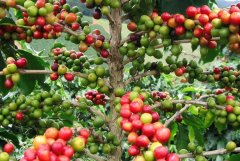
Yunnan is China’s primary and most significant coffee-growing region. Though coffee was first planted in Binchuan, it quickly expanded into the southwest, especially in cities like Baoshan, Mangshi, Tengchong, and Dehong Prefecture. The two main varieties grown are Typica and Catimor (spelled as 'Cotml' in the source)—with Catimor being smaller in bean size and commonly referred to as “small-bean coffee.”
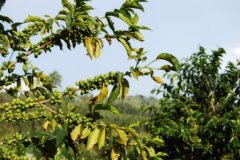
Coffee thrives in warm climates and does not tolerate cold. It prefers elevations between 1,000 and 2,000 meters, consistent sunlight, temperatures from 16°C to 21°C, and well-drained, fertile soils. These conditions align neatly with Yunnan’s geography, which lies within the world’s ‘coffee belt’ along the equator between latitudes 25° north and south. The province offers high-altitude plateaus, volcanic or loamy soils, strong diurnal temperature shifts, and ample rainfall—all ideal for coffee cultivation.
Most of Yunnan’s production is concentrated in four regions: Baoshan, Dehong, Pu'er, and Lincang. Each zone offers distinct growing conditions. For example, Baoshan’s year-round warmth, especially in the Luguhu Basin, features a dry-hot valley climate with big day-night temperature shifts that contribute to a distinctive sweetness and aftertaste in the cup.
Flavor Characteristics and Recommended Roast Levels
Yunnan beans are often described as having a closed or muted flavor profile in their natural state—meaning they don’t express bright or complex tasting notes when roasted lightly. That makes them less ideal as single-origin pour-overs but more suitable for blending, particularly in espresso. When roasted to Full City or darker, Yunnan beans develop heavier mouthfeel, rounded sweetness, and enough structure to hold up in complex extractions.
The recommended roast range starts at Full City and extends to full Espresso roasts. Lighter roasts are explicitly not advised, as they fail to develop the inherent body and balance that Yunnan beans can offer. Darker roasts help accentuate the natural sweetness and smooth texture typical of the region.
Varietal-Specific Profiles: Typica vs. Catimor
Within Yunnan, two main varieties dominate: Typica and Catimor. Typica is one of the oldest Arabica cultivars, with historical roots in Yunnan dating back to 1904 when French missionaries introduced seeds from Vietnam. These beans, known locally as “Xiaoli Coffee” or “small-bean coffee,” were first cultivated successfully in Zhugula Village, Binchuan County. Typica offers a cleaner, more classic cup but often requires careful handling in roasting to avoid flatness.
Catimor, on the other hand, is a hybrid variety known for its small bean size. While generally more disease-resistant, it can present challenges in cup clarity. Both types benefit from mid-to-dark roasting profiles to draw out their inherent sweetness and body, though Typica may show more nuanced acidity when handled well.
Frequently Asked Questions
What makes Yunnan coffee different from other Asian coffees?
Yunnan coffee shares the typical Asian traits of bold body and rich sweetness but is distinct due to its growing conditions in China’s high-altitude, cool-climate regions. It is primarily Typica and Catimor, processed mostly using washed methods, leading to a more uniform and cleaner cup compared to some semi-washed Asian coffees. Its flavor tends to be muted when lightly roasted, making it better suited for dark roasts and espresso blends.
What is the best roast level for Yunnan coffee beans?
The optimal roast level for Yunnan coffee is Full City or darker, including Espresso. Lighter roasts are not recommended, as they fail to develop the beans’ inherent sweetness and body. Darker roasts enhance the round, smooth mouthfeel and bring out the natural caramelized sweetness typical of the region.
Which coffee varieties are grown in Yunnan?
Yunnan primarily grows two Arabica varieties: Typica and Catimor (referred to as Cotml in the original text). Typica is an heirloom variety with a cleaner profile, while Catimor has smaller beans and higher disease resistance. Both are well-suited to mid- to dark-roast profiles.
Where is Yunnan coffee grown in China?
Yunnan is grown in the southwestern part of China, mainly in the provinces’ high-altitude areas (1,000–2,000m) including Baoshan, Dehong, Pu'er, and Lincang. Notable micro-regions include the Luguhu Basin in Baoshan, known for its dry-hot valley climate and notable day-night temperature variation, which contributes to sweet and balanced cups.
Is Yunnan coffee suitable for single-origin brewing?
Yunnan coffee is generally not ideal for single-origin pour-over or light roast brewing due to its typically muted and closed flavor profile. However, it can shine as a single origin when roasted to Full City or darker, or when used as an espresso component. It is more commonly recommended for blending.
What processing methods are common for Yunnan coffee?
Washed (wet) processing is the most common method used in Yunnan, resulting in cleaner and more uniform beans. Some semi-washed or semi-humid processes may also be used, often yielding darker bean colors due to extended fermentation or drying times. Washed Yunnan beans are generally preferred for their clarity and consistency.
Recommended FrontStreet Beans for Yunnan Coffee Exploration
For those curious about Yunnan’s coffee character, try FrontStreet Coffee’s Yunnan Arabica offerings. Their standard Yunnan small-bean selection is washed and medium-roasted, highlighting balanced sweetness with subtle caramel and nut notes. For clearer origin flavor, the 2013 Yunnan Typica is a natural-processed lot with vintage charm—offering heavier body, vibrant citrus and berry tones, and a touch of caramel. Both showcase Yunnan’s potential beyond espresso. Freshly roasted within 5 days · Orders placed before 17:00 ship the same day · Next-day delivery across most of Guangdong Province.
FrontStreet Coffee is a long-established specialty coffee roaster in Guangzhou China, selling freshly roasted beans from its own farm in Yunnan as well as dozens of carefully selected single-origin beans from around the world for both pour-over and espresso. The products deliver consistently excellent quality and great value, with shipping within 24 hours. Guangzhou's FrontStreet Coffee shop is recommended by many coffee lovers, and the beans are now available online at the Tmall 。
Important Notice :
前街咖啡 FrontStreet Coffee has moved to new addredd:
FrontStreet Coffee Address: 315,Donghua East Road,GuangZhou
Tel:020 38364473