
Coffee Knowledge
Latest articles, industry insights and brewing guides

The Historical background of reforming Manor Coffee Development Guatemala reformed the flavor of manor Kaddura coffee
In 1904, Mr. Manuel Prez acquired La Reforma Farm for the production of tobacco, corn and beans. Later, his son Leonardo continued to produce the same crops, and it was not until 1939 that Leonardo II began to produce coffee. Leonardo II has been engaged in coffee production since he was very young. He and his brothers and cousins did it by hand.

Is Congolese coffee a boutique coffee? What are the main varieties of coffee grown in Congo?
The Democratic Republic of the Congo (DRC) is rich in resources but lacks stability and infrastructure due to years of civil war. The country once had a booming coffee industry, but now needs to develop development strategies to help producers realize their great potential and improve the quality of life of farmers. But some non-governmental organizations and other agencies are taking steps to revitalize the coffee industry in the Democratic Republic of the Congo

The development trend of coffee in Ethiopia has changed from cooperative model to single boutique small-scale farmers.
Ethiopia Yega Xuefei producing area has become so famous that even Xiao 7's coffee has begun to use it. The details should not be introduced by the editor. However, there is a new trend in the Yega Sheffield system, that is, the development of a single small farmer and a single agricultural product. Let's share this new trend in Ethiopia with the new direction of the Waka Cooperative. This new hair

Why Miami Coffee Culture is influenced by Cuba introduction to Miami's unique coffee culture
Miami's coffee culture is inseparable from the influence of Latinos. More than 60 years of Cuban immigration history, unlike most major cities in the United States, has helped to create a culture in a way that enjoys coffee. This means that if you are a roaster or coffee shop that wants to enter this market, you should understand the way people's attitudes towards drinks are shaped. Cuba's contribution to Miami coffee culture

Guatemala Potomac Manor Coffee Bean Vivette Nan Guopodosi Manor Coffee?
Porto West Manor is located in the border area of the famous coffee producing area of Guatemala, Vivette Nango province, less than 2 kilometers away from the Mexican border. Porto West Manor, run by four generations, has been handed over to the younger generation to manage coffee planting, continuing the enthusiasm of our ancestors for coffee. Csar Abel Ramirez Perez, the current owner of the manor, returned to his hometown for farming after graduating from university.
Guatemala Potomac Manor Coffee beans how about Podolsi Manor Coffee
Porto West Manor is located in the border area of the famous coffee producing area of Guatemala, Vivette Nango province, less than 2 kilometers away from the Mexican border. Porto West Manor, run by four generations, has been handed over to the younger generation to manage coffee planting, continuing the enthusiasm of our ancestors for coffee. Csar Abel Ramirez Perez, the current owner of the manor, returned to his hometown for farming after graduating from university.

Introduction to the background of Los Angeles Manor Coffee in Guatemala
Finca Rosma has twice honored the top ten winners of the Guatemala Excellence Cup (Guatemala Excellence Cup). They won eighth place this year and second place in 2010. The estate is inherited by its founder and current owner, Dr. Fredy Morales Merida, who began farming and managing the land 20 years ago. Located in Vivette Nanguo

The flavor and characteristics of Yejia Fischer coffee bean brewing scheme
The Yega Fischer producing area is famous all over the world for its clean and exquisite flavor. In a broad sense, the Yega Xuefei production area includes Abaya, Borena, Wenago, Ykrgacheffe and Kochere, among which Kochere (Chinese translation: Cochel) is a very important washing area. Yejiaxue

The flavor and characteristics of Yejia Fischer coffee bean brewing scheme
Yega Xuefei in Ethiopia is famous all over the world for its clean and exquisite flavor. In a broad sense, the production area of Yega Xuefei contains Abaya, Borena, Wenago, Ykrgacheffe and Kochere, among which Kochere is a very important washing area in this area. The washing method of coffee beans can best reflect the basic local flavor of the producing area, which we will understand today.

Guatemala Bao Lake Manor Coffee Geographic advantage what is the flavor and taste of Bao Hu Manor Coffee
Bao Hu Manor is currently operated by the third generation Maximiliano Palacios. The name Baohu comes from the family name Palacios and the Huehuetanango region where it grew up. Palacios began to take charge of Tianyi and Baohu Manor in 1954, planting coffee covers an area of about 34 hectares, with Kaddura as the main type of coffee. Baohu Manor is located in Guardia.

Advantages and Flavor of Eincht Manor Coffee Bean Vivetnam Fruit
Eincht Manor is located in the town of Lalibertad in Vivette Nanguo, with a total area of 720 hectares, but retains 470 hectares of natural primeval forest. The estate has always been the pioneer of fine coffee in Central America. About 50 years ago, it was one of the first estates to focus on a single variety and vertically integrated production of high-quality coffee. These efforts are painstaking

Guatemala Mystic Lake Manor Coffee beans? Attilan Lake Mystic Lake Manor Coffee Flavor
Mysterious Lake Manor has a high altitude, volcanic soil and microclimate, and the beautiful qualities of all the top coffee farms can be found on the farm. Because of its proximity to the lake, volcanic soil and mountains are an important factor in the formation of microclimate. The farm cup shows a very fine taste, good acidity, mellow thickness, sweetness, and all citrus series.

Black Angel Manor Coffee beans in Guatemala the characteristics and flavor of black angel manor coffee beans
Black Angel Manor is located on the border between Guatemala and Mexico, it takes 7 hours to cross the mountains from the Guatemalan capital, and it is located at 1784m in Haipa, Minamago province. This manor (known as Farm) is located in the first mountain range of the windward mouth of Mexico, and the humidity brought by the north is regulated by the monsoon. Coffee in this extremely high sea postscript gives birth to an annual COE award-winning manor. ■ area:

The Monkey Manor on the Guatemalan Tree, the Monkey Manor MudoNovo Coffee on the Coffee Bean Tree
Humid tropical rain forest climate Guatemala has a unique geographical environment and climatic conditions, making it one of the famous coffee producing areas, and the microclimate with different conditions has created rich coffee beans in Guatemala. Coban Koban rainforest producing area is one of the major producing areas in the country. Monkey Manor in trees from the Coban Koban Rainforest, located in the northern sea of Guatemala

Guatemala Stonehenge Coffee Bean Introduction Stonehenge Coffee Flavor Features
Towering in the clouds, there are people outside the stone manor, heaven beyond heaven, a mountain and a mountain. Vivitenango borders Mexico in the north of Guatemala, from the Rocky Mountains of North America all the way to the starting point of the Central American Isthmus. The whole terrain is plateau type, but you can feel the cold atmosphere of warm and cold zone near the equator. Stonehenge is located at the highest point of the plateau terrain, where

Introduction of Gulumadan Coffee production area in Guatemala Flavor characteristics of Gumadan Coffee beans
Gumadan, in Spanish, refers to an endless range of mountains. Will be in the Gumadan series in the typical plateau region of Guatemala. The average height of the manor is 1500m to 3000m, which is mainly located in the mountain city of 2500m. The scene is like a continuous wave scene. Due to the extreme plateau climate, the climate is cool all the year round, and it often floats here when it comes to the winter with more water.

Guatemala Solo Manor Coffee Solo Manor Yellow Bourbon Coffee Flavor Characteristics
The farm where the Malacatena Coffee House is grown was purchased by Dr. Mario de la Cerda and his wife Maria Colom in 1960. In 1980, their son Juan de la Cerda Colom started managing the farm and producing coffee there. Over the last eight years, they've evolved and changed significantly in how they handle coffee.

What are the local conditions? How is coffee naturally affected by climate, soil, etc.?
We often hear the word "local conditions" when we talk about coffee, but what exactly does it mean? Does it have anything to do with the flavor of coffee? Why do we need to care about the local environment? The author interviewed some people in the coffee and wine industries and asked them to tell you what was going on in the country. What are the local conditions? The word vernacular conditions comes from the French Terroir, which is most commonly used when talking about wine.
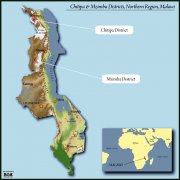
Introduction and Flavor of Kitipa Coffee, the Standard of Malawian production area
Coffee produced in Malawi is rarely distinguished by origin, and coffee producing areas can be regarded as areas delineated for growing coffee, rather than defined by local soil or climate. Chitipa produces several of Malawi's most prestigious coffees. Adjacent to the Songwe River, it is also the natural border between Malawi and Tanzania to the north. This area is also a large-scale Misuku Hills community.

Coffee beans and Historical background of the Republic of Malawi there is no unified grading standard for Malawian coffee.
The Republic of Malawi is located in the inland zone of the plateau in south-central Africa. It is one of the most densely populated countries in Africa, with more than 13 million people living in just 118000 square kilometers, 20 per cent of which is water. It can be seen on the map that there is a very large lake to the northeast. It is Lake Malawi, which is also the natural boundary between Malawi and its neighboring countries. Coffee in the late 1800s