
Coffee Knowledge
Latest articles, industry insights and brewing guides

An introduction to the Coffee producing area of Cauca Valley in Colombia Information and Flavor characteristics of Cauca Valley Coffee
Located in the northwestern province of the Pacific Ocean, the capital of Cali, the Valle Del Cauca is one of the most fertile areas in Colombia. The Cauca River flows down between two mountains in the Andes. This area is also one of the most violent areas of armed conflict in Colombia. Most of the agricultural land in Colombia is quite small, with about 75800 coffee trees planted in the area.

Colombia Cauca coffee region characteristics Introduction Cauca coffee flavor characteristics
Cauca is best known for coffee produced near Inza and Popayan. Meseta de Popayan is a plateau, high altitude provides favorable growing conditions, close to the equator and surrounded by mountains, thus protecting coffee from humidity in the Pacific Ocean and southern trade winds. This creates a very stable climate all year round. In addition, coffee in this area is very important.

Introduction of Parana Coffee producing area in Brazil the flavor characteristics of Parana coffee
Parana is a very important agricultural region in Brazil, producing 25 per cent of its crops, although it accounts for only 2.5 per cent of the country's total. Coffee used to be the most productive crop in the region, but after the frost in 1975, many producers began to diversify. In the past, about 22 million bags of coffee were produced in this area, but now there are only about 2 million bags. The selection of the original colonists

Introduction to the coffee producing area of Esp í rito Santo in Brazil
Esp í rito Santo (Espirito Santo) has a larger area than other Brazilian coffee producing areas.

An introduction to the background of small coffee producing areas in Brazil's Bahia Hilado and Bahia Plateau.
Bahia Cerrado da Bahia is famous for its large-scale, industrial and artificially irrigated coffee. In the late 1970s and early 1980s, it was part of a government-encouraged agricultural program that provided preferential credit and incentives that attracted about 600 farmers to move here. By 2006, there were 1.5 million males here.

Honduras Ecuador Small Farmer Coffee Quality How about St. Vincent washed Pacas Flavor Introduction
Origin: Santa Barbara Producer: Edgardo Tinoco Smallholder treatment: Beneficio San Vicente Altitude:1500m Variety: Pacas Treatment: Wash Grade:SHG Honduras is located in Central America, mostly high mountains and deep valleys, with excellent rings for growing coffee trees

Coffee background of Shapada Diamantina region introduced in Bahia Coffee producing area of Brazil
Located in northeastern Brazil, Bahia is the northernmost coffee growing area in the country. It has a vast territory and dry winter land near the equator, which is conducive to the production of aromatic coffee. More and more intriguing coffees have been produced in recent years. The dry winter land near the equator is conducive to the production of aromatic coffee. This area has the highest GDP in the northeastern states of Brazil, and has an economy over the years.

Introduction of coffee producing areas in the state of Sao Paulo, Brazil the flavor characteristics of Sao Paulo coffee
The state of Sao Paulo covers Brazil's well-known coffee producing area Mogiana. The area is named after Mogiana Railroad Company, the company that founded the Coffee Railway in 1883. This has also led to the emergence of better modes of transportation and the further expansion of coffee production here. The most famous Brazilian coffee is Santo from the state of Sao Paulo (Sao Paulo)

Flavor and introduction of Coffee producing area in Minas and Minas Southeast Mountain Forest region of Southern Brazil
Sul De Minas, south of Minas, is the main coffee growing place for Bulgarian sommeliers. Historically, it is the birthplace of large quantities of coffee production in Brazil, which is an ideal place to produce high-quality coffee. There are many generations of small farmers here. Perhaps for this reason, there are more cooperatives in the region. Most of them are small farms, but it is still a good place for industrialization.
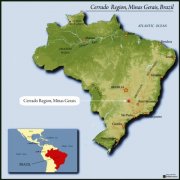
Characteristics of coffee producing areas in Minas Gerais, Brazil. Introduction to the flavor of Brazilian Hirado coffee.
The state of Minas Gerais (Minas Gerais) is a state in southeastern Brazil. Minas Gerais has some of the highest mountains in the country, providing the elevation needed to grow coffee. Coffee produced on behalf of the state of Minas Gerais often holds 70 per cent of the medals in the annual COE Cup in Brazil. Cerrado with no bitterness,

Brazilian Coffee introduces the main coffee producing areas and taste graded coffee producing areas in Brazil.
The Republic of Brazil was born in 1890. In the early stage, it was similar to a military dictatorship. Nevertheless, the government recognizes the importance of coffee as a source of profit, especially due to the decline in the value of sugar and gold in the international market. The current policy allows coffee to be overproduced in the hope of replacing competitors; this is a promising strategy. Brazil is the biggest coffee in the world.

Introduction to Puebla Coffee Region, Mexico Characteristics of Veracruz Coffee Region, Mexico
Pueblo is the capital of the Mexican state of Puebla, located east of Mexico City, between the Sierra Nevada and Sierra Madre in the east. Coffee beans from this area are always grown under macadamia nuts and pine trees, contributing to Puebla's coffee beans being filled with incredible aromas. BaJa coffee is P7cafe

Introduction of Coffee producing areas in Oaxaca, Mexico Coffee flavor characteristics in Oaxaca
The capital of Oaxaca, located about 510km southeast of Mexico City, the legendary city blessed by God has a charming climate like spring all year round. Dating back to 1000 BC, the city was once the gathering place of two ancient civilizations, Mixtec and Zapotec, and then experienced Spanish colonization. Oaxaca is still home to many aborigines.

Introduction and characteristics of Coffee producing area in Chiapas, Mexico
From the southern Mexican state of Chiapas, which borders Guatemala, many people compare the coffee in this area with that of Guatemala. This area has a mild climate, fertile land, very humid and tropical climate, and is very suitable for growing coffee beans. The Sierra Madre Mountains provide the elevations necessary for high-quality coffee production and beneficial volcanic soil.

Introduction to Mexican Coffee what are the main producing areas of Mexican coffee? How's the Mexican coffee?
The history of coffee in Mexico, like most of Central America, was first grown in Mexico in the early colonial era (most likely in the late 18th century). As people paid more attention to the region's rich mineral resources and mining, coffee really developed into an industry, and when small farmers opened it after the Mexican Revolution in 1920.

Introduction and Flavor of El Salvador Tecapa-Chinameca and Cacahuatique Coffee producing areas
Tecapa-Chinameca Mountain Tecapa-Chinameca is the third largest coffee producing area in El Salvador, with an elevation of 500-2150 m, located between the city of San Miguel, the Lempa River and the Grande River, sloping to the north to the central valley and descending to the south to the coastal area. Coffee in this area is a tortilla made with salt, sugar or a little sugar.

Introduction to the characteristics and Flavor of Chichotepec Volcano Coffee producing area in El Salvador
The Chichotepec Volcano Chichotepec Volcano (Volcn de San Vicente) district is located in the city of Sao Vincent in the central part of El Salvador. In the 1880s, the local production was no more than 50 bags, but this volcanic area is rich in soil and is now home to many coffee plantations. Traditionally grow a row of coffee trees and a row of orange trees to cover coffee.

Introduction and flavor characteristics of El Balsamo-Quezaltepec coffee producing area in El Salvador
Part of the El Balsamo-Quezaltepec El Balsamo-Quezaltepec coffee garden overlooks the capital San Salvador from the Quetzaltepec volcano. It is 500-1960m above sea level, about south of San Salvador and San Vincent. This area is the site of the pre-Spanish culture Quetzalcotitan civilization, which believes in the feathered serpent god. The various totems of this god are still sa today.

The difference between Apaneca-Ilamatepec and Alotepec-Metapan coffee producing areas in El Salvador
Apaneca-Ilamatepec Mountains Apaneca-Ilamatepec Mountains, located west of El Salvador, 500-2300 meters above sea level. Volcanic activity is frequent here, but it still produces a lot of coffee that has won prizes in competitions. The most recent eruption of Mount Santa Ana in 2005 has had a huge impact on its coffee production over the years. This is the largest producing area in El Salvador, and probably the most.

El Salvador coffee history introduction El Salvador coffee six major producing areas and coffee classification system
El Salvador, known as the home of volcanoes, is the smallest country in Central America (roughly the same size as New Jersey). Coffee was grown after independence from Nicaragua in the mid-19th century and quickly became a popular cash crop. Active volcanic activity brings mineral-rich volcanic ash to the country, mainly volcanic ash in the soil composition