
Coffee Knowledge
Latest articles, industry insights and brewing guides
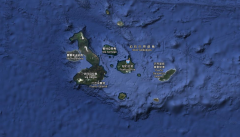
The influence of Geography and Climate on the Coffee producing areas of the Galapagos Islands
Located on the Pacific coast of Ecuador, the Galapagos Islands (Galapagos) consists of 13 major islands, 6 smaller islands and numerous small islands. About 135 years ago, the first coffee seeds were brought here from French colonies in the Caribbean (stopped in Panama along the way). These are the seeds of bourbon, which is still grown on these islands today.

What is the planting advantage of Samora admiration coffee? what are the flavor characteristics of Samora admiration coffee?
Samora admiration (Zamora Chinchipe) achieves all the traditional hallmarks of the coffee growing area: plenty of sunshine, plenty of rainy season, moderate temperature and an ideal altitude of about 1000 meters. This area, located to the east of Loha, has enough altitude to grow excellent coffee trees, but produces only 4% of Arabica in the territory. Organic farming is quite common here.

Geographical advantages of Loha Coffee producing area the flavor of coffee in Luoha producing area of Ecuador
Ecuadorians say Loja produces the best coffee in the country, especially in the small community of El Airo, not far from Yacuri National Park. This high altitude area specializes in producing its own Arabica coffee beans. About 20% of the Arabica beans in Ecuador come from this mountainous southern region, close to the Andes, one of the highest coffee-growing regions in the world.
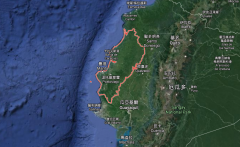
Flavor characteristics of Manawi Coffee Bean
Manabi, the first Ecuadorian province to grow coffee, uses felling and burning to cut down local forests and then burn the remaining stumps and vegetation to grow coffee. Nearly 50% of Ecuador's Arabica coffee beans come from Manawi province, but because almost all of the coffee beans in this area are planted below 700 meters above sea level, there is no place to produce another flying place.

The influence of Ecuadorian geographical location and climate on coffee grading system of Ecuadorian coffee
Ecuador introduces that coffee has been introduced into Ecuador since the 19th century. The first coffee plantations were established in the coastal areas of Manabi province in the 1860s. As one of the most biologically diverse countries on earth, Ecuador's unique ecosystem is an ideal place for the plant to flourish, and coffee soon became one of Ecuador's main exports. Until 1920

The background of Secret Satipo Coffee producing area introduces the characteristics of Satipo
Satipo is a Peruvian town located in the Hunin region in the central part of the country. It is the capital of Satipo province and is 628m above sea level. The producing area is located to the east of the Andes, between the San Martin area in the north and the Cusco area in the south, and is part of the Huning coffee growing area, where the culture is very diverse. Coffee is an important crop here, as well as cocoa
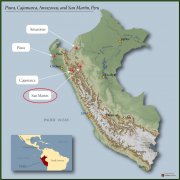
What's St. Martin's coffee like? The characteristic Flavor of San Martin Coffee producing area in Peru
Coffee is Peru's main export. However, crops are affected by climate change, which reduces acreage and promotes the spread of disease. To meet these challenges, farmers have two parallel strategies: they diversify production by adding new crops such as cocoa or vegetables, and invest in organic agriculture to protect the environment and get higher prices. The latter makes Peru a complete

Peruvian Coffee background and current situation Peruvian Coffee grading system Peruvian Coffee treatment
The Historical background and present situation of Peruvian Coffee Peru had its first coffee shop as early as 1771, but it was not until 1895 that Peru began to export coffee beans. On the lush slopes of the Andes, many older farms and small farmers continue to grow primitive varieties brought by early settlers. Most farmers are of Indo-Canadian origin and speak Spanish as a second language.
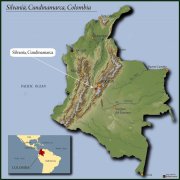
Kundinamaka Coffee Bean Flavor introduction to Coffee producing areas of Candinamaka, Colombia
Around 1860, the province of Cundinamarca began to grow coffee on the western slope, and then slowly moved northwest over the next decade or two. This area is the second Colombian province to start export, and production peaked during World War II. There used to be many very large estates here, some with more than a million coffee trees.

How does Colombian Antioquia coffee taste? Introduction to the Origin of Aantioquia Coffee
Antioquia (Antioquia) is the birthplace of Colombian coffee, is also an important coffee producing area, coffee planting area of 128000 hectares, the largest in all producing areas. But this is not just a place of origin. It is the largest coffee grower in any other part of Colombia, with both small producers and large estates. Coffee trees love volcanic soil and a stable climate (

Is the coffee good in Caldas, Colombia? The main flavor characteristics of Caldas coffee
For a long time, Caldas was considered the best place for Colombian coffee, but now other producing areas have become more competitive. The area is also home to the National Coffee Research Center (Cenicafe), which is run by FNC. This is recognized as the top coffee research institution in the world, where several unique Colombian varieties are cultivated. Karda.

How do you make Columbia Linglong Coffee? What are the flavor characteristics of Nalinglong coffee?
The taste of coffee in Narino is often stunning and complex. Growing coffee at such a high altitude is very challenging because plants are easy to get dead branches.

Colombia Risaralda Coffee Region Background Risaralda Coffee Flavor Taste
Risaralda is a sizeable coffee-producing province, with many farmers affiliated with co-operatives. This region has a unique geographical location, ideal for coffee production, but is vulnerable to climate change. Coffee plays a vital role in the region's social and economic development, providing employment opportunities for many people. In the 1920s, many foreigners

Introduction to the coffee producing area of Kindio in Colombia what are the flavor characteristics of Jindio coffee?
The province of Quindio is a small area in central Colombia west of the capital Bogota. Coffee is an important cash crop in the region because of its high unemployment rate. However, with climate change and the probability of coffee tree diseases, the risk of growing coffee has also increased, prompting many farmers to switch to citrus trees and Hawaiian beans. Jin Di

Introduction of Huilan Coffee producing area Coffee advantage in Laboyos Valley Coffee flavor characteristics of Huilan Coffee
Huilan has a combination of excellent soil and geographical advantages for growing coffee, and some of the most complex and fruity Colombian coffees come from here. This area belongs to the selected alpine coffee beans of the Colombian State Corporation, which is known as the national treasure of Colombia. With its superior geographical and climatic conditions, Colombian coffee has always maintained high quality. There are more than 70,000 kinds of coffee in this area.

Why do many coffee shops use EK43 bean grinders? What are the advantages and disadvantages of EK43 bean grinder
EK was originally designed to grind drip coffee by hand, but its advantages (discussed later) outweigh the inherent disadvantages of unstable powder supply (for example, 20 grams of coffee beans with an error of 1-1.5 grams of powder). However, all this changed in the hands of Matt Perger, the champion of the 2013 World Barista Competition, when he used EK43 to prepare coffee on the main stage, although Perger was not the first.
Does the degree of roasting affect the caffeine content of coffee? Does deep-roasted coffee have more caffeine?
Deep-roasted coffee is more bitter and mellow than light-roasted coffee, so it is often thought that deep-roasted coffee has a higher caffeine content. Although deep-roasted coffee has a strong flavor, it should not be mistakenly associated with higher caffeine. The strong flavor of bitterness comes from baking, not from caffeine. Deep-roasted coffee doesn't actually have more coffee than light-roasted coffee.

How to distinguish coffee aroma and aftertaste? What makes coffee taste?
You ask us: Why is coffee aroma and aftertaste so different? Even though the same chemicals may be involved? Here's what we found: Aftertaste in coffee refers to the taste and aroma that remains in the mouth after swallowing. Coffee aroma spreads for a long time compared to other beverages: espresso aftertaste lasts up to 15 minutes (RJ Clarke and OG Vitzthum, 2001)

Does the quality of the cup also affect the flavor of coffee? Which material and shape is better for coffee?
You may have many mugs at home, and you should also have the cup you like or are most used to. In addition to pleasing to the eye, or the cup has a special meaning to you, what you need to consider is actually the material. Drinking coffee from cups of different materials will affect the flavor of coffee due to differences in thermal conductivity. This paper introduces the difference between ceramic cup and glass cup. Thermal insulation effect of ceramics

Introduction to the geographical features of Tolima coffee producing area in Colombia the flavor characteristics of Tolima coffee
Coffee from Tolima is harvested twice a year, so coffee from Tolima can be found on the annual list of COE winning estates. It is located in the southwest of Colombia, Huila to the east and Valle del Cauca to the west, in the heart of Colombian boutique coffee (the eastern mountains and central mountains of Cordilleras).