
Specialty Coffee Beans
Latest articles, industry insights and brewing guides

What is the quality of Yunnan small grain coffee? I was surprised to have a drink of Yunnan iron pickup today.
I am a coffee lover. I always say that Yunnan beans are very ordinary, but today I was surprised that the landlady was also a coffee lover after drinking a tin truck. She opened her own coffee shop to pass the time. Today, in order to gather popularity, the landlady took out half a pound of high-altitude iron pickup truck carefully prepared by the owner of the coffee garden in Dehong, Yunnan, and asked me to try it. Little Fuji 4.5
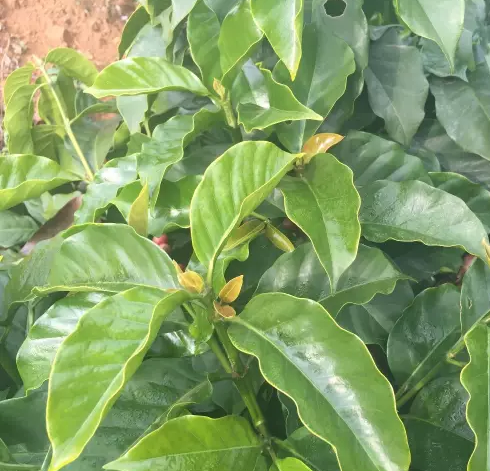
The difference between iron pickup and black coffee, the difference between small grains in Yunnan, and the characteristic flavor of iron pickup coffee.
Yunnan small-grain coffee Yunnan small-grain coffee, Rubiaceae, coffee genus, the planting area is mainly distributed in Lincang, Baoshan, Simao, Xishuangbanna, Dehong and other states. Small grains of coffee are native to Ethiopia or Arabian Peninsula. The main producing area of small-grain coffee is suitable to grow in the mountains of 800-1800 meters above sea level. If the altitude is too high, it will taste sour, and if it is too low, it will taste bitter. Most small grains of coffee are planted at 1100 above sea level.
The difference between Yunnan Tiebika raw bean wholesale authentic Yunnan small grain boutique coffee and Yunnan Katim
Yunnan small-grain coffee Yunnan small-grain coffee, Rubiaceae, coffee genus, the planting area is mainly distributed in Lincang, Baoshan, Simao, Xishuangbanna, Dehong and other states. Small grains of coffee are native to Ethiopia or Arabian Peninsula. The main producing area of small-grain coffee is suitable to grow in the mountains of 800-1800 meters above sea level. If the altitude is too high, it will taste sour, and if it is too low, it will taste bitter. Most small grains of coffee are planted at 1100 above sea level.

Description method of planting Flavor and taste of Bourbon Pacas Coffee
Pacas (Pacas) is a natural variant of bourbon, similar to Kaddura of Brazil (Cuturrra) and Villa Sacrhi of Costa Rica. Like other bourbon variants that have been widely planted, Pacas is a new variety formed by a single gene mutation, which gives Pacas a crucial characteristic: the plant can be further closely planted, and eventually the body.

Description of taste, flavor and aroma of Papua New Guinea Paradise Bird Coffee
Papua New Guinea (PNG) in addition to Sigri Manor, there are some good farms or estates to be recommended, which is also the reason for the introduction of Paraka Manor; Sigri has strong funds, foreign coffee shows are easy to see her booth, coupled with the famous Europe, the United States, Asia, she has established the conditions of an internationally famous manor, but other PNG domestic manors are not so lucky, mainly because

Raw bean file | Yunnan small grain coffee Yunnan iron pickup Typica boutique coffee beans
Yunnan small-grain coffee Yunnan small-grain coffee, Rubiaceae, coffee genus, the planting area is mainly distributed in Lincang, Baoshan, Simao, Xishuangbanna, Dehong and other states. Small grains of coffee are native to Ethiopia or Arabian Peninsula. The main producing area of small-grain coffee is suitable to grow in the mountains of 800-1800 meters above sea level. If the altitude is too high, it will taste sour, and if it is too low, it will taste bitter. Most small grains of coffee are planted at 1100 above sea level.
Introduction to the description of Brazilian Hilado Coffee Flavor and taste
In the past 150 years, Brazil has been the country with the highest coffee bean production in the world, with a total annual output of about 2.7 million metric tons, accounting for 1/3 of the world's total coffee bean production. Top production area ─ Brazil Hirado in Brazil has a coffee bean planting area of 27000 square kilometers, the most famous producing area is Parana in the south of Brazil.

Introduction to the planting flavor and taste of Tanzania coffee grade source in East Africa
Tanzania is an East African country south of the equator, bordered by Uganda and Kenya to the north and the Republic of the Congo, Rwanda and Burundi to the west. It is hot and humid all the year round, with an average temperature of 21-25 ℃ in most areas. Precipitation is divided into long and short rainy seasons, and the annual precipitation is abundant. The economy is based on agriculture, coffee is one of the main cash crops in Tanzania, in Tanzania, Arabica coffee
Introduction to the planting flavor and taste of Tanzania coffee grade source in East Africa
Tanzania is an East African country south of the equator, bordered by Uganda and Kenya to the north and the Republic of the Congo, Rwanda and Burundi to the west. It is hot and humid all the year round, with an average temperature of 21-25 ℃ in most areas. Precipitation is divided into long and short rainy seasons, and the annual precipitation is abundant. The economy is based on agriculture, coffee is one of the main cash crops in Tanzania, in Tanzania, Arabica coffee
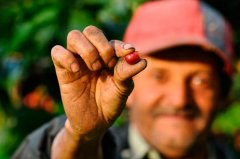
Introduction to the description of taste and flavor of African Tanzanian coffee washing method
The sweet citrus fruit aroma and flavor of Tanzanian coffee make you feel the flavor of orange and grapefruit. In fact, Tanzanian coffee is very similar to Kenya coffee, both coffee emit African acidity and citrus aroma. On the other hand, Tanzanian coffee has a unique aroma of raisins, which gives an extraordinarily complex and multi-layered flavor. Compare Tanzanian coffee with Kenyan coffee

Raw bean treatment: typical air-drying process Indian monsoon coffee treatment, Indian coffee history
Before the Indian monsoon Malaba Coffee, a tweet about the history of coffee species: it is amazing that 90% of the world's coffee originated from the same coffee tree! It was said that coffee originated in Ethiopia, and Arab businessmen brought it to Yemen, and then a thousand years later, because of a legendary love story, a Yemeni woman risked death to give coffee seeds to the prince of India.

The characteristics of Indian coffee legendary: Indian monsoon Malaba coffee is Indian coffee good?
Before the Indian monsoon Malaba Coffee, a tweet about the history of coffee species: it is amazing that 90% of the world's coffee originated from the same coffee tree! It was said that coffee originated in Ethiopia, and Arab businessmen brought it to Yemen, and then a thousand years later, because of a legendary love story, a Yemeni woman risked death to give coffee seeds to the prince of India.
Coffee origin Indian monsoon Malaba coffee Indian "monsoon coffee" coffee characteristics
Before the Indian monsoon Malaba Coffee, a tweet about the history of coffee species: it is amazing that 90% of the world's coffee originated from the same coffee tree! It was said that coffee originated in Ethiopia, and Arab businessmen brought it to Yemen, and then a thousand years later, because of a legendary love story, a Yemeni woman risked death to give coffee seeds to the prince of India.
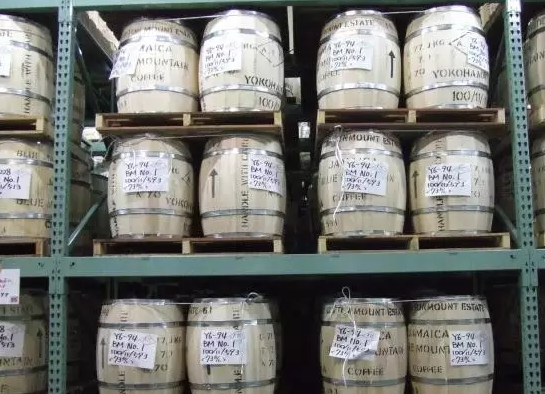
Data | official statistics of coffee and raw beans exported from Jamaica to China
According to data from the World Trade Organization and Chinese Customs, the total global exports of Jamaica in the past five years are as follows: 842 tons in 2011, 592 tons in 2013, 692 tons in 2013, 449 tons in 2014, 555 tons in 2015, of which, China's imports in the past five years are as follows: 2011 19 tons, 2012 17 tons, 2013 3 tons, 2014 2 tons 2 tons (all official statistics)
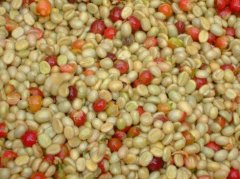
Introduction to the Flavor characteristics of small Grain species in Katim, Yunnan, the planting environment of Katim, Colombia
In the eyes of most Chinese, Yunnan Coffee is Yunnan small Coffee. Many people even think that Yunnan Xiaomi is a coffee tree. Perhaps in the eyes of many businessmen, this name means business opportunities, but in my eyes, this name is dispensable, he is at best a brand, absolutely can not be regarded as a coffee variety. Now that we are talking about the varieties of coffee in Yunnan, we have to
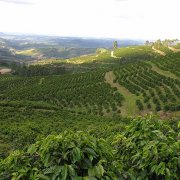
Introduction to the Future Development of Flavor and taste characteristics of African Burundian Coffee
Burundi is located in central Africa with a pleasant climate. Arabica coffee beans grown in the mountains of north-central Africa are of high quality and have won first prize and sixth place respectively in the coffee quality rating of Southeast African countries and the Paris Coffee Fair. According to the annual production of coffee beans in this country, the annual output is between 8000 and 35,000 tons, which is mainly sold to Europe.

Indonesian Gold Mandrine Coffee Origin Flavor Characteristics Description Taste Suitable for what method of brewing Introduction
Mantenin coffee is produced in Sumatra, Indonesia, Asia, otherwise known as Sumatra coffee. The main habitats are Java, Sulawesi and Sumatra, 90% of which are Robusta species. The most famous of these is mantenin from Sumatra. Fine traditional Arabica coffee produced in Sumatra North The best are named Lintong and Mantenin
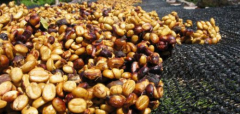
Imported Coffee Wholesale Costa Rica Arabica Honey processing Coffee beans Coffee characteristics
Costa Rican coffee cultivation was introduced from Cuba in 1779 and exported for the first time in 1820. There are now about 32000 coffee farmers, with an average planting area of less than one hectare (10000 tons) per farmer. Costa Rica has a population of 41 billion (2006), with a coffee planting area of 82500 hectares and an annual production of 1.7 million bags (60kgs per bag). The annual domestic consumption is 380000 bags.
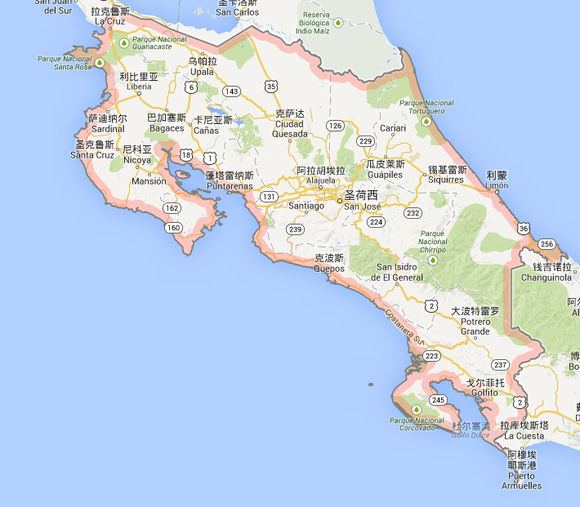
What is the difference in flavor between yellow honey, red honey and black honey in Costa Rican honey treatment?
Costa Rican coffee cultivation was introduced from Cuba in 1779 and exported for the first time in 1820. There are now about 32000 coffee farmers, with an average planting area of less than one hectare (10000 tons) per farmer. Costa Rica has a population of 41 billion (2006), with a coffee planting area of 82500 hectares and an annual production of 1.7 million bags (60kgs per bag). The annual domestic consumption is 380000 bags.
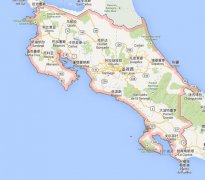
Costa Rican Arabica Coffee, a big coffee country in southern Central America
Costa Rican coffee cultivation was introduced from Cuba in 1779 and exported for the first time in 1820. There are now about 32000 coffee farmers, with an average planting area of less than one hectare (10000 tons) per farmer. Costa Rica has a population of 41 billion (2006), with a coffee planting area of 82500 hectares and an annual production of 1.7 million bags (60kgs per bag). The annual domestic consumption is 380000 bags.