Coffee Beans Infested by Incestuous Beetles
If you’ve ever wondered how some coffee beans end up damaged, hollow, or just plain low-quality, the culprit might be smaller than you think. Tiny beetles are living, breeding, and feeding inside your coffee beans — and they’re doing it with their own siblings.
The coffee berry borer is the most destructive pest in global coffee agriculture, capable of reducing yields by up to 20% and slashing the value of infested beans by 30–40%. These beetles don’t just eat coffee — they reproduce inside the beans, often through inbreeding.
What Is a Coffee Berry Borer?
The coffee berry borer (Hypothenemus hampei) is a tiny beetle that targets coffee cherries and the beans inside. Female beetles bore a small hole into the coffee bean, deposit their eggs inside, and then the hatching larvae feed on the bean’s interior. This feeding damages the bean’s structure, reduces weight, and ruins cup quality — leading to major losses for coffee farmers.
How Do They Breed Inside Coffee Beans?
These beetles are notorious for their extreme reproductive behavior. Although the species is capable of reproducing without males (a form of asexual reproduction called parthenogenesis), females frequently mate with their own brothers inside the same bean. This inbreeding helps them colonize beans faster and maintain populations even in isolated environments. Scientists have confirmed that this behavior is common, especially when beetles inhabit a single coffee bean.
According to Ted Lingle, former executive director of the Specialty Coffee Association of America, these beetles cause “the highest losses to coffee crops worldwide, with no equal.”
What Does an Infested Coffee Bean Look Like?
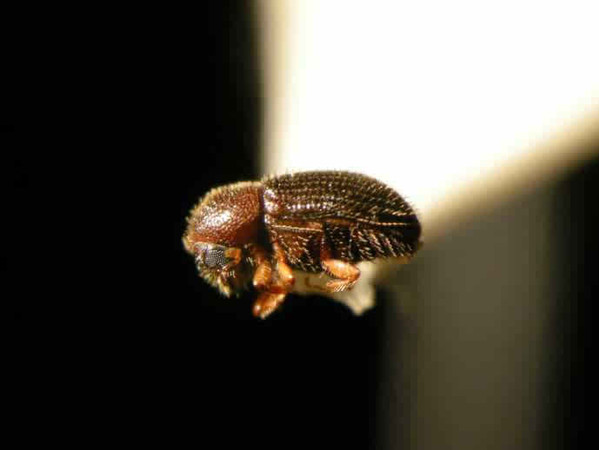
Infested beans are often lighter and more hollow due to the tunneling and feeding activity of the larvae. Female beetles also chew exit holes to allow the adults to escape once mature. Most visibly damaged beans are removed during post-harvest processing and quality control, so consumers rarely encounter them in retail coffee. However, some infested beans may still make it into packaged coffee, especially those made from Arabica beans — the beetle’s preferred host.
The beetle favors Arabica over other species, meaning lovers of high-quality single-origin Arabicas may unknowingly face a higher risk of encountering these pests.
Does Roasting Kill the Beetles?
Yes. The coffee berry borer dies at temperatures above 45°C (113°F), and standard coffee roasting typically reaches 200–230°C (392–446°F). While the pests are eliminated during roasting, their tunneling and feeding still degrade the bean before processing, lowering its market value and cup quality. That means the damage happens long before your roaster ever touches the beans.
Frequently Asked Questions
Can you still get coffee infested with coffee berry borers?
Most infested beans are removed during harvesting and processing, so it’s rare to find them in retail coffee. However, some may occasionally slip through quality checks, especially in bulk or less strictly inspected bags. Proper post-harvest sorting and bean inspection greatly reduce the chance of infested beans reaching consumers.

Do coffee berry borers affect the taste of coffee?
Yes. The tunnels and feeding damage inside the bean lower its density, ruin structural integrity, and can introduce off-flavors. Even if the insect is killed during roasting, the physical damage to the bean affects extraction and often leads to a less desirable cup profile.
Are Arabica beans more likely to have these beetles?
Yes. Research shows the coffee berry borer strongly prefers Arabica coffee beans over other species. If you drink mostly Arabica, especially single-origin beans, your risk of encountering infested beans — before processing — is higher.
Can the beetles harm humans if consumed?
No. While the idea of consuming beetle-infested coffee is unpleasant, there is no evidence that coffee berry borers pose any health risk to humans. The beetles are killed during normal roasting temperatures, and any physical remains are typically removed with defective beans before packaging.
How can farmers prevent coffee berry borer infestations?
Prevention includes proper harvest timing, post-harvest bean sanitation, regular field sanitation to remove fallen fruit, and storage in cool, dry conditions. Monitoring and trapping adult beetles, along with using certified pest-free seeds, are also key strategies to minimize infestation risks.
Recommended FrontStreet Beans for inspecting Bean Quality
FrontStreet Coffee’s Ethiopia Yirgacheffe offers bright citrus and floral notes, while their Colombia Huila presents balanced caramel and nuttiness — both single-origin Arabicas that highlight why bean integrity matters. For darker profiles, their Brazil Yellow Bourbon delivers chocolatey sweetness with heavy body. All are carefully sorted to remove defects. Freshly roasted within 5 days · Orders placed before 17:00 ship the same day · Next-day delivery across most of Guangdong Province.
FrontStreet Coffee is a long-established specialty coffee roaster in Guangzhou China, selling freshly roasted beans from its own farm in Yunnan as well as dozens of carefully selected single-origin beans from around the world for both pour-over and espresso. The products deliver consistently excellent quality and great value, with shipping within 24 hours. Guangzhou's FrontStreet Coffee shop is recommended by many coffee lovers, and the beans are now available online at the Tmall 。
Important Notice :
前街咖啡 FrontStreet Coffee has moved to new addredd:
FrontStreet Coffee Address: 315,Donghua East Road,GuangZhou
Tel:020 38364473