How to Use an AeroPress: Single-Origin Brewing Parameters
If you’ve ever struggled to get juicy, clean flavors from a compact brewing device—without overcomplicating your morning routine—the AeroPress might be your answer. But simply owning one doesn’t guarantee great results. You need to know the precise grind, water temperature, and brew steps that transform good coffee into a bright, sweet cup. This guide breaks down everything you need to know to use the AeroPress correctly, especially for single-origin beans.
To brew a balanced single-origin coffee with the AeroPress (as tested with FrontStreet Coffee’s Kenya Little Tomato), use 18g of coffee ground to a pour-over grind size slightly finer than standard (EK43s setting 7 / 90% through a China-standard No.20 sieve), a 1:11 brew ratio (approx. 200ml water), 90°C water, and a reverse brewing method for stability—all in around 1 minute 20 seconds.
The AeroPress: More Than Just a Gadget
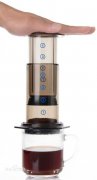
The AeroPress is a two-part brewing tool that produces rich, full-bodied coffee quickly by pushing hot water through coffee grounds using manual pressure. Unlike a pour-over or French press, the AeroPress isn’t electric, and it doesn’t rely on gravity alone—it uses physical pressure to speed up extraction. Inspired by espresso machine mechanics (but without electricity or portafilters), it creates a sealed brewing chamber where you manually apply pressure to extract flavor efficiently.
It’s often compared to a French press, but with shorter brew times and lower temperatures—two big differences that set it apart in the specialty coffee world. Though it launched in 2005 as an unconventional device, the AeroPress quickly earned respect for its versatility, portability, and ease of cleaning.
Why the AeroPress Stood Out
When it first hit the market, many specialty coffee experts dismissed the AeroPress as a toy. But Alan Adler, its inventor and founder of AeroPress Inc., responded with delicious brewed samples—and flavor won the argument. Over time, the AeroPress proved it could deliver excellent coffee fast, with minimal equipment. It’s popular because it’s easy to clean, travel-friendly, budget-conscious, and incredibly adaptable.
More than just convenient, the AeroPress invites experimentation: adjust brew time, water temperature, coffee dose, agitation, brew direction (upright or inverted), and filtration to highlight different flavor notes. That range of possibilities helped spark the World AeroPress Championship (WAC), where home brewers and professionals alike push the boundaries of what the device can do.
The Rise of the World AeroPress Championship
The WAC began modestly in 2008 in Oslo, Norway, with just three competitors and organizers Tim Varney and Tim Wendelboe. Today, it’s a global phenomenon. By 2018, over 3,100 people from 61 countries competed in person, with 68,265 watching online. Competitors explore every variable: agitation style, brew direction, coffee-to-water ratio, grind size, and more. Unlike traditional barista competitions focused on espresso machines, the WAC is creative, accessible, and open to anyone with an AeroPress and curiosity. It’s a celebration of experimentation that has expanded the reputation of the device worldwide.
How to Brew Single-Origin Coffee with the AeroPress (Reverse Method)
This walkthrough uses FrontStreet Coffee’s Kenya Little Tomato—a single-origin lot with bright acidity reminiscent of green plum and cherry tomato, and a juicy sweetness like pears. The recommended specs:
- Coffee dose: 18g
- Grind size: Fine pour-over (EK43s setting 7, 90% through a China-standard No.20 sieve)
- Brew ratio: 1:11 (approximately 200ml total water)
- Water temperature: 90°C
- Brew method: Reverse (inverted) method for stability
Step-by-step instructions:
- Place two AeroPress paper filters (preferably circular) inside the filter cap and rinse with hot water to seal the cap against the chamber.
- Assemble the plunger and chamber, then press the plunger down to the number 4 mark. Invert the whole unit so it sits upside down.
- Add 18g of finely ground coffee into the chamber, then pour in hot water (90°C) up to the number 2 mark on the chamber. Start your timer immediately.
- Stir the coffee and water mixture gently for 10 seconds using a spoon or paddle.
- Attach the rinsed filter cap with wet filters to the top of the chamber.
- Place your cup or server on a stable surface, then carefully flip the AeroPress right side up over it.
- At the 1-minute mark, begin pressing the plunger down steadily until you hear a hiss. Total brew time should be around 1 minute 20 seconds.
The reverse method offers more stability—especially helpful for beginners—and helps produce a clean, vibrant cup. This particular Kenya profile delivers juicy, sweet-tart notes with a round mouthfeel.

Frequently Asked Questions
What is the best grind size for AeroPress single-origin coffee?
A good starting point is a grind size slightly finer than standard pour-over (e.g., EK43s setting 7, ~90% through a China-standard No.20 sieve). For Kenya Little Tomato, this produced balanced extraction with good clarity and sweetness.
What water temperature should I use for AeroPress?
For brighter, more acidic single-origin coffees like Kenya Little Tomato, use 90°C water. Adjust higher or lower depending on the bean’s density and processing style.
How long should an AeroPress brew take?
Total brew time—including blooming, stirring, and pressing—should be around 1 minute 20 seconds when using the reverse method. Adjust time to taste, but avoid over-extracting.
Is the reverse (inverted) method better for beginners?
Yes. Brewing AeroPress in the inverted position helps prevent drips during setup and gives you more control over brew time and pressure, making it ideal for new users.
Can I use the AeroPress for light roasted single-origin beans?
Absolutely. The AeroPress works well with light, medium, or dark roasts. For light roasts, use a finer grind and slightly cooler water to highlight floral, fruity, or acidic notes.
What makes the AeroPress different from a French press?
The AeroPress uses pressure and shorter brew times (typically under 2 minutes), finer grind sizes, and often paper filtration for a cleaner cup. A French press uses a metal filter, longer steep time, and coarse grind for a heavier, fuller-bodied result.
Recommended FrontStreet Beans for AeroPress Brewing
For AeroPress fans, FrontStreet Coffee’s Kenya Little Tomato delivers bright notes of green plum and cherry tomato with a juicy pear-like sweetness—perfect for highlighting the AeroPress’s clarity. Also try the FrontStreet PWN Golden Mandheling for its bold, clean profile of nutty chocolate and spice, ideal for darker roasts. Or explore the FrontStreet Strawberry Candy Espresso (a Geisha-based blend) for floral, fruity complexity. All three roast levels perform well in the AeroPress. Freshly roasted within 5 days · Orders placed before 17:00 ship the same day · Next-day delivery across most of Guangdong Province.
FrontStreet Coffee is a long-established specialty coffee roaster in Guangzhou China, selling freshly roasted beans from its own farm in Yunnan as well as dozens of carefully selected single-origin beans from around the world for both pour-over and espresso. The products deliver consistently excellent quality and great value, with shipping within 24 hours. Guangzhou's FrontStreet Coffee shop is recommended by many coffee lovers, and the beans are now available online at the Tmall 。
Important Notice :
前街咖啡 FrontStreet Coffee has moved to new addredd:
FrontStreet Coffee Address: 315,Donghua East Road,GuangZhou
Tel:020 38364473