Friday, September 11, 2026 · Leading English Source for Global Coffee Industry

Coffee Farm

Latest articles, industry insights and brewing guides

What is the good material of the coffee cup?

What is the good material of the coffee cup?

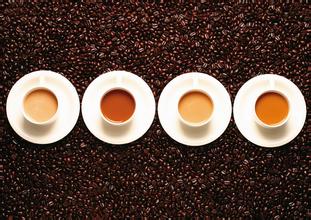
Drinking coffee is like drinking water, it is a matter of course. But for a good cup of coffee, in addition to careful baking and exquisite operating skills, coffee cups also play an extremely important role. Basically, coffee cups can never react with coffee, so active metals can never be used as coffee cups (of course, if you want to pursue alternative flavors)

All the varieties of Robusta

All the varieties of Robusta

The output of Robusta species accounts for 25% 35% of coffee bean production, and its main producing countries are in Indonesia (one of its coffee beans is a kind of coffee beans processed by washing, which is a hybrid between Robusta and Arabica. It is the only kind of coffee beans on the Chinese market that can be used as a single drink), Vietnam, Africa, (Ivory Coast, Nigeria, Angola)

What are the cafes in Athens

What are the cafes in Athens

The Cycladic Art Museum is a collection of Cycladic civilization, which is a distinct example of neoclassical architecture. Located in a prominent position in the center of Athens, Greece. Kois Associated Architects, an Athenian architecture firm, has redesigned its cafes and stores to match the Cycladic feel. Cycladic Cafe Design Restaurant in Athens, Greece

Roasting ingredients of coffee beans

Roasting ingredients of coffee beans

Baking is roughly divided into shallow baking (Light), medium baking (Medium), urban baking (City) and deep baking (Deep). Light roasted coffee beans: will have a strong smell, very crisp, high acidity is the main flavor and slightly mellow. Medium-roasted coffee beans: have a strong mellow, but also retain a certain degree of acidity. City-baked coffee beans: dark brown on the surface

How many varieties of coffee beans are there?

How many varieties of coffee beans are there?

French Milk Coffee: the ratio of coffee to milk is 1:1. When the orthodox French milk coffee is brewed, the milk pot and coffee pot are filled with coffee cups from both sides at the same time. This method has been going on for hundreds of years. Today, it is still an indispensable drink on the French breakfast table. French baby, full of milk flavor! Turkish coffee: still use the original cooking method, complex process with

Introduction of Ethiopian Yega Fischer G1

Introduction of Ethiopian Yega Fischer G1

Yejia Xuefei, nearly 2,000 meters above sea level, is one of the highest coffee producing areas in the world. Here has been a wetland since ancient times, Yirga means to settle down, Cheffe means wetland, Lake Turkana, Lake Abaya, Lake Chamo bring rich water vapor here. The rift valley, represented by Misty valley, is foggy all the year round, like spring all the year round, with a gentle breeze.

How much coffee does the coffee tree produce in a year?

How much coffee does the coffee tree produce in a year?

At present, the most important coffee beans in the world come from Arabica, Robasta and Liberia. these three varieties of coffee beans are the three original species of coffee trees, and the quality of coffee beans produced by other coffee trees is also higher than that of other coffee trees. Arabica Coffee Tree, which originated in Ethiopia, accounts for 70% of the world's coffee production, and is a world-famous coffee product.

How to adjust manual coffee grinding

How to adjust manual coffee grinding

If you want to grind your own beans and drink coffee, bean grinders under 1000 yuan generally cannot be used, because this kind of bean grinder is not actually ground, but is beaten by high-speed rotation with a steel knife, and the powder is uneven, and it is difficult to control the thickness of the powder. Hand bean grinder is to play, really want to drink, tired to death fart, the same grinding degree is not easy to control. The real bean grinder uses high strength.

Introduction to the characteristics of Cappuccino Coffee

Introduction to the characteristics of Cappuccino Coffee

Don't say I don't know, you think that layer of foam is just embellishment, but in fact, it is the foam that determines the taste of cappuccino coffee. Milk must be skim, and then use a special foamer to milk, so that the milk is very uniform, very delicate. Coffee cups also have requirements, the cup should be warm with hot water, in fact, in order to solidify the foam, if the foam dispersed, it will be very ugly

Siphon pot and ice drop coffee

Siphon pot and ice drop coffee

Ice drop coffee is a kind of Dutch coffee, which is generally roasted and finely ground, using a curling kettle to add enough underboiled water, and then putting it into the refrigerator to get the flavor of coffee beans. The taste of coffee beans mainly comes from the degree of roasting. Raw coffee beans are unscented by roasting in order to produce the unique flavor of coffee, mainly light roasting.

Jun 04, 2016 114 views #Siphon #ice droplets #coffee
Siphon pot and ice drop coffee

Siphon pot and ice drop coffee

Ice drop coffee is a kind of Dutch coffee, which is generally roasted and finely ground, using a curling kettle to add enough underboiled water, and then putting it into the refrigerator to get the flavor of coffee beans. The taste of coffee beans mainly comes from the degree of roasting. Raw coffee beans are unscented by roasting in order to produce the unique flavor of coffee, mainly light roasting.

Jun 04, 2016 113 views #Siphon #ice droplets #coffee
Siphon pot and ice drop coffee

Siphon pot and ice drop coffee

Ice drop coffee is a kind of Dutch coffee, which is generally roasted and finely ground, using a curling kettle to add enough underboiled water, and then putting it into the refrigerator to get the flavor of coffee beans. The taste of coffee beans mainly comes from the degree of roasting. Raw coffee beans are unscented by roasting in order to produce the unique flavor of coffee, mainly light roasting.

Jun 04, 2016 114 views #Siphon #ice droplets #coffee
Varieties of coffee beans in Africa and South America

Varieties of coffee beans in Africa and South America

Neutral Brazil, El Salvador, lowland Costa Rica, Venezuela, Honduras, Cuba. Mellow Colombian metenin, Mocha, Blue Mountains, Guatemala, Costa Rica. Generally speaking, sour coffee beans, especially high-quality new beans, are best roasted shallower, while bitter coffee beans are roasted shallower, and then sweet details are mostly in the highlands.

The process of making ice drop coffee

The process of making ice drop coffee

1. According to the number of users, pour an appropriate amount of drinking cold water into the water bottle and put it back on the top cover. * the standard amount of water per person is about 120cc (if ice is added, the same amount of water should be deducted to avoid excessive amount of water and over-extraction). * due to the long dripping time, it is recommended to open it when adding an appropriate amount of ice, and it is better to keep the low temperature extraction flavor. Usage of ice drop coffee II. Close it first.

Jun 04, 2016 209 views #Ice drops #coffee #making process
International transaction price of civet coffee

International transaction price of civet coffee

Kopi Luwak, produced in Indonesia, is one of the most expensive coffee in the world. Indonesia grows a lot of coffee crops, including wild animals called civets, omnivores, pointed mouths and dark gray fur. The favorite food is fresh coffee beans, which are fermented and digested in the body and eventually become the feces of cats. Feces are just grains of coffee beans.

The extraction rate of fine coffee is related to the concentration and the amount of water extracted from coffee?

The extraction rate of fine coffee is related to the concentration and the amount of water extracted from coffee?

However, due to the different tastes of different populations, the requirements for intensity are different, and the theory cannot point out that the specific flavor or the miscellaneous flavor originally caused by the problem of beans is the so-called extraction rate, that is, how much coffee powder will be dissolved in water when it is placed in water. According to SCAA theory, up to 30% of the material will be dissolved in water. In general, if the substance dissolved in water occupies the coffee