Saturday, September 5, 2026 · Leading English Source for Global Coffee Industry

Coffee Knowledge

Latest articles, industry insights and brewing guides

Detailed explanation of the whole process of coffee roasting

Detailed explanation of the whole process of coffee roasting

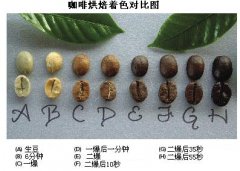
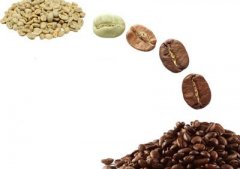
Comparison of coffee beans at different stages of roasting [Photo Source: Fang Jiangang] have you prepared raw beans and decided to roast coffee beans with exclusive flavor? If not, you might as well use your imagination to follow me on this fragrant baking trip. To put it simply, baking is heating the baking directly. Unlike cooking, you don't need oil or water to bake.

Honeycomb structure of roasted coffee beans

Honeycomb structure of roasted coffee beans

Coffee enthusiast, Professor Yukio Hiroase of Kanazawa University in Japan, has a doctorate in engineering and specializes in computational mechanics. the boss has studied coffee beans with a hundred and twenty thousand scientific spirit and achieved the following results: 1 the interior of roasted coffee beans is honeycomb structure. different roasting methods form different honeycomb structures. (2) the diameter of honeycomb cavity is basically 0.01mm, that is, about 10 microns. three

Jul 04, 2014 162 views #Roasted coffee beans
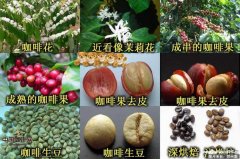
[illustration] Coffee growth process

[illustration] Coffee growth process

1. Seed selection, seedling planting, shaping, pruning, soil management, fertilization, pest control, flowering and fruit picking. 2. Picking can be divided into two ways: manual picking and mechanical picking. Manual picking is divided into two ways: daylighting and selective picking. High quality coffee beans can be obtained by picking.

Detailed explanation of coffee roasting (Coffee Roasting)

Detailed explanation of coffee roasting (Coffee Roasting)

Coffee roasted Coffee Roasting coffee is popular mainly because of the aroma formed after roasting and the taste when drinking. The coffee raw bean itself does not have any special taste, it is roasted to completely change and reorganize the substances inside the raw bean to form a new structure, thus bringing out the mellow flavor of the coffee. Baking tool roaster, divided into three categories: direct fire type, semi-hot air

Storage of coffee beans

Storage of coffee beans

The ideal way to buy and make coffee is to buy a lot of raw coffee, bake it yourself, and grind it before you prepare it. But most people like to buy roasted coffee beans, and they probably buy more than we use for several days. Water is the enemy of storing coffee. Coffee oil is water soluble. It makes coffee more flavored, while moist conditions can corrupt coffee oil.

A brief introduction to the roasting degree of coffee

A brief introduction to the roasting degree of coffee

Cinnamon Roast: cinnamon baking: this is the lightest kind of baking. There is no oil on the surface of the coffee beans. Large coffee bean manufacturers often mix the lightly roasted coffee beans with the coffee beans they sell. Because it can save money and increase the quantity. Cinnamon-roasted coffee beans usually do not appear in urban baking City Roast: the name of urban baking.

Jul 04, 2014 214 views #Coffee roasting #coffee roasting
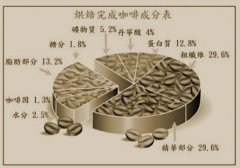
Roasting finished coffee composition table

Roasting finished coffee composition table

Caffeine: caffeine is the most eye-catching of all the ingredients in coffee. It belongs to a kind of phytoxanthin (animal muscle component). It has the same properties as theobromine contained in cocoa, green tea contains the same theophylline, and the percentage of reduction after baking is very small. Caffeine has a very wide range of effects. will affect the human brain, heart, blood vessels, gastrointestinal, muscle and kidney and other parts, the right amount of coffee

Main varieties and characteristics of coffee (cooked beans)

Main varieties and characteristics of coffee (cooked beans)

Blue Mountain Coffee: Produced in Jamaica, it is mellow, slightly sour, supple, sweet, delicate in flavor and light in taste. Colombia: Produced in South America, slightly sour, mellow, soft and mellow, slightly sour to medium acid. Brazil: produced in South America, neutral, medium bitter, fragrant, slightly sour, slightly bitter, restrained. Mantenin: produced in Indonesia ~ Sumatra, bitter, fragrant bitter. Mocha: Produce esopi

Coffee roasting degree resolution chart

Coffee roasting degree resolution chart

American Coffee Association (SCAA) roasting standard this standard uses infrared caramelization tester technology (Agtron) to measure the color of coffee beans to determine the roasting degree of coffee, and the color is divided into eight equal parts into eight standard color blocks for coffee industry as roasting identification. The above colors are for reference only according to the roasting degree preferred by each country. This is also coffee roasting.

Jul 04, 2014 126 views #Coffee roasting #coffee roasting
Five Environmental factors for growing Coffee

Five Environmental factors for growing Coffee

Coffee can not be grown in any environment, because it is originally a plant growing in a tropical rain forest. In systematic development, coffee forms the habit of calm wind, cool, shaded or semi-shaded and humid environment. Therefore, coffee has strict requirements on planting conditions. We call the strips on both sides of the equator, between latitudes 25 degrees south and north, suitable for coffee growth as coffee belts.

Roasting and mixing Roasting &  Blending of Coffee beans

Roasting and mixing Roasting & Blending of Coffee beans

When high-quality coffee beans are picked, the most important step in making them gourmet coffee is roasting and mixing. A master baker must have both the temperament of an artist and the rigor of a scientist. Only in this way can we ensure that the sugars and other carbohydrates contained in the coffee are carbonized during the roasting process, thus producing the well-known coffee fat and producing good coffee with high quality and consistent style.

Jul 04, 2014 83 views #Coffee beans are roasted and mixed.
Roasting Theory of Coffee beans (2)

Roasting Theory of Coffee beans (2)

Let's talk about the definition of various baking degrees and taste. In the United States, the degree of roasting has long been defined by Cinnamon (shallow roasting), City (shallow roasting), Fully City (deep roasting) and Dark roast (heavy deep roasting, including Italian and French). However, the American preference for coffee flavor has always been strong in the west and light in the east, so on the west coast.

Knowledge of coffee botany

Knowledge of coffee botany

There are more than 60 kinds of coffee, but there are roughly two varieties of coffee grown commercially on a large scale, one is Arabica, accounting for about 70 percent of the world's coffee planting area, and the other is Robasta, accounting for about 30 percent of the world's coffee planting area.

Roasting Theory of Coffee beans (1)

Roasting Theory of Coffee beans (1)

Grab a handful of coffee raw beans smell, there is always a pungent smell, very different from the impression of the charming smell of coffee. However, after roasting "fragrance" correctly, raw beans will emit the strongest aroma in the world. The small high-altitude Arabica coffee raw beans are like a warehouse full of chemicals. At present, scientists have identified more than 2,000 known ingredients, including 700 to 700.

The origin of coffee trees

The origin of coffee trees

The earliest origin of coffee trees is recognized by botanists and the industry as Kaffa province in Ethiopia. Ethiopia is located in the landlocked country of northeast Africa, with many lakes, rivers and rich water resources, which is called the East African Water Tower. The name of the country comes from the Greek word for tanned faces and land inhabited by suntanned people.

Roasting and taste of coffee

Roasting and taste of coffee

Since the Arabs discovered the coffee beans, the first way to eat them is to put the whole fruit of the coffee into the mouth and chew it to get its juice. Later, they ground the coffee beans from the fruit and mixed them with animal fat as a physical supplement for caravans to trade far away. After that, around 1000 AD, it was changed to the method of boiling raw beans into soup. Until 13.

Tips for ESPRESSO Baking (selected translations)

Tips for ESPRESSO Baking (selected translations)

Translated from Fresh Cup Magazine's Coffee Almanac,2003 June issue, pp. 36-40, Roasting for Espresso: Implications for Coffee Retailingby David Schomer. Introduction A few years ago, I took a very important coffee course to compare the differences between espresso and other immersion brewing methods (such as French pressure and trickling).

Jul 04, 2014 101 views #ESPRESSO baking #baking tips
Fresh-keeping skills of coffee

Fresh-keeping skills of coffee

With the increase of time and processing procedures, the life of coffee will be reduced; the appropriate storage method can prolong the shelf life of coffee. Coffee should be stored in a dry, cool place, not in the refrigerator, so as not to absorb moisture. Coffee beans and ground coffee can be frozen. The only thing to note is that when you take coffee out of the freezer, you need to