
Coffee Technology
Latest articles, industry insights and brewing guides

Coffee flower should pay attention to what kind of coffee pull flower with what milk pull what coffee is called
Coffee flower drawing is divided into two processes, namely: flower drawing and carving. To pull flowers is to pour milk with milk foam into espresso to mix the two kinds of foam to form a unique pattern. However, carving, as the name implies, is to draw a more delicate figure on the surface of the coffee with a coffee needle, extra milk foam or chocolate sauce. Nowadays, the art of coffee carving can be painted more complex.

Coffee brewing ratio instant coffee brewing ratio coffee powder brewing ratio
In theory, during the brewing extraction process (the roasting degree of coffee beans is 5565 according to the SCAA standard), the hot water temperature in contact with coffee powder should be kept at 9194 degrees, which is called the best extraction water temperature. Of course, this temperature range is a theoretical value, and experienced producers don't have to be too dogmatic. In practical applications, it may be for a specific brewing appliance, or for a certain type of deep baking.

Coffee drying and semi-washing coffee beans semi-washing coffee bean washing
Semi-washed coffee is mainly produced in Silado area, which is characterized by the fact that the coffee beans are not impregnated through the fermentation tank. According to Fulaigao coffee experts, semi-washed coffee beans contain fewer defective beans than the drying method, and are rich in sour taste. If you use shallow baking, it will taste like grass, while deep baking will make the bitterness extremely obvious, so it is the most suitable for moderate baking.

Automatic foam coffee machine semi-automatic coffee machine milk foam coffee machine skills
1. Put the pull vat containing milk bubbles vertically and collide with the table, so that the big milk bubbles will burst into small ones. After the big milk bubbles are burst, shake the flower jar horizontally and let the foam rotate and collide, which will also eliminate some large milk bubbles. The dense milk bubbles are as smooth and shiny as the mirror. 2. Use a spoon to scrape off a large layer of milk foam above the foam and leave the thick milk below.

The process of Coffee Bean drying process sludge dryer Coffee raw bean treatment coffee saving method
1. Raw beans: the raw coffee beans before stir-frying are only for the convenience of transshipment, without special packaging conditions, depending on the differences of each production area, out of economic and practical considerations, generally use 60 kg gunny bags for packaging, and then further processing after arriving at the destination. Of course, there will be some different packaging, such as Jamaica Blue Mountain is packed in 70kg wooden barrels. 2. Cooked beans:

How long does it take to learn how to make coffee?
The ratio of cappuccino to steamy milk is 2/3 cup coffee to milk and 1/3 cup steamy milk, and it's not that ratio that proves you're not making cappuccino, which is why I say pay attention. It's easy to make a nice pull and make the steamy milk too thin, and then you want to make cappuccino and make latte.

The Prospect of Coffee Raw Bean Market Coffee merchants mix coffee beans in Italian style with strong coffee flavor
The coffee industry has helped more than 15 million people find jobs and accounted for about 31 per cent of the country's foreign exchange earnings. According to Shimelis Arega, a spokesman for Ethiopia's Ministry of Trade, the country's exports are expected to grow by 45% this year and are expected to reach 260000 tons. Of these, about 60, 000 tonnes (or 1 million packets) will be traceable, accounting for about 25 per cent of total exports. The bar code system is designed by IBM.

Iced coffee is more expensive than hot coffee. Ice coffee time ice drop Yega Chuefei.
The reason is that the supply cost of iced coffee is a little bit higher than that of hot coffee. Iced coffee, for example, needs to be filled with plastic cups and is equipped with straws. This is more expensive than hot coffee using paper cups alone. Because the second iced coffee, as the name implies, obviously needs ice, which means that the coffee shop may need to buy an ice maker. Of course, this adds a little bit to the cost. Reason three production

The method of volcanic flushing comes from the hand-flushing method of deep-roasted coffee beans in Japan.
As long as you can get rid of the preconception that coffee is a hot drink, you can see more coffee charm. People often say: I agree with the saying that good coffee tastes good even if it is cold. In the process of drinking coffee, the temperature drops slowly, at the same time, the sour and bitter taste also gradually change the balance, stickiness increases, it will produce a rich taste. Keep picking.
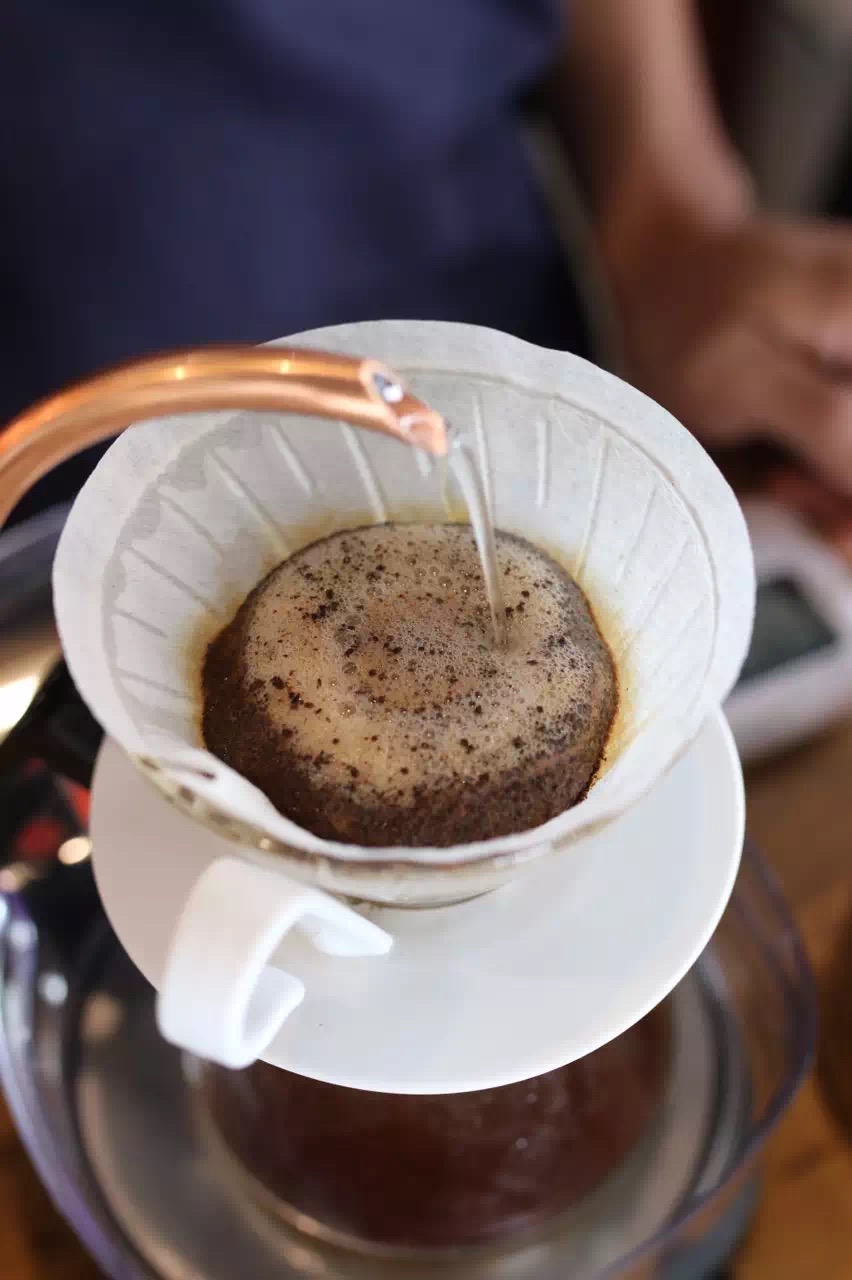
Akita hand coffee brewing skill Kono coffee brewing skill hand coffee maker
Akita hand coffee skills: between 68 and 78 degrees, the essence of coffee is extracted through the natural tension of water, which can maintain the cleanliness of coffee liquid and maximize the aroma of coffee powder. Teacher Huang Zhiren created Akita-style low-temperature hand flushing according to the eating habits and taste preferences of Guangdong locals, and has always insisted on using it in the operation of Cafe Cafe.

Coffee bean treatment method Honey treatment method introduction what kind of coffee bean is more suitable to use honey treatment method
Tanning has long existed in Ethiopia and Yemen. It doesn't waste much water and electricity, but it takes a lot of time and manpower to separate unripe beans from defective beans. After the coffee is picked, immediately go into the drying ground to dry. The process takes up to a month, and it must be carefully observed and constantly flipped to prevent

The treatment methods of raw coffee beans introduce how many treatment methods there are for coffee beans
Tanning. Brazilian coffee fields are endless and are mostly harvested mechanically in order to meet the economic benefits. When 75% of the coffee fruit in the coffee garden turns red, mechanical harvesting is started, followed by the same pre-washing operation, which is moved into the sink to remove floating beans, sift out the sunken beans, and then use a large pulp screening machine to dig out the pulp and remove the pods covered with pectin. The next stage is separated from the washing method.

The washing method of coffee beans introduces the treatment methods of coffee beans.
Then the raw coffee beans with residual pectin will enter the fermentation stage (fermentation with microorganisms in water or with microorganisms in the air); after fermentation, the fruit with endocarp will enter the flushing channel to rinse clean; after washing clean is the drying stage, the drying stage will try to keep the water content of raw coffee beans at about 12%, and then install them.

Introduction to the treatment of coffee beans how many treatment methods are there?
In the process of washing, the peel and pulp of the fruit are treated by a special desizing machine and the coffee beans are peeled off. The coffee beans then enter the fermentation tank for fermentation treatment so that the mucous membrane is no longer sticky. The sugars in the mucous membrane are decomposed during fermentation. Depending on the fermentation method, the fermentation time is usually 12 hours to 6 days (some growers use the watering system to ferment coffee beans.

Introduction of coffee treatment method introduction of coffee tanning method and washing method
Pulped-natural, also known as honey treatment (Miel Process in Spanish), is said to refer to the process of making raw beans that are sun-dried with mucous membranes. The honey treatment process is vulnerable to pollution and mildew, so it needs to be closely watched throughout the process, constantly turning, and speeding up drying, so as to avoid bad fermentation flavor. Its advantage is that it can best preserve the original sweetness of the ripe fruit of coffee.

Introduction to the planting technology of coffee the planting conditions and distribution of coffee
Coffee planting conditions and distribution 1. What is coffee? Coffee (Coffee) is derived from the Latin word Coffea (biological word name) and belongs to a member of the Rubiaceae family. These plants are all woody plants, most of which are distributed in the tropics, with more than 500 classifications and about 6000 varieties. Most of the Coffea plants are tropical 5-6 meters high.

Sun-treated coffee beans with charming citrus jasmine flavor introduce sun-treated coffee
Flavor introduction: if the washed Yega Chuefei has charming citrus, jasmine, lemon and other fragrances, the entrance of coffee is in full bloom ~ the sun Yega is more like a fruit bomb that explodes after the entrance, bold, wild, fruit-flavored syrup-like sweetness and mellow thickness in addition to its own citrus lemon aroma, blueberry and strawberry wine is amazing! The flavor is really better than water.

Introduction to the treatment of raw coffee beans introduction of honey treatment introduction to the treatment process of coffee production
Honey treatment as an advanced coffee processing method, there is no lack of practitioners in Yunnan. But not everywhere is suitable for the production of honey beans, coffee producing areas are mostly wet and rainy, this process is very easy to make coffee beans fermented mildew, mildew taste. Because in some places, while using honey treatment, it is easy to use microorganisms and natural nutrients to cultivate honey.

Coffee bean washing method introduces which coffee bean varieties are treated by washing method
Washing is currently the most popular method of treatment, most of the fine coffee beans will choose washing method. Washing coffee refining process: harvesting tank (remove impurities and immature beans) pulp remover (remove pulp and impurities) fermentation tank (remove mucosa attached to the endocarp) washing tank (select light and hard beans) solarization field (or dryer) hulling machine (

There are several ways to treat coffee beans.
Honey treatment is a complex, time-consuming and difficult processing method. The first step is to select the best fruit, then peel off the flesh to leave the endocarp, which is the core of the honey treatment. The endocarp is rich in sugar and sourness, which slowly penetrate into the beans during drying. The second step is drying and producing high quality coffee.