
Specialty Coffee Beans
Latest articles, industry insights and brewing guides

The advantages and disadvantages of washing treatment method coffee beans, washing treatment method and sun treatment method which good to drink?
Treatment is a necessary condition for making a coffee bean, and it is also a crucial step, which guides the direction of coffee flavor. What is coffee bean processing? Such as common washing, sun and honey treatment. These treatments refer to green bean treatments, which are processes to obtain the green bean portion of the coffee fruit, scrape off the pulp, peel, and fruit layer. Coffee after harvest
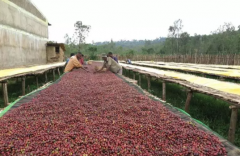
What are the characteristics of sun treatment? What is the difference between sun treatment and washing treatment?
A delicious coffee bean, is through the results, picking, manual selection and then through the raw bean processing, and finally in the baking, to get the well-known coffee beans. The treatment of coffee beans is very important in the treatment of raw beans, and the treatment method has always been an important part of coffee. As a process of shelling and taking beans, the different treatment methods and quality will directly affect the final flavor of coffee. Here
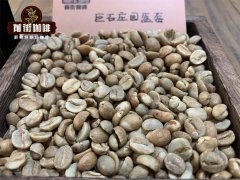
Classic flavor of Costa Rican boutique coffee Costa Rica only grows Arabica coffee
The origin of Costa Rican coffee can be traced back to the introduction of Cuban coffee in 1729, and began to export coffee to Colombia and Chile in 1820, and shipped it to London in 1845, which was called golden beans by British aristocrats. In 1825, the Costa Rican government announced the implementation of a duty-free policy for coffee. After 1832, it actively promoted the coffee industry and encouraged private small farmers.

Does Panamanian Coffee have only geisha varieties? is Panamanian Coffee suitable for hanging ears?
Panamanian coffee arrived with European immigrants in the 19th century, about 50 years after the country's independence from Spain, but as an agricultural product, it did not really gain a foothold until, so to speak, the past 20 years. In contemporary Panama, coffee comes mainly from the two main indigenous groups, the Bugle and Ngobe, and is usually privately owned by immigrants from Europe or North America or their descendants.

Why is it called Golden Manning? where can I buy authentic gold manning?
Mentling coffee, Ankora coffee and Lintong coffee grown in Sumatra are the best quality gourmet coffee in the world. These coffees are characterized by rich, more down-to-earth flavors than Java Arabica, unique herbal tones and low acidity. This low acidity makes them particularly attractive to people who are sensitive to healthy organic acids in coffee. Sumatra caffeine is abundant.

What is the grade of Jamaica Blue Mountain Coffee beans? Introduction to the grade standard of Jamaican blue mountain coffee beans.
Jamaica's blue mountain coffee beans are known to everyone in the coffee industry, and it has a long history. Even for those who don't drink coffee, when it comes to coffee, when it comes to blue mountain coffee, let's introduce the grade of Jamaican blue mountain coffee beans and what a standard it is. Jamaica (Jamaica) is one of the islands in the Caribbean. The Negro and Muratto
What's the difference between Sakuran and geisha? The difference between Humbera Coffee and geisha Coffee Bean and the Origin of the Story
Geisha/Gesha, due to its pronunciation close to the Japanese word for geisha-Geisha, is called geisha coffee in some areas. although the coffee bean flavor is exquisite, but this elegant flavor comes from the specific planting environment. Rose varieties are very picky about their growing environment, and they are required to be planted at higher elevations, with cloud shade or a large number of shade trees.

What kind of coffee is geisha Coffee? What is the relationship between the Emerald Manor and the Veil Manor?
geisha Coffee originated in Ethiopia and developed in Panama. geisha coffee was first introduced to Panama by Don Pachi Serracin from Costa Rica in 1963. Because the yield is not high, which directly affects the harvest, coffee farmers are not willing to plant and have been regarded as windbreak trees. Until the Emerald Manor of Panama was trying coffee beans, it was surprised to find that in its own coffee farm.
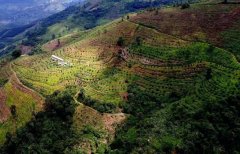
What is the boutique coffee in China, the development history of Yunnan coffee, is Yunnan coffee beans delicious?
Yunnan, as the main coffee producing area in China, what special flavor does it have? In recent years, Yunnan coffee beans stand out in the raw bean competition and become a group of dark horses to enter the boutique coffee market, so what is the unique charm of Yunnan coffee? What kind of story does it have? The first Yunnan coffee beans were introduced by Tian Deneng, a French Catholic missionary, via Vietnam in 1904.
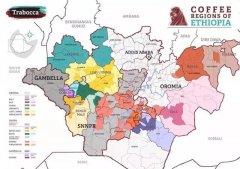
The origin of fine coffee beans in Africa, what kinds of coffee beans are in Africa, and the origin of coffee.
Speaking of coffee beans from Africa, you can immediately think of Kenyan coffee beans and Ethiopian coffee beans. Their beans have always been very popular among the people, because the rich sour fruits are really unforgettable. Africa, located in the equatorial zone, is a well-known region of coffee producers in the world, such as Ethiopia and Kenya. A

Cup test coffee is what kind of process, cup test coffee meter, cup test how to score?
Cup test coffee is what kind of process, cup test coffee meter, cup test how to score? The items tested in the COE cup are: aroma, cleanliness, sweetness, acidity, oral touch, flavor, aftertaste, balance, overall. COE is the abbreviation of Cup Of Excellence, which translates to the Cup of Excellence. The Excellence Cup Program was born in 1999. The main goal of the project is: through the quality coffee competition.
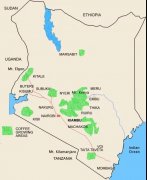
The origin of coffee-where does Kenyan coffee come from, how is it graded, is Kenyan coffee good?
The Republic of Kenya (The Republic of Kenya) is located in eastern Africa, the equator runs through the central part, and the Great Rift Valley of East Africa runs through the north and south. It is bordered by Somalia to the east, Tanzania to the south, Uganda to the west, Ethiopia and South Sudan to the north, and the Indian Ocean to the southeast. The coastline is 536 km long. 18% of the land area is arable land, and the rest is mainly suitable for animal husbandry. Coffee from Kenya
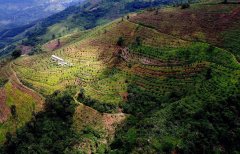
How to plant a coffee tree? The natural conditions of coffee cultivation and the skills of growing coffee.
How to grow coffee well? First of all, geographically, the golden planting belt of coffee is centered on the equator, covering the appropriate temperature from 25 north latitude to 25 south latitude. Coffee likes a warm environment, hardy but not hardy, and the most suitable planting temperature is between 16 degrees Celsius and 21 degrees Celsius. Good land environment, fertile soil. The most suitable soil for growing coffee is in the plains and mountains.

The history of coffee beans, the origin of coffee, the spread and development of coffee. How did coffee come from all over the world?
Coffee beans originated in Ethiopia, but the country that pushed coffee to the world was Yemen across the Strait of Mande. this was also because Ethiopia did not attach importance to coffee and had no standardized management at that time, and was amputated by other countries. But fortunately, now the African lion is awakening and is pushing it around the world with lightning. Coffee crossed the Red Sea in the 17th century.

How to drink Arabica coffee what are the benefits of Arabica coffee?
We know that, as far as botany is concerned, about 80 varieties of coffee have been identified, of which three are cultivated for drinking coffee, namely, Arabica, Canafra (also known as Robusta), and Liberia. Arabica species account for about 70% of the world's coffee, and there are many mutated or crossbred subvarieties, such as iron pickup.

What kind of coffee do people who know coffee usually drink? Is Brazilian Arabica coffee good?
Many people have the habit of drinking coffee, Italian coffee, espresso coffee and fine coffee suitable for hand brewing. Coffee is presented in different ways, and the coffee taste page will be different, and everyone's favorite coffee is also different. With the rise of the third wave of coffee, boutique coffee is increasingly loved by coffee industry people, and people who know a little about coffee

Overview of Ethiopia Green Coffee beans Why buy Ethiopian Green Coffee beans
Coffee beans in the Yirgacheffe Yegashifi, Sidmao Sidamo, Harrar Hara and Limulim regions are located in the Ethiopian highlands and account for 63 per cent of Africa's contribution to the global supply of raw coffee beans according to regional symbols. Ethiopia has long been coveted for its famous Arabica coffee tree and its aromatic and rich coffee beans. Yirgac of Sidamo province
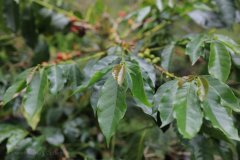
Peruvian coffee producing areas and coffee growing types are all Peruvian coffee organic?
Peru lies in the west of South America. Peru has been producing coffee since the 1700s. Peruvian coffee growers usually have small farms, but these growers have a reputation for producing high-quality shaded Arabica beans. The coffee industry is Peru's main industry, and coffee is the country's largest export. Peru is actually a major producer of organic coffee. Peru is
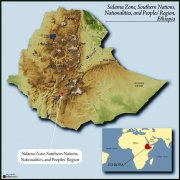
The birthplace of coffee beans, the producing areas and stories of Ethiopian boutique coffee beans.
The Federal Democratic Republic of Ethiopia (The Federal Democratic Republic of Ethiopia), or Ethiopia for short, is a country located in northeast Africa. It is bordered by Djibouti and Somalia to the east, Sudan and South Sudan to the west, Kenya to the south and Eritrea to the north. The plateau accounts for 2% of the country's area, with an average elevation of nearly 3000 meters.
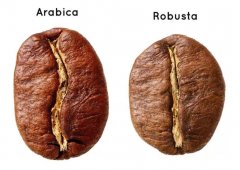
How many kinds of coffee do you have? A detailed introduction to the varieties of fine coffee beans. Coffee Knowledge Basics Teaching
With the development and change of the times, more and more people like to drink coffee, and the variety of coffee is very wide, different coffee has different tastes, the following is to introduce the types of common coffee. Coffee beans can be divided into two main types: Arabica and Robusta. Arabica: Arabica accounts for 65% to 80% of the total coffee market, and for the ring