
Coffee Farm
Latest articles, industry insights and brewing guides

An introduction to Kenyan coffee beans the characteristics of Kenyan coffee beans the culture of coffee beans
Coffee entered Kenya in the 19th century, when Ethiopian coffee drinks were imported into Kenya through southern Yemen. But it was not until the early 20th century that the Bourbon Coffee Tree was created by the St. Austen Mission (St). AustinMission) is introduced. Kenyan coffee is mostly grown at an altitude of 1500 to 2100 meters and is harvested twice a year. To ensure that only ripe berries are picked, people must be in the forest

Introduction of Ethiopian Coffee beans the characteristics of Ethiopian coffee beans
Various forms of coffee cultivation can be found in Ethiopia: everything from wild coffee forests and semi-developed land to traditionally operated plots to modern plantations. About 50% of the coffee is grown more than 1500 meters above sea level. Harrar coffee is the highest growing area of all coffee in Ethiopia. Hara coffee can be divided into long coffee.

Introduction of Ethiopian Coffee beans the characteristics of Ethiopian coffee beans
Various forms of coffee cultivation can be found in Ethiopia: everything from wild coffee forests and semi-developed land to traditionally operated plots to modern plantations. About 50% of the coffee is grown more than 1500 meters above sea level. Harrar coffee is the highest growing area of all coffee in Ethiopia. Hara coffee can be divided into long coffee.

The culture of Colombian coffee beans the characteristics of Colombian coffee beans boutique coffee
The largest producer of quality coffee in the world! The traditional deep-roasted coffee has a strong and memorable flavor. In 1808, coffee was first introduced to Colombia, which was brought by a priest from the French Antilles via Venezuela. Today, the country is the second largest producer after Brazil, with an annual output of 13 million bags of 60 kg each.
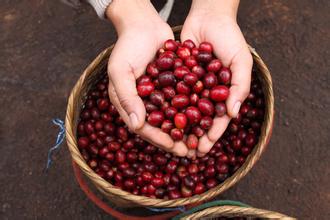
Nicaraguan coffee bean culture the characteristics of Nicaraguan coffee beans
The excellent Nicaraguan coffee is among the highest in the world, it is mild and delicious, moderate granule, very fragrant. In many countries, coffee production has been seriously affected for political reasons. Nicaraguan coffee industry is no exception. The 1979 revolution forced coffee planters to flee to Miami. This was followed by a period of uncertainty, and the government considered whether to re-

San Juan Ciudo is a small village in central Honduras with rich and well-balanced coffee.
San Juan Ciudo is a small village in central Honduras, 40 kilometers northeast of Tegucigalpa, the capital of Honduras. The town is under the jurisdiction of Francisco Morazn. In addition, Francisco Morazn has jurisdiction over Nuevo Rosario, Guacamaya and Plan Grande, with a total population of about 1400. Although San Juan Theodore is famous for its mineral deposits in history,

The characteristics of Honduran coffee beans the culture of Honduran coffee beans the price of Honduran coffee beans
Overall, Honduran coffee has a good reputation and is suitable for mixed coffee. Coffee in Honduras is imported from El Salvador. Honduras produces high-acid high-quality coffee. Like other places, the coffee grade in Honduras depends on altitude: coffee grown at 700 to 1000 meters above sea level is medium, and grown at 1000 to 1500 meters above sea level

The price of Guatemalan coffee beans the characteristics of Guatemalan coffee beans
Coffee production in Guatemala has declined relatively, at 700kg per hectare, while that in El Salvador is 900kg per hectare and that in Costa Rica is even more astonishing, at 1700 kg per hectare. The export of dangerous Dimara coffee is controlled by private companies, but the National Coffee Council (Asociacion Nacional de Cafe) controls the coffee industry.
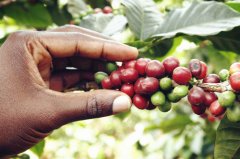
Volcanic geology Coffee cultivation Nicaragua Coffee bean flavor
The volcanic ash and shady cultivation produce high-quality Nicaragua coffee with a mild, mild, slightly acidic flavor. Nicaragua coffee is the largest of all coffee beans, and MADRIZ is located in the mountains of northern Nicaragua, adjacent to Nueva Segovia, Jinotega and Esteli. This area is quiet and elegant, with the famous Somoto

El Salvador coffee origin El Salvador coffee culture El Salvador coffee price
Unique, mild coffee. El Salvador is one of the small countries in Central America and has a very dense population. Its coffee flavor is characterized by excellent balance. Today, this coffee accounts for 40% of the country's exports. The best quality coffee is exported to Germany from January to March after 35% of the extra hard beans. In the early 1990s, guerrilla warfare greatly damaged the country's national economy.
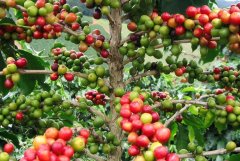
Niagara Jim Molina Manor Honey treatment of Red bourbon Fine Coffee
Nicaragua Honey Process Red Bourbon country: Nicaragua production area: La Sabana, Madriz altitude: 1400-1450m harvest time: December to March next year treatment method: honey treatment variety: red bourbon treatment plant: Jaime Jose Molina Fiallos flavor: chocolate, red fruit, fruit juice Nicaragua is mainly divided into four major producing areas.

Characteristics of Costa Rican coffee the culture of Costa Rican coffee
Costa Rican coffee is called extra hard beans, and this kind of coffee can grow at an altitude of more than 1500 meters. Altitude has always been a problem for coffee growers. The higher the altitude, the better the coffee beans, not only because the higher altitude can increase the acidity of the coffee beans and thus increase the flavor, but also because the night temperature at the higher altitude is lower, which makes the trees grow slowly, thus making the coffee.
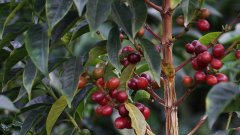
What is honey treated coffee beans treated with honey in different ways
Honey treatment is a kind of treatment between sun treatment and water washing. It keeps the coffee clean by washing, and because it is dried in the sun together with the pulp mucosa, it greatly increases the sweetness and caramel flavor of the coffee (the sugar content of the pulp mucosa is extremely high). Honey treatment first appeared in Costa Rica in Central America, mainly because of some high elevations in Central America.
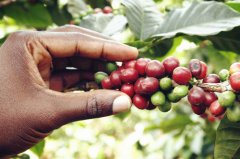
Fire Phoenix, a 100% organically grown coffee farm in Costa Rica
Located in the fertile hills of the Poas volcano in the central valley of Costa Rica, Fenghuang Manor is the first producer in Central and South America to produce honey-treated and sun-cured coffee. It is a completely 100% organically grown coffee manor. The owner believes that organic farming is a better choice for environmental maintenance and family health, even in the face of many technical and organizational
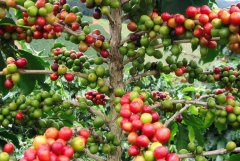
The history of coffee cultivation in Colombia is known as "green gold".
The history of coffee cultivation in Colombia can be traced back to the Spanish colonial era in the 16th century, and there are many theories about the history of coffee in Colombia: one: it is said to come from the island of Haiti in the Caribbean and from El Salvador in Central America. Second: in 1808, a priest introduced coffee beans to Colombia for the first time from the French Antilles via Venezuela. One of them

Red Honey of Fire Phoenix Manor in the Valley of Central Costa Rica treats Coffee Flavor
Located in the fertile hills of the Poas volcano in the central valley of Costa Rica, Fenghuang Manor is the first producer in Central and South America to produce honey-treated and sun-cured coffee. It is a completely 100% organically grown coffee manor. The owner believes that organic farming is a better choice for environmental maintenance and family health, even in the face of many technical and organizational

Introduction of coffee beans in Papua New Guinea characteristics of coffee beans in Papua New Guinea
The legendary background of modern coffee. In PapuaNewGuinea, about 75 per cent of coffee products come from small local farmers

The culture of Indonesian coffee beans the origin of Indonesian coffee beans
Coffee that makes you feel refreshed and ready to drink. Coffee is produced throughout Indonesia (Indonesia), and Java occupies an extremely important position in coffee history. In the mid-17th century, coffee trees were introduced to Indonesia by the Dutch (some official sources believe that earlier). The first batch of coffee from Java was sold to Amsterdam in 1712. However, in 1877

The characteristics of mocha coffee beans the origin of mocha coffee beans
Mocha beans are smaller and rounder than most coffee beans, which makes mocha beans look like peas. In fact, bean-shaped berry coffee beans (Peaberrybean) are sometimes called mocha beans. The shape of mocha coffee beans is similar to that of Ethiopia's Harrar coffee beans.
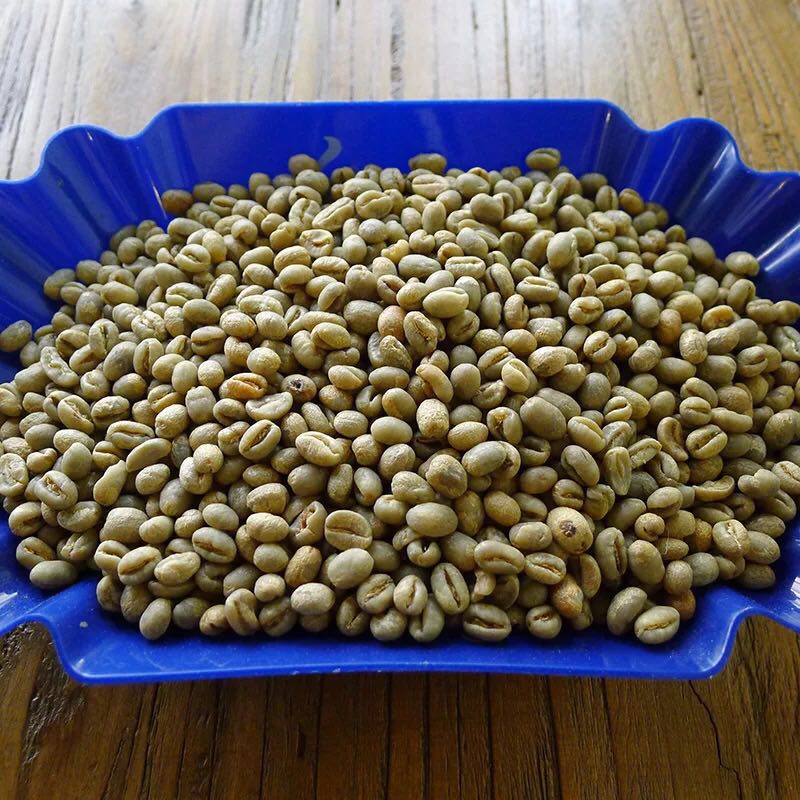
Characteristics of coffee beans in Tanzania A brief introduction to coffee beans in Tanzania the culture of coffee beans in Tanzania
Gourmet coffee has soft acidity and attractive aroma, which is absolutely worth enjoying. Coffee exports from Tanzania (Tanzania) play an important role in the whole national economy. Bean-shaped berry coffee is very productive and is said to be more fragrant than ordinary coffee. Generally speaking, the coffee beans in Tanzania have an extraordinary quality. For example, in the neighborhood of Kilimanja