Wednesday, September 9, 2026 · Leading English Source for Global Coffee Industry

Specialty Coffee Beans

Latest articles, industry insights and brewing guides

Knowledge about freshness of coffee beans and packaging and storage

Knowledge about freshness of coffee beans and packaging and storage

Raw coffee beans (that is, unroasted beans) will not rot for several years. Once the raw beans enter the roasting process, the aroma wakes up and they begin to age day by day. Roasted coffee beans will lose their taste in three to four days if they are not properly preserved. If they are properly stored, the taste period may be extended by three or four months. Fresh coffee beans are easy to soak into mellow jade, and off-flavor coffee beans are hard to be immortals. Raw coffee beans are not good.

Freshness is the importance of good coffee it is important to master the roughness and fineness of coffee beans

Freshness is the importance of good coffee it is important to master the roughness and fineness of coffee beans

Freshness is the first element of good coffee, and the second important task is to master the roughness and fineness of coffee beans, which directly affects the extraction effect, that is, the quality and intensity of coffee flavor. In principle, the finer the coffee powder, the longer the brewing time, the stronger the coffee flavor; on the other hand, the thicker the coffee powder, the shorter the brewing time, the lighter the taste. The longer the extraction time, the thicker the beans will be ground so as not to cause excessive extraction.

Analysis of the composition of coffee beans what ingredients are contained in a coffee bean?

Analysis of the composition of coffee beans what ingredients are contained in a coffee bean?

Raw bean (unit: percentage) moisture: 11.3 fat: 11.7 protein: 11.8 sugar: 8.0 essence: 17.1 caffeine: 1.3 Salmonic acid: 6.0 Minerals: 4.2 crude fiber: 28.6 cooked bean moisture: 2.5 fat: 13.2 protein: 12.8 sugar: 1.8 essence: 29.6 caffeine: 1.3 Salvianolic acid: 4 .0 mineral: 5.2 crude fiber: 29.

Steps of making special fancy coffee making of honey iced coffee

Steps of making special fancy coffee making of honey iced coffee

Honey iced coffee ingredients: coffee beans 60 grams / 6 cups, cold boiled water 720cc/6 cups, crushed ice. Beans: iced coffee beans (deep baked). Utensils: ice drop coffee group, pill filter paper, bean grinder, honey about 1 ounce. Use the cup: HG9811 shape glass. 1. The coffee is extracted by the "ice drop coffee usage" with the ice drop coffee group. two。 Will be extracted

The skill of choosing coffee beans from the beginning of drinking

The skill of choosing coffee beans from the beginning of drinking

When many books introduce how to choose coffee beans, they mostly ask to look at the beans, smell the beans, touch the beans and even bite them. although these are important, the prerequisite is whether the taste of coffee roasting is suitable for you. Each roasting stage will vary according to the roaster's understanding of coffee roasting, and the roasting hand will be adjusted for cost considerations.

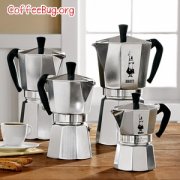
The working principle and usage of mocha teapot Analysis of the structural characteristics of Moka teapot

The working principle and usage of mocha teapot Analysis of the structural characteristics of Moka teapot

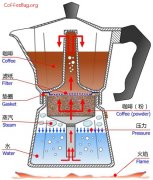
First of all, let's analyze the structural characteristics of the mocha pot: the lower pot is filled with hot water, and after it is heated on the stove, the boiling steam of the hot water will pass through the pressure to filter the hot water from the tube of the coffee container in the lower pot through the coffee powder and leave the fragrant coffee in the upper pot. Here are the general steps: 1. Water quality is very important! Preferably a household water purifier.

Relationship between altitude of Fine Coffee Bean planting and Coffee Flavor

Relationship between altitude of Fine Coffee Bean planting and Coffee Flavor

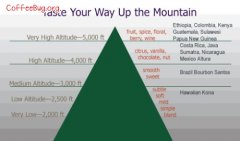
The influence of geographical location on the flavor of coffee beans is profound. All coffee grows in the tropics, and the altitude at which it grows has a profound effect on the taste of coffee. The tropical belt extends from 30 degrees north latitude to the equatorial regions of the southern mountains that produce the world's truly high-quality Arabica coffee. Central and South America, South Asia and some Pacific islands, south-central Africa is also the most important in the world.

Classification of coffee beans explanation of packaging names and specifications of coffee beans

Classification of coffee beans explanation of packaging names and specifications of coffee beans

● 's key to distinguishing coffee beans has recently been the increase in the number of unroasted raw coffee bean stores across the country in response to the gourmet needs of customers. In the store, you can personally choose what you like from the raw coffee on display, and some stores can also bake it for you on the spot. In this way, you can taste the fried and fragrant coffee at home. Here, for all of you

The basic method of making espresso the steps of making coffee in a mocha pot

The basic method of making espresso the steps of making coffee in a mocha pot

1) tools for espresso 1) mocha kettle group (including gas stove and stove) 2) coffee beans 3) bean grinder 4) pellet filter paper 5) espresso cup plate group 2) items for the use of mocha pots. It is recommended that you try to brew the coffee several times before tasting the coffee. two。 In order to prevent the coffee pot from being burned empty when brewing coffee, a small amount of water will be left in the pot after brewing coffee.

Colombia's two main coffee bean varieties Kadura and Colombia coffee bean production regional flavor

Colombia's two main coffee bean varieties Kadura and Colombia coffee bean production regional flavor

Colombia Coffee Producers Association (Federación Nacional de Cafeteos de Clolambia), or industry abbreviation [FNC] staff introduced the two main varieties of Colombian coffee, Cadura and Colombia. Kadura was introduced from Brazil in the 1960s and now accounts for 45-50% of Colombia's production, replacing the earliest Tibica. A new breed of the same name as Colombia [Colombi

Harald Coffee one of the highest elevation areas of coffee cultivated in Ethiopia

Harald Coffee one of the highest elevation areas of coffee cultivated in Ethiopia

Harald (Harar) is 1600 meters above sea level, and the Harald Heights in eastern Ethiopia is one of the highest elevation areas for human coffee cultivation (some even claim to be as high as 2000 Murray 2,700 meters). Across the Gulf of Aden, overlooking the two ports of Moka and Aden in Yemen. For centuries, Harald coffee farmers carried coffee beans down the mountain with camels, donkeys or carriages, risking being besieged by hyenas.

A variety of coffee from Guatemala.

A variety of coffee from Guatemala.

Guatemala is bordered by Mexico to the north, Honduras and El Salvador to the south, the Caribbean to the east and the Pacific Ocean to the west, with tropical rain forests, volcanic geology, plateau valleys and changeable microclimate. The average elevation of dangerous countries is high, with coffee belts distributed over 1500 meters and between 14 and 16 degrees north latitude, it is easiest to grow extremely hard beans, all of which are washed, 45% of which are washed.

Indonesian coffee Asian coffee has a higher alcohol thickness than Central and South America and African beans.

Indonesian coffee Asian coffee has a higher alcohol thickness than Central and South America and African beans.

The mellow thickness of Asian coffee is higher than that of Central and South American and African beans, but its sour taste is lower, with slightly sunken wood, herb, spice and earthy flavor, and its low and stuffy aroma is higher than that of rising sour flavor. At the end of the 17th century, the Dutch East India Company transplanted Indian Arabica trees (Tibica) to Jakarta, Java. Due to the favorable climate and soil, Arabica quickly spread to Sumatra in Java.

Brazil is the largest coffee producer in the world.

Brazil is the largest coffee producer in the world.

Brazil is the largest coffee producer in the world. Although Brazil has failed to increase production in recent years, it has greatly improved the quality of coffee in the past decade, trying to get rid of the idea that Brazilian weight is not important to quality and that Brazilian beans are as light as water. In recent years, it has successfully transferred to the boutique coffee market.

Common coffee terms how to express coffee beans in-line coffee terms?

Common coffee terms how to express coffee beans in-line coffee terms?

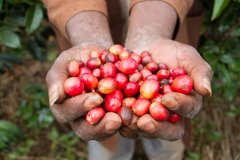
About coffee beans: * Coffee cherry: the fruit of a coffee tree, named because its rind is bright red and its shape is very similar to cherries. * round beans: when the coffee fruit is growing, one of the two seeds develops very well, and the other seed is eaten so that the coffee bean that should be oval becomes round. * Elephant beans: bigger than ordinary coffee beans and usually taste

The definition and concept of Fine Coffee

The definition and concept of Fine Coffee "Coffee Studies" by Han Huaizong

What is boutique coffee? The word is from Erna. Ms. Erna Knustsen was the first to reveal it in the Tea and Coffee monthly (TeaCoffee Trade Journal) in 1974. At that time, she worked as a coffee purchasing expert at B.C.Ireland in San Francisco. Based on her professional knowledge, she coined the new term [specialty coffee], which highlighted that only in the most

The species of coffee, tell me what kinds of coffee trees there are.

The species of coffee, tell me what kinds of coffee trees there are.

The coffee beans we usually see are red fruits on trees, seeds without peel and pulp. It is a kind of plant, so there will naturally be different tree species, just as there are many kinds of apples. There are two main categories visible in the market: Arabica and Robusta (rough flavor, caffeine more than twice as high as Arabica, not a boutique coffee variety. But in recent years, India

How to use Philharmonic pressure Aeropress to make Coffee syringe Coffee containers

How to use Philharmonic pressure Aeropress to make Coffee syringe Coffee containers

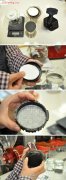
Philharmonic pressure Aeropress is an easy-to-operate coffee-making appliance with the characteristics of pressure extraction, which makes the coffee made by it different from manual drip coffee (that is, what we usually call hand-brewed coffee). Today we introduce to you about the use of Philharmonic pressure Aeropress to make coffee: the preparation of Philharmonic pressure before making coffee: prepare to filter.