
Specialty Coffee Beans
Latest articles, industry insights and brewing guides

Introduction to Nicaraguan Coffee Manor
Nicaraguan coffee of high quality is in the forefront of coffee beans in the world and enjoys a good reputation. Its particles are moderate in size, mild in taste and very aromatic and mellow. Nicaragua is located in central Central America, bordered by the Pacific Ocean to the west and the Caribbean Sea to the east. The highlands in the north and the coastal plains in the east are part of the Central American volcanic belt. The eastern plain is high-temperature and rainy, with a tropical maritime climate. Suitable

The taste of clean and meticulous Cuban crystal coffee introduces Cuban boutique coffee.
In Cuba, most of the coffee beans are picked by hand. Coffee beans are picked about every half a month during the ripening period. During or after picking, coffee beans are classified and those immature and bad beans are removed to ensure the quality of the coffee. Cubans usually deal with coffee beans in two ways: sun exposure and water washing. Sunbathing is the easiest,

El Salvador Coffee Manor El Salvador Coffee Flavor introduction of boutique coffee in El Salvador coffee producing areas
El Salvador's coffee accounts for 40% of the country's exports, and it is usually picked in November, December and January-March of the following year. The export of raw beans lasts almost all year round. Coffee is produced in seven of the country's 14 provinces, with the largest number in the northwestern provinces of chalatenango and santa ana. The coffee produced in El Salvador is 100% Arabica, of which 68% is

Peruvian coffee flavor and taste Peruvian organic coffee boutique coffee beans Peruvian coffee beans
Peru is also a big coffee producer. Up to 98% of Peruvian coffee is grown in forest areas, and most producers are small farmers. Coffee is high-quality and balanced and can be used for mixed drinks. Peru has good economic conditions and a stable political situation, thus ensuring the good quality of coffee. In the mid-1970s, Peru produced about 900000 bags of coffee a year, and then continued.

Indonesian Kopi Luwak producing areas introduce civet boutique coffee beans Indonesian coffee culture
Musk cats are omnivores, they are withdrawn by nature, like to walk at night, and live in tropical rain forests, subtropical evergreen broad-leaved forests, mountain shrubs or hills, mountains and grasses below 2000 meters above sea level. Its food includes small beasts, birds, amphibians and reptiles, crustaceans, fruits and seeds of insects and plants. Civets like to choose the most mature and sweet coffee trees.

Introduction of boutique coffee producing areas in Tanzania A brief introduction to the taste and flavor of Tanzania coffee manor
Tanzania's main coffee producing area, located at the foot of Mount Kilimanjaro, is rich in volcanic soil. Some coffee trees planted here are more than 100 years old. Coffee was first introduced by Christians from Kenya to grow coffee. Coffee trees must be carefully taken care of, weeded and fertilized. And old branches must be cut off so that new branches can grow to maintain the quality of coffee beans.

Introduction of Jamaican Fine Coffee A brief introduction to the Flavor of Jamaica Blue Mountain Coffee Manor
Coffee tree full minister on the rugged hillside, the picking process is very difficult, non-local skilled female workers simply can not do it. It is very important to choose the right ripe coffee beans when picking. Immaturity or ripeness will affect the quality of the coffee. The picked coffee beans are shelled on the same day, and then let them ferment for 1218 hours. After that, the coffee beans are washed and screened.

Indonesian boutique coffee beans Mantenin coffee flavor and taste introduction to the origin of Indonesian coffee
Experts say there is a gland near the sexual organs of Indonesian civets that secretes milky oil, which has always been a precious raw material for the perfume industry. Even Shakespeare's play King Lear has this dialogue: please give me some civet oil to stimulate my inspiration. Others say: this kind of coffee is unique and is a specialty of Indonesia. Drink it, it's like being in a stone.

Biloya Biloya Cooperative washes Ethiopian Yega Xuefei G1 original Coffee Caf é
The winner of the Sasa Sestic,2015 World Barista Competition and his business team ONA Coffee started a raw bean shopping program called Project Origin three years ago. The project works directly with coffee growers in poor countries and regions to improve their production conditions and give them a purchase price 20% higher than the fair trade price. The original intention of the development is also included.

Addis Katema cooperates with the Harald producing area where Yejia Shifei is tanned.
Compared with the traditional sun-treated Harald area, sun exposure is not common. As the first water washing plant in Ethiopia, coffee drinkers are more familiar with Yejia, which is famous for its elegant lemon and orange style. The coffee flavor treated with water washing is not easy to have wild flavor, has the characteristics of purity and freshness, and is suitable for light roasting degree.

Worka Woka cooperative Ethiopia Yega Xuefei G1 snow coffee native species Waka Worka single product
Processed by the Waka Cooperative (Worka cooperative). Alemayehu Alako Farm is a member of the Waka Cooperative. The Waka Cooperative, located in the south of Gedeb District, was founded in 2005, and joined the famous Yejia Sheffield Coffee Farmers Cooperative Union (YCFCU,Yirgacheffe Coffee Farmers Cooperative Union) that year to produce high-quality sunburn.

Arabica Coffee Tree Resa Cooperative Ethiopian Fine Coffee
Today, there are still a large number of wild Arabica coffee trees growing in many parts of Ethiopia, averaging between 4200 and 6800 feet above sea level. Now there is a trend of small cultivation, generally planting banana trees for shade at the same time, but due to lack of agricultural technology, herbicides and pesticides are less used. Resa cooperative (1000-1400 meters) belongs to the production area: Gedeo-Wen

Hafursa cooperative Yega Sheffield Ethiopian boutique coffee African flavor
Unlike ordinary African coffee, Sidamo has clear acidity, smooth taste and delicate floral smell. Washing Sidamo is elegant and playful. The entrance is mild and pleasant, with a strong taste impact with the bright lemon acid later on. The palate is unique and mellow, with a chic and pleasant aftertaste. The slowly rising finish contains chic sweetness. Coffee and raw beans are grayish

Sun treatment of Ethiopian Coffee by Konga Konga Cooperative Yega Chuefei
No matter whether the coffee is washed or dried, all the exported coffee is sent to the capital, Addis Ababa, and the DIRE DAWA auction outlet in Hara province. The DIRE DAWA auction center usually exports sunburn halas in the area. Coffee information from different farms can be seen in the auction house every day to facilitate the purchase of traders, and several official personnel from Ethiopia also go in and out of the center every day to inspect and make arrangements.
Finchewan cooperative Vina goo Ethiopia boutique coffee Yega Sheffield Sidamo
There are many water treatment plants on the main roads of coffee producing areas, especially in Jima area, and a large number of treatment plants are not fully utilized because of the fierce competition, so the person in charge of the treatment plant pays higher prices to farmers, but worries about whether they can make a profit. Nowadays, a kilogram of raw beans is usually sold for about 2 Birr (Ethiopian units).

Kochere Kochel of the Sigiga Cooperative in Ethiopia
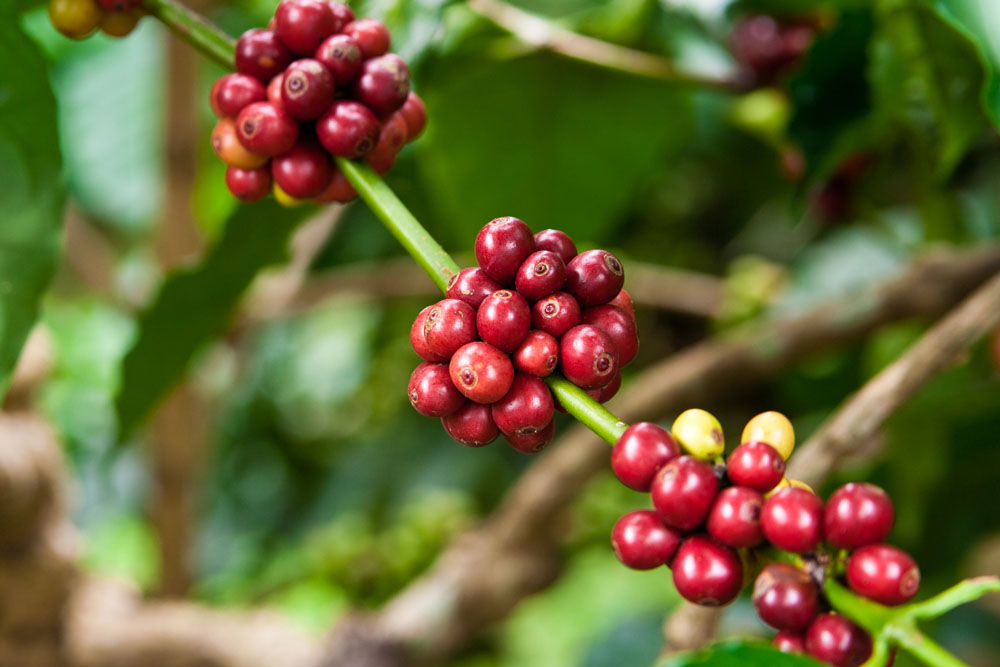
During the harvest, farmers harvest fresh red fruit every day, and every two days the coffee fruit is sent as a unit or sold to a washing plant for treatment. coffee fruit that has not gone through a water treatment plant is usually naturally fermented for about 12 hours, and then passed through the sun for drying and shelling. in any case, farmers always try their best to send them to the water treatment plant for treatment so that they can be washed.
Tumticha Cooperative Coffee Bean Ethiopian Yega Chefe Fine Coffee
Coffee is Ethiopia's main economic crop and the country's largest crop export and important industry. It accounts for 60% of Ethiopia's total export value and supports many small farms, as well as sugar, bananas and cotton. It is also Ethiopia's largest and important commodity export crop after oil, and it is also the largest export of Elaraby in Africa, in 1997.

African Aramo Cooperative body thick and lasting 90 + Clinique producing area
Flavor description: light fermented wine, jujube, sweet orange tonality, dark berries, litchi, carambola, peach, peach, longan jujube, honey sweet, cocoa with a hint of spice, body thick and lasting Aramo Cooperative (1750-2300 m) (90 + Clinique producing area): Gedeo- Yega Snow members: 2254 people Land attribute: red brown soil can provide

Ethiopian Coffee Edido Ediot Cooperative African Yega Sheffield Ethiopian Coffee
Production area of Edido Edidot Cooperative (1750-2300 m): Gedeo- Yega Xuefei members: 1044 people Land attribute: red brown soil can provide a set of treatment equipment certificates: Fair Trade Fair Trade, Organic organic coffee processing plant screening available berries, directly placed on the shelf exposure, just a few days before the sun will be turned every 2-3 hours to prevent excessive hair

Belekara Cooperative Yejia Shefei Gedeo-Wenago Vinago Ethiopian Coffee Bean
Sasa Sestic, winner of the 2015 World Barista Competition, started a green bean shopping project called Project Origin three years ago with his business team ONA Coffee. The project works directly with coffee farmers in poor countries and regions to improve their production conditions and pay them 20% above fair trade prices. Belekara Cooperative