
Specialty Coffee Beans
Latest articles, industry insights and brewing guides

Adado Adado Cooperative Sidamo-Bule soft acidity and citrus flavor
Production area of Adado Adado Cooperative (1200-1700 meters): Sidamo-Bule members: 1128 people Land attribute: red Brown soil can provide a set of processing equipment certificates: Fair Trade Fair Trade, Organic Organic Coffee Yirgacheffe coffee from Ethiopia, although petite, but gentle and delicate, sweet and lovely. As the hometown of coffee

Haru Cooperative Gedeo- Yega Sheffield Ethiopian Coffee
Yega Xuefei is a small town, 700-21000 meters above sea level, synonymous with Ethiopian boutique coffee. It has been a wetland since ancient times. The ancient saying "Yirga" means to settle down and "Cheffe" means a wetland. The mode of production and flavor of coffee here are so outstanding that Ethiopian coffee farmers compete to take pride in the flavor of their coffee, and thus become Africa.

Learn about the choice of milk before pushing and closing the pattern of Italian coffee.
Coffee flower is a comprehensive skill: 1, need to understand Italian blending, Italian baking, Italian extraction and control of many factors; 2, need to understand milk selection, milk composition, milk foaming and treatment of fusion; 3, need to understand coffee grinder, coffee machine use principle, adjustment, maintenance; 4, need to understand the selection of cups

Italian blending of coffee beans coffee pull flower requirements for milk foam skills of making milk foam
Milk foam element one: refrigerated milk is best refrigerated, about 5 degrees Celsius, the heat brought by the coffee machine steam can complete the formation of foam before the milk temperature goes up, on the contrary, the normal temperature is normal temperature milk, especially in summer, this makes the room for temperature rise is very limited, often in the steam shortly after the thermometer indicates 65 degrees. Milk foam factor 2: the amount of milk is drawn in the coffee.

The Fusion and injection of Coffee pattern the skill of Italian blending of Coffee beans
First of all, the main point: the integration of 1. Cup height: refers to the distance between the milk jar and the coffee cup, the distance between the normal milk jar and the coffee cup is about 510 cm (reference), it should be the distance between the cylinder mouth and the coffee liquid level. Each lesbian is different on this point, there is no exactly the same height and distance, there is no fixed height, but the purpose is only one thing, that is, to let the milk foam

Heart-shaped leaf-shaped tulip coffee pull step pull competition Italian blending of coffee beans
1. The cup is tilted and poured into the cup in a slightly higher place with a small flow of milk. pay attention to pouring it in the center of the cup. Here, the hand holding the milk tank is to pull the milk up and down in a uniform circle to merge the milk and espresso. two。 When the cup is half full or 7 minutes full, the milk tank falls directly, the cylinder body is attached to the cup edge, and the mouth is as close to the coffee liquid level as possible.

Panamanian Coffee Manor Jade Manor Panamanian Coffee producing area Flavor
Panama's geographical advantage is that it has many distinctive microclimate areas suitable for coffee cultivation, and Panama also has many persistent and professional coffee growers. This means there will be a lot of very good coffee in Panama, but these coffees are often associated with high prices. The high coffee price in Panama is mainly caused by the following factors: land price:

Panamanian Coffee Manor production area introduces Panamanian Coffee Flavor and Louise Manor
In 1996, Blaise and Rachel visited a farm for sale in the Haramijun area of the Bocketi Valley, and was attracted by the beautiful farm and immediately bought it. This is Esmeralda. Daniel Lou, the third son of Haramiqiong Farm. It is in this farm that Mr. Bidasson has grown Geisha coffee that attracts the attention of the coffee world. Geisha pronunciation is the same as Japanese.

Panamanian Coffee Flavor Manor, the King of Coffee Price ratio in Central America, introduces Esmera.
Panama Coffee, the king of coffee price in Central America, has been among the best coffee producers in the world since three years ago, surprising countries that have been in the vanguard of developer production for many years. Panamanian coffee is mainly produced in the west near the Costa Rican border, producing the best washed coffee. Compared with coffee beans grown at low and middle elevations

Introduction of Bolivian Coffee Flavor and Taste Fine Coffee beans from Manors in Bolivia Coffee producing areas
Coffee is grown in lower and humid areas, and after harvest, coffee farmers send coffee fruits or sticky shell beans to higher elevations to La Paz for further washing and drying. But the mountain road is steep, cars and horses are traveling together, and it takes more than ten hours to get to the processing plant when there is a traffic accident. Along the road, there are many tombstones killed in car accidents, and the coffee production of La Paz and Yonghas.

Panamanian Coffee with Flower and Fruit Flavor introduction to the characteristics of boutique Panamanian coffee beans
The dry aroma of geisha is very bright, with aromas of rose and jasmine, with aromas of pomelo and citrus, light baked with nutty aromas, and wet aromas with hazelnut and more floral characters. In terms of taste and flavor, compared with the previous rising aroma, the early stage may be slightly mild and subtle, a little cooler, and the flower and fruit flavor gradually decreases with the decrease of temperature.

Introduction of Jamaican boutique coffee beans with endless aftertaste introduction of Jamaican coffee flavor and taste manor
Jamaican Blue Mountain Coffee, however, Blue Mountain Coffee is a coffee that coffee retailers that value credibility need to stock up anyway. The major retailer in the UK said: no matter what the price, he will continue to sell Blue Mountain coffee all year round, because he has many customers who only recognize Blue Mountain. Since Japan has always invested in the Jamaican coffee industry, the cultivation of Blue Mountain Coffee is now mostly daily.

Mexican Coffee Flavor and Taste introduction Mexican Coffee Manor Fine Coffee beans Aldura Coffee
Mexicans are optimistic and enthusiastic, and it can also be seen from their coffee that the mellow Mexican coffee is not only loved by the native people, but also praised by many coffee connoisseurs. There are many ways to taste Mexican coffee, mainly divided into alcoholic and non-alcoholic practices. Non-alcoholic Mexican coffee often goes with milk. Put a cup

Smooth and smooth coffee producing area of Santo Domingo, Dominica introduces Santo Domingo Coffee Manor
The earliest coffee in Dominica was introduced from Martinique (the overseas province of France), dating back to the early 18th century. Dominica is an island country with a tropical climate. The temperature changes little throughout the year. Except for the lower temperature in the Central Cordillera Mountains, which can reach less than 0 ℃ in winter, the annual average temperature in other areas is between 25 and 30 ℃, which is affected by the mountain topography.

Introduction of Puerto Rican Coffee Bean Flavor and Taste Larez Yaoke Coffee in Puerto Rico Coffee producing area
Puerto Rico's coffee beans are carefully planted, pure, aromatic and heavy, of which the best coffee is Yauco Selecto, which means Selecto. Yaocote Coffee is grown only on three farms in the southwest of the island, San Pedro, Caracolillo and La Juanita. It is a truly high-quality coffee with a strong flavor and a long aftertaste. Puerto Rico

The taste of Antigua coffee in Guatemala introduces the coffee producing area of Antigua.
Guatemala Antigua Coffee is not only smooth, high hardness, good quality, more full-bodied and sour and sweet perfect match, coupled with a trace of smoke, but also emphasizes its deep and mysterious. Guatemala is located in the center of North and South America, and its geographical location occupies an important position in Central America. Guatemala covers an area of about 108899 square kilometers. The territorial characteristics can be divided into: plateau volcanoes,

Introduction of Ecuadorian Coffee Flavor characteristics of Ecuadorian Coffee producing area
Ecuador is one of the few countries in South America that produces both Arabica and Robbins. However, as the land suitable for Arabica coffee trees is decreasing, the production of Robbins coffee is gradually increasing. The best Arabica coffee comes from the Andes, especially the Chanchagu Valley (Chanchamgo Valley), which is divided into two mountains from the south.

Introduction of Ugandan Coffee production area
It has a low ripe fruit aroma, such as the taste of red wine, and a thick mellow thickness, which is similar to some Kenyan beans with low tone, but with a mild soil flavor, so it is quite different from other East African countries in flavor characteristics. on the contrary, it is somewhat similar to Asian Indonesian Sulawesi Tonaga coffee and Java manor coffee. With baking between City+ and Full City+

Burundian Coffee Bean Flavor Story recommendation of Burundian boutique coffee beans in Burundi coffee producing area
The coffee production type of Bloomberg is similar to that of Yisuobi, and most of them are produced by small ones. Farmers in the Nielu Deer Co-operative Society (Nyarunasi Cooperative) send their harvested ripe fruits to the processing system for unified treatment. The coffee collected by the people is washed and processed with traditional water. After the fruit is removed, the coffee is soaked and washed in the sink and placed on the scaffolding to be dried every day.
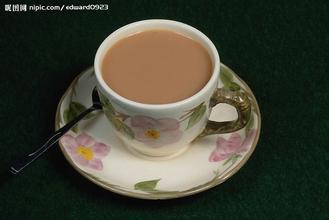
The mellow flavor of Dominican coffee introduces the characteristics of Dominica coffee manor.
Coffee in Dominica is grown in highlands and lowlands, and its taste is slightly different. The upland is sour, but the taste is rich; the lowland is less sour and tastes smoother. Boutique coffee has become popular in recent years. High-quality coffee beans produced by some Dominican estates have a rich aroma, mellow taste and moderately bright sour taste, and have been bought with the more famous Puerto Rico beans or teeth.